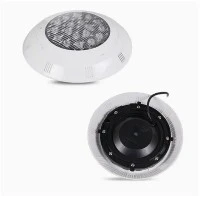
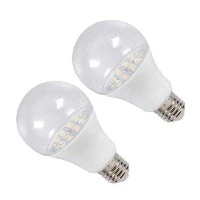
As the majority of LED failure mechanisms are temperature-dependent, the semiconductor junction temperature must be kept low in order to ensure good performance and reliability. In general, the design of a thermal system includes consideration of the drive current, the ambient operating condition, the thermal resistances of all the components along the thermal path and all the associated interface resistances. Operating LEDs at high drive currents and high ambient temperatures without compromising light output and reliability requires efficient removal of heat from the semiconductor junction to the ambient environment. Heat always flows from higher temperature regions to lower temperature regions until a thermal equilibrium is reached. Thus, the task of thermal management is to reduce the thermal impedance of the lighting system. Thermal impedance is the measure of the total resistance to the flow of heat along a thermal path. It includes all the thermal resistance at component and interface levels.
A typical thermal design for an LED lighting system consists of package-level and system-level thermal management. Package-level thermal management handles the junction-to-substrate thermal resistance and thermal reliability of solder interconnection between the LEDs and the metal-core printed circuit board (MCPCB). System-level thermal management handles heat transfer from the MCPCB through a heat sink to the surrounding environment. To maximize the heat flow from the MCPCB to the heat sink, a thermal interface material (TIM), which can be a grease, epoxy or pad, is placed between the two components to fill in interfacial air gaps and voids. The role of the heat sink to extract the waste heat from the MCPCB as efficiently as possible to the ambient air so that no thermal buildup occurs within the LED packages. To do so the thermal transfer rates of the heat sink must outpace the load rate at which thermal energy is introduced to the junction.