Softball Field Lighting Cost Guide
Installing or upgrading to an LED lighting system for a softball field is a significant investment, with total costs typically ranging from $40,000 to over $400,000. This wide range depends heavily on your field's existing infrastructure, its size, the level of play, and site-specific challenges.
This guide breaks down the key factors that determine the final cost, helping you create a realistic budget and a strategic plan for your project.
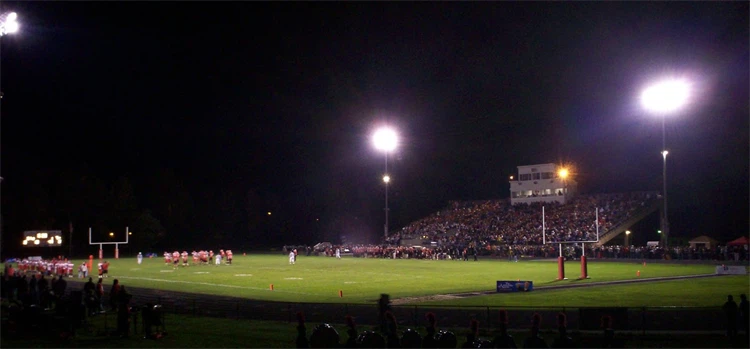
Key Factor 1: Does Your Field Already Have Lighting?
The single biggest cost driver is whether you are retrofitting an existing system or starting from scratch.
If Your Field Has Existing Lighting:
Potential Savings: You may be able to use existing poles and electrical conduits, which can significantly reduce costs.
Necessary Assessment: A professional must inspect the poles, wiring, and electrical panels for structural integrity and code compliance.
Long-Term Benefit: Upgrading to LED will slash energy and maintenance costs, providing a strong return on investment over time.
If You Are Starting from Scratch:
Higher Upfront Cost: Budget for the installation of new light poles, underground wiring, and electrical panels.
Utility Coordination: You may need to work with the local utility company to ensure adequate power supply, which can add to the cost and timeline.
Major Expenses: Expect significant costs for trenching, pouring concrete foundations, and installing a new electrical service.
Key Factor 2: Evaluating Your Existing Infrastructure
If you have poles in place, the next step is a thorough evaluation to see if they can support a modern LED system.
Pole Type and Condition:
Wooden Poles: Common in older installations, they are often less suitable for LED retrofits. They may be structurally unsound or too short (under 50 feet), requiring replacement or the use of more fixtures to achieve proper light levels.
Steel Poles: These are more durable and generally ideal for LED upgrades. However, they must be inspected for rust and foundation issues. Short poles may still require more fixtures or specialized optics.
Pole Placement:
The location of your poles is critical for achieving uniform illumination. Poorly placed poles may create dark spots, forcing you to install additional fixtures or even new poles to meet lighting standards, which increases the project cost.
Electrical Infrastructure:
Your electrical system must be capable of handling the new LED load. Key considerations include:
Is the existing wiring functional and up to code?
Can the current electrical panel handle the demand of the new system?
Cost Impact: If the field was previously under-lit, you may need more fixtures to meet modern standards, potentially increasing the energy load. If no infrastructure exists, costs will be substantially higher for installing conduits, wiring, and new panels.
Key Factor 3: Field Size & Level of Play
The size of your field and the highest level of competition it hosts directly determine the required light levels, measured in foot-candles (fc).
| Class of Play | Typical Use | Recommended Light Level |
|---|---|---|
| Level I | College, Semi-Pro, Professional | 50-100 fc |
| Level II | High School Varsity, Amateur Leagues | 30-50 fc |
| Level III | Training Facilities, Youth Competition | 20-30 fc |
| Level IV | Recreational, Elementary School | 10-20 fc |
As the required light level increases, so does the cost. Higher levels of play require:
More or taller poles to minimize glare and achieve uniformity.
Higher-lumen (brighter) fixtures.
More advanced optics for precise light control.
A greater energy load, potentially requiring panel upgrades.
Key Factor 4: Additional Cost Influencers
Beyond the core components, several other factors can impact your budget:
Funding Source: Publicly funded projects (e.g., for schools or municipalities) often require competitive bidding and compliance with "prevailing wage" laws, which can increase labor costs by 10-25%.
Local Regulations: Zoning restrictions may limit pole height or require measures to control "light spill" and glare to comply with Dark Sky ordinances. Meeting these rules can require more expensive, fully shielded fixtures.
Site Conditions: Fields in flood zones, on sloped or rocky terrain, or in remote locations can pose unique challenges. These may require specialized engineering, reinforced foundations, or unique construction methods, all of which add cost.
Easements & Access: If installation requires access through neighboring properties or existing easements, coordination and potential fees can add complexity and cost.
Strategic Approach for Your Project
Start with an Audit: Begin with a professional assessment of your existing infrastructure and lighting goals.
Get Multiple Quotes: Seek detailed proposals from reputable contractors who specialize in sports lighting.
Plan for the Total Cost: Remember to factor in not just the hardware and installation, but also potential costs for design, engineering, permits, and utility connections.
Consider the ROI: While the upfront cost of a high-quality LED system is significant, the long-term savings in energy and maintenance make it a financially sound investment.
By understanding these factors, you can move forward with your softball field lighting project with a clear and realistic budget.