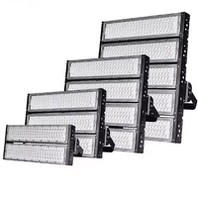
Stadium illumination upgrade to LED as part of a wider project
Upgrades and modernizations to LED stadium lighting systems are often made as part of larger construction projects, whether a new field is being built or an old one is being renovated. Renovations will increase the lifetime of the playing field, thus it makes logical to upgrade the infrastructure in the area as well. A new lighting system will guarantee clubs optimum up-time at the specified levels of competitiveness every day so they can maximize their investment on the field.
During these developments, expenses mount rapidly, and the playing field is often the main concern. But having the appropriate lighting systems may greatly enhance the experience of both players and spectators, resulting in a rise in attendance, membership, and facility uptime. Additionally, throughout the course of the system's life, employing LED lighting saves money on power, maintenance, and fixture replacement. These reductions quickly offset the higher initial price of LEDs.
Planners should take into account not just the costs of building and installing a new facility, but also how the facility will affect revenues and costs throughout the course of the new infrastructure's anticipated life. That point of view clearly demonstrates the advantages of LED over traditional lighting solutions.
Operators of sporting venues must plan ahead for the sports that will be played on the freshly lighted field. They also need to be aware of the facility's intended competitive level, since this will also influence the lighting design and product choices. These factors must to be taken into account early on in the planning process. Vendors and designers of lighting should participate in the project-related discussions to provide their knowledge and skills.
Lower running expenses compared to a traditional metal halide system more than balance the high initial investment costs of LED stadium lighting.
The decision on whether and when the club should install an LED sports lighting system should be made after consultation with the required specialists and planners and, most importantly, after a thorough cost analysis.
Please consult our sport-specific artificial turf field pricing guidelines for further details if you want to add LED stadium lighting while also constructing a new sports field.
operating costs for sports field lights
Concept and specifications for use
Stadium LED lighting systems need to adhere to a set of standards and be suitable for the primary users of the sports facility. Managers of sports facilities must also choose the lighting type depending on the facility's intended usage.
It's not necessary to design stadium lighting specifically for one kind of sport. Numerous facilities, especially those in public parks and schools, may be utilized for a variety of sports. Designing the playing fields and accompanying infrastructure with many roles in mind is necessary to make such a reality.
Single-sport playing facilities are necessary for higher levels of competitiveness. Similar to how there are certain requirements for the playing field itself, they have illumination requirements as well. The single-sport lighting design is influenced by the light intensity, the lights' placement on the field (both horizontally and vertically), and any prospective spectator presence.
The sport's seasons also have an impact. Sports that are typically played in the winter will need more lighting than summer sports. The significance and requirements for the lighting increase if the venue plans to host more nighttime events. These issues go beyond simple aesthetic or sporting considerations; the more often a field or court is used, the more economical an LED-based system will be. An establishment that operates continuously throughout the year will realize the worth of LED lighting sooner than one that operates just during the day.
Due to the versatility of LED lighting systems, even in a field that has been specifically designed and illuminated, there is no one-size-fits-all solution. A dimmer switch may be used to change the brightness, and individual fixtures can be switched on and off. Facilities may thus only use (and pay for) the light they really need, such as low levels of partial light for training and small-sided pick-up games and full illumination for a competitive game played on the same field.