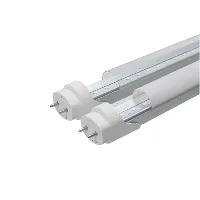
The choice of fluorescent lights is still LED as classroom lights, and the sound of one after another is still controversial, but it is still in occupation and some localities.
Although people in the industry have also paid attention to this point, they are limited by demand-side positioning and only verbally questioned "energy-saving fluorescent lamps as classroom lights are a historical step backward."

The problem of campus lighting environment regulations
1. There are two reasons why teachers still choose fluorescent lamps in some areas.
First, GB7793 is a mandatory environmental specification for lighting in small and medium-sized campuses. There are rules in the specification to use three-primary-color fluorescent tubes and electronic ballasts.
Secondly, some people still think that the blue light of LED has a certain risk of harm to eyesight.
The author believes that there are indeed clauses in the GB7793 specification that specify the use of tri-color fluorescent tubes and electronic ballasts, but it is clearly stated in the preface that some are mandatory clauses and some are introductory clauses.
There is no need to endorse the classroom lights to the platform at this stage or in the future.
Regarding the second point, the so-called blue light hazard has been clearly concluded in the relevant technical papers discussed by the profession in recent years and related international and domestic regulations, and my country has related mandatory regulations and testing for blue light. method.
The skills and specifications of the two products
2. As we all know, the development of LED as an indoor lighting technology has now completely surpassed fluorescent lamps in terms of all technical parameters, market understanding, standard systems, and cost prices.
Regarding the related glare, blue light, stroboscopic, color temperature, color rendering, illuminance, uniformity, energy saving, and standardized installation methods that are affected by the prevention and control of myopia lights are turned off, there are now clear rules and related specifications, which constitute and A complete system of campus classroom design, lighting requirements, building space distribution, product safety specifications, functional specifications, and energy-saving specifications, covering national mandatory regulations, referral regulations, collective regulations, professional regulations, and local regulations.
Only some of the specifications were formulated earlier and need to be further revised and updated to better satisfy the requirements of the shopping malls in order to provide guidance to the shopping malls.
There is no problem that a small number of people worry about being unable to test and not satisfying the classroom lighting requirements.
Comparison of the advantages and disadvantages of the two products and their practical applications
3. Fluorescent lamps and LEDs have long been compared with the advantages and disadvantages of these two products in the industry. They are only used in different areas, and the advantages and disadvantages are different. LEDs used in classroom lighting have more and more complete advantages, while fluorescent lamps contain a strip of mercury. The poisonous and harmful coming is the biggest unknown hidden danger to the campus. At the same time, LEDs have more and more advantages than fluorescent lamps in terms of functional indicators, switching times, energy-saving life, and intelligent control. The future after-sales of fluorescent lamps is increasingly uncertain. factor.
Now, in the nationwide campus pilot cities, significantly more LEDs are used as eye protection lights in classrooms than fluorescent lights.
Even, some local campuses have automatically begun to resist the phenomenon of fluorescent lights.