the Different Types of LED Modules
Light Emitting Diode (LED) technology has fundamentally changed the lighting landscape. At the heart of many LED lighting solutions is the LED module-a circuit board populated with multiple LED chips. These modules are the building blocks for everything from simple indicator lights to complex architectural displays. Their versatility, energy efficiency, and long lifespan have made them a superior choice to traditional lighting.
This guide provides a clear overview of the most common types of LED modules, explaining their unique characteristics and typical applications to help you select the right one for your project.
Understanding the Basics of an LED Module
An LED module is essentially a ready-to-use unit consisting of one or more LED chips mounted onto a printed circuit board (PCB). This board provides the necessary electrical connections and often includes components to manage heat and regulate power. Modules can be designed in various shapes, sizes, and colors, and are engineered for easy integration into larger lighting fixtures or systems.
A Breakdown of Common LED Module Types
LED modules are categorized based on their technology, construction, and intended use. Here are the primary types you will encounter:
1. SMD (Surface-Mount Device) Modules
Description: These are the most common type of LED modules. Tiny LED chips are mounted directly onto the surface of the PCB. They are known for their compact size, efficiency, and excellent light output.
Common Variants: Named after their dimensions (e.g., 2835, 3528, 5050), with larger sizes often providing higher brightness.
Applications: General lighting, LED strips, signage, decorative lighting, and television backlighting.
2. COB (Chip-on-Board) Modules
Description: COB technology mounts multiple LED chips (often dozens) directly onto a substrate to create a single, high-density lighting module. The result is a compact, powerful light source with excellent thermal performance and a uniform, glare-free beam with no multiple shadows.
Applications: High-bay lighting, downlights, track lighting, spotlights, and anywhere high-intensity, uniform light is required.
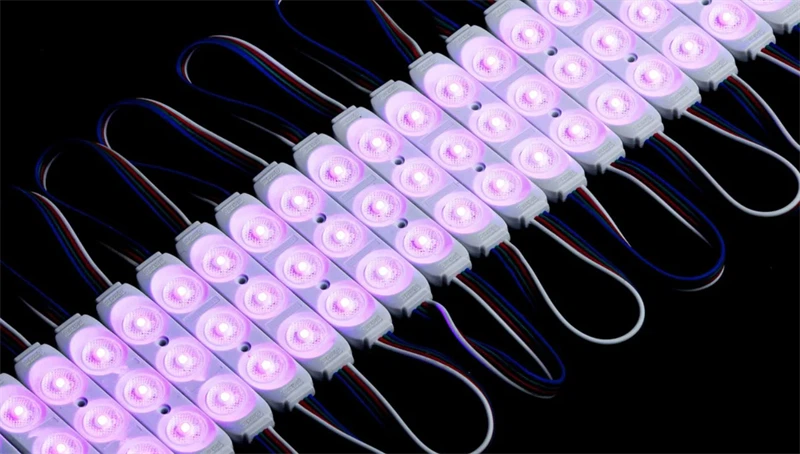
3. RGB & RGBW Modules
Description: These modules combine Red, Green, and Blue (RGB) LED chips in a single package. By independently controlling the intensity of each color, they can produce a vast spectrum of colors. RGBW modules add a dedicated White chip, allowing for richer colors and a pure white light, which is often lacking in a blended RGB mix.
Applications: Architectural accent lighting, stage and entertainment lighting, decorative displays, and mood lighting.
4. Flexible LED Modules
Description: These modules consist of SMD LEDs mounted on a flexible printed circuit, often enclosed in a silicone jacket. They can be bent, curved, and installed on uneven surfaces, offering immense creative freedom.
Applications: Curved architectural features, cove lighting, signage letters, and custom decorative lighting designs.
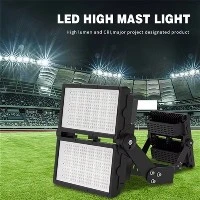
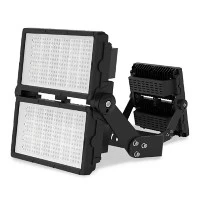
5. High-Power LED Modules
Description: Engineered for maximum light output, these modules use specialized, high-wattage LED chips and are built with robust heat sinks to manage the significant heat generated. They are designed for reliability and longevity under demanding conditions.
Applications: Street lights, stadium lighting, high-bay industrial lighting, and large-area floodlighting.
6. Specialty Modules: UV and IR
UV (Ultraviolet) Modules: Emit light in the ultraviolet spectrum. They are used for curing adhesives and inks, counterfeit detection, and sterilization processes.
IR (Infrared) Modules: Emit invisible infrared light. They are essential for night-vision security cameras, remote controls, and various sensor applications.
7. Integrated Modules: Edge-Lit and Backlit Panels
Edge-Lit Panels: LEDs are mounted along the edges of a thin, flat panel. A light-guide plate (LGP) evenly distributes the light across the entire surface, creating a sleek, uniform glow. They are extremely thin and energy-efficient.
Backlit Modules: Designed to provide even illumination from behind a surface. They are the core component in lightboxes, backlit signage, and LCD display screens.
8. Smart LED Modules
Description: These are advanced modules that incorporate microchips, allowing for individual control and communication. They can be connected to networks for remote operation, color tuning, dynamic lighting scenes, and integration into smart home or building automation systems.
Applications: Advanced architectural lighting, smart retail spaces, and connected home lighting.
Key Factors to Consider When Choosing an LED Module
Selecting the right module involves more than just picking a type. Consider these critical specifications:
Brightness (Luminous Flux): Measured in lumens (lm), this tells you the total amount of visible light emitted. Higher lumens mean a brighter light.
Color Temperature (CCT): Measured in Kelvins (K), this describes the color appearance of the white light. Lower values (2700K-3000K) are "warm white," while higher values (5000K-6500K) are "cool white" or "daylight."
Color Rendering Index (CRI): On a scale of 0 to 100, CRI indicates how accurately a light source reveals the true colors of objects compared to natural light. A CRI of 80+ is good, while 90+ is excellent for retail, art, and applications where color accuracy is critical.
Ingress Protection (IP) Rating: This two-digit code (e.g., IP65, IP20) indicates the level of protection against solids (first digit) and liquids (second digit). A higher IP rating is mandatory for outdoor, bathroom, or industrial use.
Voltage and Driver Compatibility: Ensure the module's voltage (e.g., 12V DC, 24V DC, 120V AC) matches your power supply or driver. Using an incompatible driver can damage the module.
The Unmatched Benefits of LED Modules
The widespread adoption of LED modules is driven by their compelling advantages:
Superior Energy Efficiency: They consume significantly less electricity than incandescent, halogen, or fluorescent lights to produce the same amount of light.
Exceptionally Long Lifespan: Quality LED modules can last for 50,000 hours or more, drastically reducing maintenance and replacement costs.
Design Flexibility: Available in countless shapes, sizes, and colors, they enable innovative and customized lighting solutions.
Durability: As solid-state devices, they are highly resistant to shock, vibrations, and breakage.
Instant On & Dimmability: They provide full brightness immediately and most are compatible with dimming systems for greater control over ambiance.
Environmental Friendliness: LEDs contain no mercury and have a lower overall environmental impact due to their reduced energy consumption.
Conclusion
LED modules are the versatile and efficient foundation of modern lighting. From the ubiquitous SMD and uniform COB to the colorful RGB and flexible strips, there is a perfect module for nearly every application. By understanding the different types and key performance metrics like lumens, CCT, CRI, and IP rating, you can make an informed decision that ensures optimal performance, longevity, and aesthetic appeal for your specific lighting project.