The future of LED lighting: Why smart controls and IoT are changing traditional lighting systems
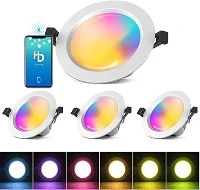
For decades, traditional LED lighting has only replaced conventional bulbs as an energy-efficient, long-life light source, still relying on simple manual switches and fixed brightness output. It solves the problems of high power consumption and short lifespan of traditional lighting but remains a passive, single-function lighting device. However, with the rapid development of IoT (Internet of Things) and intelligent control technology, the global lighting industry is undergoing a comprehensive upgrade. Modern smart LED lighting is no longer a single luminous tool but a systematic, perceivable and self-adjusting intelligent terminal. This article analyzes why smart controls and IoT technology are completely subverting traditional LED lighting systems, explains future industry development trends, and provides a professional trend chart and detailed comparison table for engineering buyers and lighting practitioners.
The Bottleneck of Traditional Passive LED Lighting
Traditional LED lights have fixed brightness, fixed color temperature and fixed working modes after installation. They can only be turned on or off manually, unable to adapt to changes in ambient light, personnel activity and working scenarios. Even with energy-saving advantages, traditional LEDs still cause massive idle power waste: lights stay fully bright during daytime natural light sufficiency, keep running in unmanned areas, and maintain consistent power output regardless of actual demand. In addition, traditional lighting systems lack data monitoring functions, unable to count power consumption, judge lamp failure or predict aging status, resulting in high long-term operation and maintenance costs for commercial and industrial projects.
The future competition of LED lighting no longer focuses on basic brightness, lifespan or energy saving. The core upgrade lies in intelligent perception, automatic control and data management. IoT smart lighting is becoming the standard configuration of new-generation professional lighting projects.
Visual Trend Chart: Performance Upgrade of IoT Smart LED Lighting
This trend chart compares traditional LED and IoT smart LED lighting in five core dimensions, reflecting the comprehensive upgrade of future lighting systems:
The data shows that traditional LEDs only have basic energy-saving capabilities with obvious functional shortcomings in intelligence, fault monitoring and operation management. IoT smart lighting achieves full-dimensional breakthroughs, realizing active sensing, automatic adjustment and digital management, which is the inevitable trend of future industrial and commercial lighting iteration.
Full Comparison Table: Traditional Lighting vs IoT Smart Lighting System
This table systematically sorts out the essential differences between traditional passive LED lighting and new-generation IoT smart lighting in working mode, energy efficiency, management and application value:
|
Core Dimension |
Traditional LED Lighting System |
IoT Smart LED Lighting System |
Practical Project Value |
|---|---|---|---|
|
Working Control Mode |
Manual switch control, fixed brightness and fixed CCT, single working mode |
Automatic induction + remote control + timing scheduling, stepless dimming and CCT adjustment |
Get rid of manual operation restrictions, realize unattended intelligent lighting |
|
Energy-Saving Performance |
Fixed full-power operation, only basic hardware energy saving, massive idle power waste |
Human induction + light linkage dimming, intelligent power reduction according to scenarios, secondary energy saving |
On the basis of LED hardware energy saving, save another 30%-50% of operating power consumption |
|
Fault Monitoring & Maintenance |
No data feedback, faults can only be found by manual inspection, high missing rate |
Real-time online data monitoring, automatic fault alarm, lifespan prediction |
Change passive maintenance to active early warning, greatly reduce O&M labor costs |
|
Scene Adaptability |
Fixed lighting effect, unable to adapt to different working and environmental changes |
Custom scene modes (work/ rest/ meeting/ night patrol), adaptive to ambient light intensity |
Improve space comfort and meet standardized professional lighting requirements |
|
System Management |
Single lamp independent work, no unified system management, unable to count energy data |
Centralized cloud platform management, unified grouping control, visual energy consumption statistics |
Facilitate project energy consumption assessment, cost accounting and standardized management |
|
Expandability |
Closed single function, no expandable interface, unable to connect with smart building systems |
Open IoT protocol, compatible with smart building, office and industrial linkage systems |
Realize multi-scene intelligent linkage and support future system upgrade iteration |
Three Core Reasons Why IoT Smart Lighting Will Replace Traditional LED
1. Traditional LED energy-saving potential is close to saturation
The photoelectric conversion efficiency of modern high-quality LED chips and drivers has reached the industry ceiling, and the hardware energy-saving space is extremely limited. The traditional way of relying on hardware optimization to reduce power consumption is no longer effective. IoT intelligent control brings software-level secondary energy saving through dynamic dimming, human body induction and light linkage, becoming the main way to further reduce lighting energy consumption in the future.
2. Digital management is the rigid demand of modern engineering projects
Large-scale industrial parks, commercial complexes, smart office buildings and municipal lighting projects have higher and higher requirements for refined management. Traditional lighting relying on manual inspection and switch control cannot meet the needs of digital construction. IoT smart lighting realizes visualized energy consumption data, automatic fault alarm and remote centralized management, which is an indispensable part of smart building systems.
3. Diversified scene lighting requires intelligent adjustment
Professional lighting no longer pursues fixed single brightness. Different scenarios such as work, rest, conference and night patrol require different brightness and color temperature matching. Traditional fixed-mode LEDs cannot adapt to flexible scene switching, while IoT smart lighting can freely switch modes and adjust parameters to meet high-standard comfortable lighting needs.
Mainstream IoT Smart Lighting Core Functions for Future Projects
First, human body & light sensor linkage: automatically turn off or dim lights when no one is present, and adjust brightness according to natural light intensity. Second, timing & scene customization: preset working modes for different time periods to realize unattended automatic operation. Third,cloud remote management: one-key control of all lamps in the project, real-time viewing of power consumption and equipment status. Fourth, fault self-inspection and early warning: automatically identify damaged or aging lamps and push maintenance reminders to avoid blind inspection.
Industry Future Trend Judgment
Ordinary fixed-function LED lights will gradually become basic low-end matching products. All medium and high-end professional lighting projects will fully popularize IoT intelligent control systems. The future LED lighting competition will shift from hardware parameters such as brightness and lifespan to intelligent control capability, digital management level and system linkage performance. Smart IoT lighting is not an optional upgrade, but the inevitable development direction of the global lighting industry.
Conclusion
Traditional LED lighting has eliminated outdated lighting products by virtue of energy saving and long lifespan, but its single passive working mode can no longer meet the needs of smart buildings and refined energy management. IoT and intelligent control technology have completely subverted the traditional positioning of LED lights, turning simple luminous hardware into intelligent digital terminals with perception, adjustment and management capabilities. For international buyers and engineering contractors, choosing IoT smart LED lighting systems is not only a cost-saving optimization for current projects, but also a forward-looking layout for future intelligent lighting upgrades, maximizing the long-term operating value of lighting projects.