Introduction: The Contractor's Calculus of Risk and Reward
Beyond Illumination: What Engineers Actually Evaluate
When a specifying engineer drafts the lighting schedule for a commercial office, a warehouse, or a school, they are not merely selecting a light source. They are specifying a system that must integrate with the building's electrical infrastructure, comply with stringent safety and health codes, and survive years of operation with minimal intervention. For the contractor tasked with procurement and installation, the primary drivers are different but equally critical: time, labor cost, and the specter of the callback-the dreaded return to a finished site to replace a failed fixture or resolve a lighting complaint.
The market is saturated with low-cost LED battens that promise high lumens and low wattage. Yet, in engineering projects, the initial purchase price is a misleading metric. The true cost is realized over the fixture's lifecycle, encompassing installation time, maintenance labor, energy consumption, and the reputational cost of non-compliance.
The Paradigm Shift Toward System Reliability
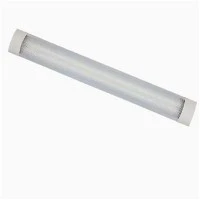
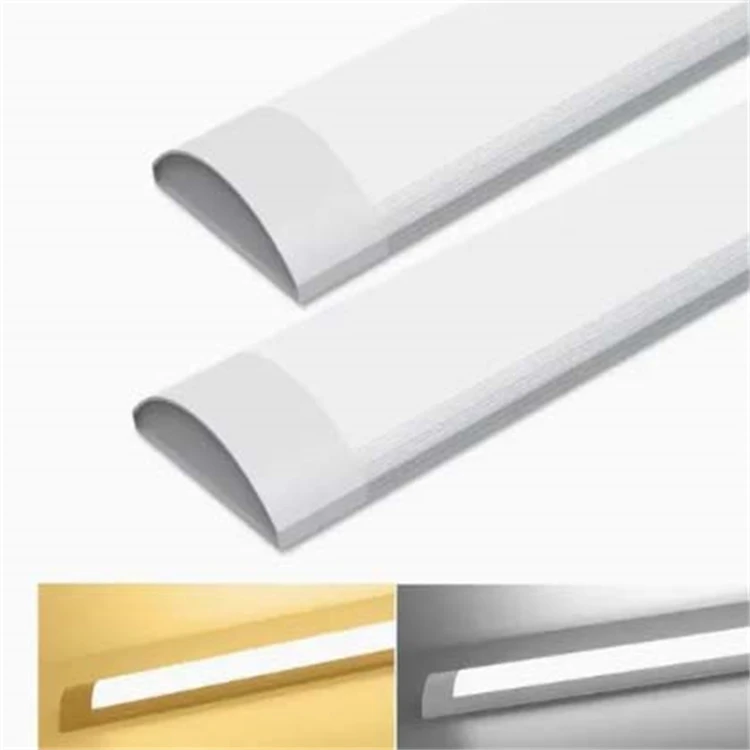
The iron-base LED batten represents a paradigm shift in this calculus. It moves away from the plastic-housed, open-loop drivers that dominate the budget segment and instead prioritizes system-level reliability. The iron-clad base is not a nostalgic throwback to industrial fixtures; it is a calculated structural and thermal decision. The constant-current driver is not an optional upgrade; it is a regulatory and health necessity. Together, they form a fixture that aligns with the contractor's fundamental requirement: to build it right the first time, and to never receive a callback.
The Material Advantage: Why Iron Beats Plastic in Commercial Installations
Structural Rigidity and Installation Efficiency
The installation phase of a lighting project is where labor costs accumulate. A fixture that is flimsy, prone to warping, or requires complicated alignment is a fixture that slows down the crew. Plastic housings, particularly those extruded from thin polycarbonate or ABS, are notorious for their lack of structural rigidity. On a long linear run-often spanning tens of meters in a corridor or warehouse-plastic battens sag, warp under the heat of the LEDs, and struggle to maintain a straight visual line.
The iron-clad base offers a stiffness-to-weight ratio that far exceeds that of unfilled thermoplastics. This rigidity ensures that the batten maintains its linear geometry across its entire length. For the installer, this translates to predictable alignment, simplified mounting, and the ability to span larger distances without the need for excessive intermediate supports. The use of galvanized iron or steel further ensures that the base will not deform during transport or handling, reducing the breakage rates that plague plastic alternatives.
Impact Resistance and Site Durability
Construction sites are hostile environments. Fixtures are stacked on pallets, moved on dollies, and often installed in environments where other trades are still active. A plastic diffuser and housing can crack if struck by a tool or a ladder. An iron base acts as a protective shell, resisting impact and deformation. This durability during the installation phase reduces the need for last-minute replacements and ensures that the fixture operates as designed from day one.
Thermal Management in High-Density Layouts
Engineering projects often require dense lighting layouts. In a high-ceilinged warehouse or a manufacturing plant, the lighting fixtures are the primary heat source after the machinery. The thermal conductivity of the housing is therefore the single most important determinant of the LED's lifespan.
As established in material science, the thermal conductivity of iron (approximately 50 W/m·K) is orders of magnitude higher than that of plastic (approximately 0.2 W/m·K). In a plastic housing, heat from the LED junction is trapped, causing localized hot spots that accelerate light decay and degrade the driver's capacitors. The iron base acts as a continuous heat sink, rapidly spreading the thermal load across the entire fixture surface. This thermal management is critical in enclosed environments or where multiple fixtures are mounted closely together, preventing the ambient temperature within the fixture from rising to destructive levels.
The Arrhenius Effect and Capacitor Lifespan
The impact of thermal management on the driver's lifespan cannot be overstated. The electrolytic capacitors in the driver follow an Arrhenius-like degradation curve: for every 10°C increase in operating temperature, the lifespan of the capacitor is halved. In a plastic-housed fixture, the ambient temperature around the driver can easily exceed the external ambient temperature by 15–20°C. In an iron-clad fixture, the efficient heat spreading lowers the driver's operating temperature, effectively doubling or tripling the time before the driver fails. For a contractor, this is the difference between a 3-year warranty and a 5-year warranty, and the difference between a profitable project and a loss-making one.
Corrosion Resistance for Harsh Environments
Engineering projects frequently involve environments that are hostile to metals and plastics alike. Parking garages, coastal facilities, food processing plants, and underground tunnels expose lighting fixtures to high humidity, salt spray, cleaning chemicals, and temperature extremes.
While standard steel would rust in such conditions, the iron-base batten employs a protective finish-typically a galvanized coating or a high-quality powder coat. The zinc in galvanization acts as a sacrificial anode, protecting the iron from electrochemical degradation even if the surface is scratched. The powder coat provides a physical barrier that resists chemical attack. This corrosion resistance ensures that the fixture's structural integrity and thermal contact are maintained over years of service, whereas plastic housings might become brittle, crack, or discolor under UV exposure and chemical stress.
Electrical Reliability: The Constant-Current Driver as a Risk Mitigation Tool
Eliminating Flicker to Comply with Modern Standards
In the realm of engineering specifications, compliance is non-negotiable. LED flicker has emerged from a niche technical concern to a major regulatory and health issue. The IEEE 1789-2015 recommended practices explicitly state that flicker at certain frequencies and modulation depths can cause health issues, including headaches, eyestrain, and neurological discomfort.
Many low-cost LED battens use pulse-width modulation (PWM) to regulate current, switching the LEDs on and off at high speed. This method produces a modulation depth of 100%, far exceeding the recommended safety thresholds. The iron-base LED batten addresses this by integrating an intelligent constant-current driver. This driver utilizes a closed-loop feedback system to maintain a continuous, stable flow of current to the LEDs, reducing output ripple to near-zero. By eliminating flicker at the source, the fixture ensures compliance with stringent health and safety standards, such as those referenced by EN 12464-1 for workplace lighting. For the contractor, specifying a flicker-free fixture is a safeguard against future litigation, tenant complaints, and non-compliance penalties.
Surge Protection and Voltage Fluctuation Tolerance
Engineering projects often have to deal with grid instability. In industrial areas or older buildings, voltage fluctuations and power surges are common. A simple constant-voltage driver can be highly sensitive to these fluctuations, causing the LEDs to flicker, shift color, or fail prematurely.
The intelligent constant-current driver is engineered with a wider input voltage tolerance and built-in surge protection. It continuously monitors the current and adjusts the internal switching to compensate for grid variations. This robustness is essential in environments where the fixture shares a circuit with heavy machinery or where the power supply is not stable. By preventing the driver from being overwhelmed by transient surges, the fixture significantly reduces the likelihood of catastrophic failure during the project's handover period and beyond.
Reducing Callbacks and Warranty Claims
The most critical metric for a contractor is the callback rate. A callback means lost labor, disrupted schedules, and damaged reputation. The iron-base LED batten is engineered to minimize this risk.
By combining a high-efficiency constant-current driver with an iron thermal base, the fixture operates significantly below its maximum thermal and electrical limits. This conservative operation-often referred to as "derating"-is the secret to exceptional longevity. The LEDs are not stressed, the capacitors are not baked, and the electrical connections are not strained. In a commercial project, where access to fixtures often requires scaffolding or lifts, the difference between a fixture that lasts 15,000 hours and one that lasts 50,000 hours is the difference between a planned maintenance cycle and an unplanned, unbudgeted crisis.
Optical Performance: Delivering Uniform Light Without the Glare
The High-Transmittance PC Cover in Large-Scale Applications
In large spaces, the goal of lighting is to provide uniform illumination without creating a harsh visual environment. The iron-base batten uses a high-transmittance polycarbonate (PC) soft mask. This cover is designed to achieve two competing objectives: transmit as much light as possible (transmittance >85%) and diffuse the light to eliminate hot spots and glare.
For the contractor, this optical quality is essential for meeting the project's illumination requirements (lux levels) while complying with uniformity ratios (U₀). A fixture with poor optical design will produce pools of light and dark spots, requiring the contractor to install more fixtures to meet the average lux requirement, thereby increasing the electrical load and material costs. The high-transmittance PC cover ensures that the specified lumens are delivered to the work plane with a uniformity that satisfies the most demanding lighting design software (like DIALux or Relux).
UGR Compliance for Commercial and Educational Spaces
The Unified Glare Rating (UGR) is a critical metric in commercial and educational lighting design. High UGR values indicate excessive glare, which causes visual fatigue and can impact productivity and learning.
The PC cover on this fixture is micro-structured to control the angular distribution of light. It reduces the peak luminance at viewing angles that typically cause discomfort, ensuring that the fixture meets the UGR ≤ 19 threshold mandated by EN 12464-1 for offices and classrooms. By selecting a fixture with a proven low UGR, the contractor ensures that the space is not only bright but visually comfortable, reducing the risk of complaints from occupants and ensuring compliance with stringent building standards.
The Total Cost of Ownership: A Contractor's ROI Calculation
Energy Savings and Load Calculations
While the initial purchase price of an iron-base batten may be marginally higher than a plastic alternative, the energy savings and load reduction can be substantial. By utilizing high-efficacy LED chips (200+ lm/W) and an efficient constant-current driver, the fixture consumes significantly less power for the same light output.
In a large-scale project, this reduction in wattage per fixture directly reduces the total connected load. This may allow the contractor to specify smaller gauge wiring, fewer circuit breakers, and potentially smaller transformers. The savings on the electrical infrastructure can often offset the premium paid for the fixtures themselves. Furthermore, the ongoing operational savings for the building owner-sometimes reaching 60% compared to fluorescent systems-are a powerful selling point for any project.
Maintenance Cycles and Labor Costs
The cost of maintaining lighting in large spaces is dominated by labor, not materials. Replacing a failed lamp or driver in a high-ceiling warehouse requires a scissor lift, two technicians, and the disruption of operations. The iron-base LED batten, with its L80-rated lifespan of 50,000 hours or more, effectively eliminates routine maintenance for decades.
When a contractor presents a life-cycle cost analysis to a client, the elimination of maintenance is often the most compelling financial argument. The fixture becomes a "fit-and-forget" asset. The labor savings are compounded by the reduction in spare parts inventory and the elimination of disposal costs for fluorescent tubes (which contain mercury).
The "Install and Forget" Factor
In engineering projects, time is money. The most valuable attribute a product can have is predictability. The iron-base LED batten is designed to perform exactly as specified, for as long as specified.
The combination of the iron base (preventing thermal degradation), the constant-current driver (preventing electrical stress), and the high-transmittance cover (preventing optical decay) creates a system where every component supports the others. There are no weak links. For the contractor, this means they can hand over the project with confidence, knowing that the lighting system will operate without incident, protecting their warranty, their profit margin, and their professional reputation.
Conclusion: The Contractor's Standard
The iron-base LED batten is not a product of compromise; it is a product of precision engineering. It is designed to meet the exacting demands of the engineering and construction industry. It understands that a lighting fixture is not just a consumer purchase; it is a long-term investment in infrastructure.
By rejecting the flimsy plastic housings and volatile electrical circuits of the budget tier, and by embracing the structural and thermal superiority of iron alongside the stability of constant-current technology, this fixture answers the contractor's most pressing questions: Will it install cleanly? Will it meet code? Will it last? Will it cost more to maintain than to replace?
The answer, supported by the physics of thermal conductivity, the standards of electrical engineering, and the economics of life-cycle costing, is a resounding yes. The iron-base LED batten is the go-to choice for engineering projects because it is built to perform, built to comply, and built to last. For the contractor who stakes their reputation on the quality of their work, it is not just a light; it is a peace-of-mind specification.

How To Cooperate With Us?
We are happy to have total control over the manufacturing process and the calibre of our products since we have our own facilities. Since we are producers rather than just brokers, we are dedicated to providing our customers with the best pricing. Since we are certain that the price and quality of our products are clear, we invite customers to see our samples first. Our commitment to quality and customer satisfaction drives us to continuously provide top-notch goods.
Our address
3rd Floor, 5th Building, Hebei Industrial Park, Hualian Community, Longhua District, Shenzhen, China