The hazards of UV disinfection lamps Precautions for the use of household UV disinfection lamps
Ultraviolet disinfection lamps use ultraviolet rays to kill bacteria and so on. Humans have long used the ultraviolet light in the sun to partially sterilize the tradition. Drying is one of them. Maybe we don’t care about it, but there are advantages and disadvantages. , Then what is the hazard of UV disinfection lamps? What are the precautions for the use of household ultraviolet disinfection lamps? Let’s take a look at BENWEI LIGHTING.
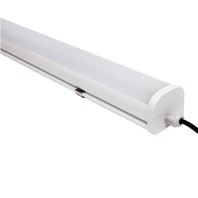
UV disinfection lamp
The hazards of ultraviolet disinfection lamps:
Ultraviolet lamps are commonly used sterilization tools in professional fields such as medicine, drinking water, and food. During the SARS period, they began to enter various public places and even homes. Some of them look very similar to household fluorescent lamps. At present, many ordinary families buy it. However, because the warning signs on the products are not obvious, businesses often ignore its hazards in publicity. Consumers are often not aware of the harm caused by ultraviolet lamps to human bodies. Therefore, in recent years, the damage caused by ultraviolet lamps happens sometimes.
The ultraviolet lamp uses the ultraviolet light emitted by the mercury lamp to achieve the sterilization and disinfection function. The ultraviolet energy emitted by it is relatively large. If there is no protective measure, it is easy to cause great harm to the human body. If the bare skin is irradiated by this type of ultraviolet light, redness, swelling, itching, and scaling will occur in the lighter ones; the more severe ones can even cause cancer and skin tumors. At the same time, it is also the "invisible killer" of the eyes, which can cause inflammation of the conjunctiva and cornea, and long-term exposure may cause cataracts.
For some small UV lamps used in restaurants and homes to kill mosquitoes, their light-emitting principles are different, and consumers do not need to worry.
If you have leukemia and other critically ill patients in your home, you need a relatively sterile environment to buy ultraviolet lamps. You must not use ultraviolet lamps for ordinary home lighting. When it is necessary to use ultraviolet light for disinfection, it is also necessary to avoid direct contact between skin and eyes with ultraviolet radiation. In public places, if you encounter ultraviolet disinfection, you should avoid it in time, especially to prevent children with thin skin stratum corneum from entering the ultraviolet operating area by mistake.
After prolonged exposure to ultraviolet rays, it may cause skin cancer in the future. In medicine, as long as 20 minutes of exposure to white mice, it will produce obvious adverse symptoms. Ultraviolet radiation damages internal tissues. If it is just peeling, apply some medicine to cure it, but internal tissue damage must be observed for a long time.
Experts suggest that when using ultraviolet lamps, there should be no people in the room, and the disinfection time is 30 minutes to 1 hour; avoid looking directly at the light source; households must wear protective glasses or sunglasses when operating the disinfection lamp.
Absolutely harmful, check out this report
46 students worry about causing cancer under the disinfection lamp. The skin was damaged by ultraviolet rays while eating at the restaurant. Among them, 11 had blood abnormalities and doctors said they might become cancerous.
UV disinfection lamp
Precautions for the use of household ultraviolet disinfection lamps:
1. Don't let the ultraviolet light source irradiate people, so as not to cause damage. Ultraviolet rays have the most obvious impact on human skin and eyes. The human body will be exposed to short-term exposure to redness, itching, and allergic pimples; long-term exposure will cause serious damage to the skin tissues, and sufficient doses of exposure may even cause skin cancer. Ultraviolet rays are also very harmful to human eyes. Short-term and large-dose exposure can cause eyes to red and swell, shed tears, and cannot open eyes. Long-term exposure to ultraviolet radiation can cause cataracts and even blindness.
2. When using ultraviolet rays to disinfect the surface of objects, the irradiated surface should be directly irradiated by ultraviolet rays, and a sufficient radiation dose should be achieved. Because of the straight line propagation of light, when objects are blocked, reflection, penetration or absorption will occur. Ultraviolet disinfection requires that the wattage of the ultraviolet lamp per cubic meter of space is ≥1.5W, and the irradiation time is generally 30 to 60 minutes. It also stipulates that the intensity of ultraviolet radiation shall not be less than 70 ūW/cm2, otherwise the sterilization effect will be poor or ineffective, and the purpose of sterilization will not be achieved.
3. The suitable temperature range for ultraviolet disinfection is 20℃~40℃, too high or low temperature will affect the disinfection effect. When using ultraviolet rays to disinfect indoor air, the room should be kept clean and dry to reduce dust and water mist. When the temperature is lower than 20°C or higher than 40°C and the relative humidity is greater than 60%, the irradiation time should be appropriately extended.
4. Pay attention to the wiping and cleaning of the lamp tube in the application. When using a new lamp, you can use 75% alcohol gauze to wipe the lamp tube to remove dust and oil stains on the lamp tube. During use, wipe regularly and do a good job of cleaning the lamp to avoid affecting the purple penetration and radiation intensity.
UV disinfection lamp
Let me stop here for the explanation of the knowledge of the hazards of UV disinfection lamps and the precautions for the use of household UV disinfection lamps. I believe you should have more understanding after reading it. The content is for your reference only, and I hope it can be helpful to everyone. Helped.