The light decay of LED lamps relies on good heat dissipation technology
As the global LED application market continues to expand, in addition to potential markets such as Europe, America and Mainland China, an extremely explosive Indian market should not be underestimated. The Taiwan International Lighting Fair just ended. Exhibitors participated in the grand event and exhibited a variety of the latest LED lighting applications.
After two years of development, India is expected to exceed US$1 billion in 2010, with an annual growth rate of over 12%. It is one of the emerging markets with considerable development potential in the global LED market. This is mainly due to the country’s electricity driven by economic growth. The demand is huge. Due to resource constraints, the only way to deploy energy-saving and carbon-reducing LED applications in advance is to build more power plants.
India’s demand for LED products is mainly dependent on imports. In 2004, India’s LED imports amounted to US$64.7 million. In 2005, the value of imports increased to US$71.23 million. In 2006, the value of LED imports reached US$88.5 million, an annual growth rate of over 11.93%. In 2007, India's economic development was even more rapid, with LED imports hitting new highs repeatedly.
The industry can discuss heat dissipation from both aspects of thermal conductivity and heat dissipation. Regarding the industry’s over-emphasis on adding a thermal conductive layer to the front end of LED heat dissipation, a fundamental solution that is different from the industry’s general approach has been proposed.
From the point of view of heat conduction, the aluminum substrate at the bottom of the traditional MCPCB is simply redundant, and the thermal conductive glue between the copper foil and the copper foil is usually a hard material. When the temperature rises, the coefficient of expansion and contraction between copper and aluminum will be different, resulting in the intermediate thermal conductive glue. Layer voids increase the thermal resistance of the interface.
The MCPCB heat-dissipating aluminum substrate commonly used in the industry is composed of a bottom aluminum block and an upper copper foil group, with a thermal conductive adhesive (Adhesive) filled in the middle. The thermal resistance of copper foil 0.001cm2?K/W is close to 0, and the thermal resistance of aluminum bottom layer is 0.08cm2?K/W, but the thermal resistance of the thermal conductive adhesive is as high as 1cm2?K/W. The actual measured thermal resistance of MCPCB is about 2~4cm2? K/W.
A few days ago, the Ministry of Economic Affairs of Taiwan also estimated that if 2.3 million street lights in Taiwan can be converted to LED lights in the future, it will save 750 million kilowatt-hours of electricity in one year, and NT$1.5 billion in electricity bills, while reducing 517,000 metric tons of electricity. carbon dioxide emissions.
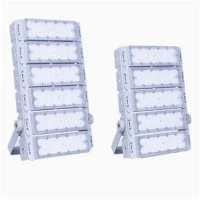
We see some interesting phenomena. It was found on large street lamps, stage lamps, and outdoor wall washer lamps exhibited by some manufacturers that the heat dissipation lamp shell of the lamps was coated with a thick layer of traditional black baking paint, and the LED street lamps were painted like a pumping motor. .
After the interview, I learned that the manufacturer said that because it is used outdoors, it has to be sprayed with baking varnish to protect it from the acid rain of climate change. Then why use black paint? The answer is actually more resistant to dirt, and it is less visible if it is dirty.
Why use paint? Don’t you worry that the paint will form thermal resistance and cause LED light decay? The answer is that if you use anodizing protection, there will still be thermal resistance, and it will fail after a few months of exposure, so you have to use paint for protection.
Unexpectedly, the spray paint for external protection seals back the heat that the heat dissipation module is trying to dissipate, resulting in poor heat dissipation and serious LED epitaxial light decay.
Temperature is actually the key issue of LED street light degradation, and LED street lights are stuck in this link. Because LED street lights have a higher luminous power than household lamps, manufacturers have worked hard on the design of heat dissipation substrate fins and cooling fans, and after the assembly is completed, paint protection is added to the outside of the lamps and heat dissipation modules to prevent weather erosion.
When the heat flux formula is imported, the heat flow q=Q(total heat)/A(surface area)=(T1-T2 temperature difference)?k(thermal conductivity)/l(pass length), because the heat flow q of the LED is constant It is a fixed constant, so the thermal resistance (Rt) is the value obtained by dividing the length l by the thermal conductivity k. The shorter the thermal conduction length, the more effectively the overall thermal resistance can be reduced. The interface thermal resistance between the interfaces increases due to the accumulation.
According to the current acceptance specifications for large street lamps, the life test of LED lamps: the life test of more than 1,000 hours, the light attenuation should be less than 3% (withered light); the life test of more than 15,000 hours, the light attenuation should be less than 8%. If you fail to pass the specifications, you will not get the acceptance fee for public works.
If the following thermal resistance formula Rtotal=Rl-s+Rs+Rs-a is introduced, the total thermal resistance of the entire LED is the thermal resistance between the LED and the substrate, plus the substrate thermal resistance (Rs), and the substrate to the air side. Resistance (Rs-a) the sum of the three. The Rs thermal resistance of the general aluminum substrate is about 2~3cm2?K/W, and the thermal resistance Rs-a from the substrate to the air end can reach 400~3,000cm2?K/W, and the bottleneck is on the substrate side.