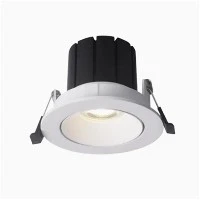
Introduction to LED Light Decay of Recessed Ceiling Spotlights
Definition and Industry Judgment Standard of Light Decay
The irreversible slow decrease in the luminous flux output of LED lighting fixtures during extended continuous operation is known as "light decay," or "lumen depreciation." The widely accepted L70 lifetime criterion is used as the primary foundation for judgement in the worldwide lighting industry: a spotlight is considered to have experienced effective light decay failure when its luminous efficiency falls to 70% of its original factory brightness. The L70 lifetime should exceed 50,000 hours for approved, high-grade commercial recessed spotlights, which can withstand 8–10 years of regular daily operation. Early light decay, on the other hand, is a common abnormal failure phenomenon brought on by non-standard design and subpar configuration. It is defined as abnormal lumen attenuation that happens well ahead of the standard life cycle and typically results in brightness attenuation exceeding 30% within 2,000–8,000 hours of use.
Early light deterioration is latent and gradual, in contrast to abrupt bulb burnout and flickering failure. Users sometimes miss modest brightness variations in the early stages and only notice colour distortion and dimming when the attenuation builds up to a certain point. Early light decay is one of the most readily overlooked yet expensive lighting system failures in engineering and residential lighting settings because of its inevitable harm.
Harm of Early Light Decay for Commercial and Residential Scenarios
Early deteriorating recessed spotlights in residential lighting will result in poor interior decoration lighting design effects, weakened space hierarchy, and dim ceiling ambient light. Long-term usage of color-shifting, low-brightness lights may also lead to visual fatigue and make living at home less comfortable. The damage caused by early light deterioration is especially noticeable in commercial settings including shopping centers, apparel shops, art galleries, and hotel lobbies. In order to preserve product texture, artwork details, and space grade, commercial accent lighting depends on consistent luminous flux and reliable high colour rendering. Early light deterioration will result in gloomy local illumination, uneven regional light colour temperatures, a significant decline in the aesthetic attractiveness of commodities displays and spaces, and a direct impact on consumer consumption and brand perception.
Early light fade significantly raises the overall usage cost of lighting systems from the standpoint of engineering operation and maintenance. In addition to costing a lot of labour and time, frequent manual inspections, light replacements, and secondary installations result in needless resource waste and project rework losses. Batch early light degradation issues will also result in user complaints, post-purchase disputes, and reputational harm for engineering contractors and bulk buyers, resulting in intangible economic costs that are hard to quantify.
Core Difference Between Normal Light Decay and Early Abnormal Decay
Natural normal light decay, a physical ageing characteristic of semiconductor light-emitting chips, is present in all LED lighting products. Normal light degradation is uniform and slow: after 10,000 hours of use, high-quality COB spotlights only create less than 5% lumen attenuation, and the colour temperature and luminous uniformity are constant, so everyday illumination usage is unaffected. Unqualified manufacturing methods, poor material selection, and flawed product design all contribute to early light degradation, an atypical failure. Along with common issues including colour cast, glare aggravation, and localised dark patches, its attenuation pace is five to ten times faster than that of normal ageing. Whether the product's structural design, heat dissipation system, and essential components satisfy industrial high-standard production criteria is the primary distinction between the two.

Core Internal Causes of Early Light Decay of Recessed Spotlights
Unqualified LED COB Chip Quality and Packaging Defects
The recessed spotlight's primary light-emitting component, the LED COB chip, is crucial in determining the product's service life and rate of light deterioration. Low-purity semiconductor wafers, recycled chips, and inefficient light-emitting structures are used in many of the low-cost, subpar spotlights available on the market. These chips are prone to local current crowding and have an uneven current density distribution during operation, which causes excessive local heat production. Long-term high-load operation will cause early acute light decay, quickly lower photoelectric conversion efficiency, and hasten the ageing of the chip's light-emitting layer.
High-end anti-glare COB recessed spotlights, on the other hand, use professional light-emitting chips that are imported and have precision wafer cutting and standardised packaging. The chip features a very low natural ageing rate, consistent photoelectric conversion efficiency, and uniform current conduction. It can sustain steady luminous flux output even after extended continuous operation, successfully preventing aberrant light degradation brought on by chip quality flaws.
The COB chip's phosphor layer is in charge of modifying colour rendering capability and transforming monochromatic light into full-spectrum white light. Poor spotlights employ cheap, inadequately resistant to heat phosphor powder and subpar packing adhesive. The phosphor layer will experience thermal ageing, yellowing, and attenuation during prolonged high-temperature operating circumstances, which will cause lower brightness, distorted colour rendering, and decreased light transmittance. In low-end recessed spotlights, this is one of the most frequent concealed reasons of early light deterioration.
Superior spotlights come with high-transmittance anti-aging packing adhesive and high-temperature-resistant, high-purity phosphor materials. Uniform thickness and sturdy structure are guaranteed by the optimised phosphor coating technique, which can withstand long-term heat impact, preserve consistent light colour and a high colour rendering index (CRI>90), and totally prevent brightness attenuation and colour drift brought on by phosphor ageing.
Defective Thermal Management System (Primary Cause of Early Light Decay)
According to industry expert statistics, the junction temperature of LED chips is inversely related to the product's service life; for every 10–15°C rise in chip junction temperature, the rate of light degradation doubles and the product's total service life decreases by 30%–50%. Recessed ceiling spotlights, in contrast to exposed bulbs, are buried in enclosed ceiling areas with inadequate natural air circulation. As a result, the heat dissipation system plays a crucial role in limiting light deterioration and longevity. By thinning aluminium materials, eliminating heat dissipation groove designs, and decreasing heat sink volume, the majority of low-quality spotlights on the market reduce prices. Due to the small heat dissipation area's inability to promptly export the heat produced by chip operation, internal heat continues to build up and the chip junction temperature remains too high over time.
An integrated thicker die-cast aluminium heat sink with a multi-groove three-dimensional heat dissipation structure is used in the high-end recessed anti-glare COB spotlight. The COB chip's internal heat can be swiftly and uniformly exported thanks to the optimised groove design, which also significantly increases the heat exchange contact area and creates a directed heat conduction and heat dissipation channel. This expert thermal management design essentially suppresses early light decay, prevents thermal ageing of the chip and packaging materials due to heat buildup, and successfully regulates the chip junction temperature within a safe and stable range.
The total heat dissipation efficiency is influenced not only by the heat sink construction but also by the thermal conduction medium between the heat sink and the COB chip substrate. Large heat resistance at the contact results from inferior lighting using low-performance thermal conductive glue or even skipping the thermal conduction medium. Rapid light fading, material ageing, and local heat buildup near the light source are caused by the chip's inability to effectively transmit heat to the heat sink for dissipation. High-quality spotlights are filled with high-thermal-conductivity nano thermal paste between the substrate and heat sink. This eliminates interface gaps, minimises thermal resistance, achieves seamless rapid heat conduction, and guarantees the lamp body's long-term stable heat dissipation performance.
Unstable Drive Power and Electrical System Failure
The "brain" of the LED spotlight is the drive power, which controls the output voltage and current to guarantee that the chip operates within its stated specifications. Simple circuit designs, inadequate overcurrent protection and voltage control, and poor anti-interference capabilities characterise low-cost, subpar constant-current drives. In real operation, the drive's current output will become unsteady due to electrical noise, sudden power surges, and variations in grid voltage. In addition to damaging the COB chip's intrinsic light-emitting structure and causing irreversible early light degradation, prolonged overcurrent operation would excessively heat the chip.
Inadequate capacitors, resistors, and circuit board materials for drives are used in many low-end spotlights; these components are prone to ageing and performance loss after one to two years of usage. Due to the ageing drive's inability to maintain steady current and voltage output, the lamp's working power fluctuates, subtle stroboscopic phenomena occur frequently, and the LED chip is continuously impacted. According to statistical data, drive system instability-rather than the chip itself-is the indirect source of over 60% of early light fading and failure issues with recessed spotlights. Superior constant-current isolated drives with full overvoltage, overcurrent, overheating, and short-circuit safety systems are used in high-end lighting. The drive's extended service life, constant output parameters, and excellent grid anti-interference ability may guarantee that the chip always operates in a safe rated condition and prevent electrical-induced light decay.
Defective Optical Structure and Unreasonable Lamp Body Design
The flat shallow-cup optical design of standard low-end recessed lamps lacks expert anti-glare structural optimisation. This design causes significant glare, eye fatigue, dispersed light emission, and significant luminous flux loss. More significantly, secondary reflection heat will build up within the lamp body due to the irrational optical cavity construction. A confined high-temperature environment is created within the optical cavity due to the inability of the reflected light and heat to disperse over time. This accelerates the ageing of the chip and phosphor layer and exacerbates early light decay.
The high-end spotlight uses a deep-cup anti-glare optical structure with carefully calibrated reflecting curves and light-emitting angles. In addition to achieving eye-friendly lighting by successfully suppressing stray light and removing dazzling glare, this design maximises the optical cavity's internal air circulation and heat dissipation space, prevents secondary heat accumulation, lowers the light source's operating temperature, and preserves long-term stable luminous efficiency.
Even though the IP20 product protection rating is appropriate for dry indoor situations, subpar spotlights have difficult installation procedures and inadequate structural tightness. Long-term indoor dust will enter the lamp body and stick to the optical lens and chip surface. Dust buildup will reduce light transmittance, obstruct light output, and visually attenuate apparent brightness. Dust cover will also have an impact on the light source surface's ability to dissipate heat, which will accelerate significant light degradation and cause localised heat buildup. Precision die-casting and seamless assembly technology, together with a tight internal structure, are used in high-quality spotlights to effectively block dust invasion, maintain long-term steady luminous performance, and keep internal components and the light-emitting surface clean.
External Environmental and Usage Factors Inducing Early Light Decay
Long-Term Closed Ceiling Installation Environment
The ceiling interlayer has recessed spotlights, creating a tiny, somewhat enclosed area. Inadequate lights with weak self-heat-dissipation capabilities provide a constant high-temperature microclimate within the ceiling because the heat produced during operation cannot be quickly dispersed to the outside air. Long-term high-temperature baking will decrease the light degradation cycle and hasten the ageing of all internal lamp components, including chips, drives, and packaging materials. This confined installation environment may be accommodated by high-quality bulbs with superior thermal management systems. They can effectively export heat and maintain low-temperature stable operation even in the closed ceiling interlayer, preventing early light degradation caused by the environment.
A little amount of moisture in the air may enter the inside of poorly sealed substandard spotlights in certain semi-humid indoor spaces such living rooms and hallways, oxidising and corroding chip pins, circuit boards, and drive components. Corrosion in components can result in unstable light emission and decreased electrical conduction efficiency, which will worsen light decay and may cause local light failure. Qualified high-grade spotlights employ precise sealing technology and anti-oxidation and anti-corrosion die-cast aluminium lamp bodies, which can withstand minor indoor moisture erosion and guarantee steady performance throughout extended indoor operation.
Unstandardized Installation and Long-Term Overload Operation
Another significant external factor contributing to early light deterioration is improper installation. The spotlight's internal heat dissipation structure and circuit architecture will be harmed by irregular hole size, unstable spring clip fixation, and distorted lamp body extrusion during installation. This will lead to aberrant current transmission and decreased heat dissipation efficiency. Furthermore, in commercial settings, continuous overload operation will enable the lamp to operate under high load for an extended period of time. Continuous high-load operation will significantly increase thermal ageing and cause early light degradation for subpar lights without overheating protection. High-toughness spring clip attaching mechanisms, which enable rapid and uniform installation without harming the lamp body structure, are a feature of premium spotlights. In the meanwhile, in order to prevent performance attenuation brought on by prolonged overload operation, the integrated overheating prevention module will immediately modify the operating state when the temperature is too high.
Professional Selection Standards to Avoid Early Light Decay & Product Advantages
Core Identification Indicators of Anti-Light-Decay Recessed Spotlights
Buyers and designers must give up on the single price-oriented purchasing concept and concentrate on four key performance indicators: chip quality, thermal management system, drive stability, and structural optimisation in order to fully avoid the financial losses and issues with lighting quality brought on by early light decay. Imported high-stability COB chips, an integrated thickened aluminium heat dissipation structure, a constant-current isolated safety drive, and a professional deep-cup anti-glare optical design are all necessary for high-quality recessed spotlights. The product's extended service life and long-term low light decay are fundamentally guaranteed by these setups.
Comprehensive Advantages of Our Premium Anti-Glare COB Recessed Spotlight
This product uses phosphor coating technology and premium imported COB light-emitting chips with precision packing. The chip has a very low natural ageing rate, a consistent photoelectric conversion efficiency, and no unusual attenuation over extended periods of use. The industry-leading integrated thickened grooved aluminium heat dissipation technology, which successfully regulates the chip junction temperature within a safe range, increases the heat dissipation efficiency by 40% as compared to standard spotlights. The product's lumen attenuation is less than 3% after 10,000 hours of usage following rigorous factory ageing testing (24-hour continuous high-load operation), and the L70 service life is up to 50,000+ hours, realising 8–10 years of steady illumination without noticeable dimming and colour change.
The device offers powerful grid anti-interference capabilities, accurate current and voltage regulation capabilities, and full overvoltage, overcurrent, overheating, and short-circuit safety features thanks to its premium isolated constant-current drive. It can prevent chip damage and light deterioration brought on by voltage swings and power surges, adjust to intricate interior power supply conditions, and guarantee the lamp's long-term steady and secure functioning. With low operation loss and excellent energy-saving efficiency, the drive and chip have passed professional matching debugging, lowering long-term usage and maintenance expenses.
The expert deep-cup anti-glare optical construction maximises the lamp body's internal heat dissipation air circulation to prevent secondary heat buildup, removes stray light and glare, and produces soft and consistent light output. With its anti-oxidation, anti-corrosion, and dust-proof qualities, the high-strength die-cast aluminium lamp body can withstand indoor environmental degradation and maintain the stability of the internal structure for an extended period of time. In addition to satisfying a variety of lighting angle adjustment requirements, the flexible adjustable lamp head and sturdy spring clip installation structure prevent structural damage from installation and operation, further guaranteeing the product's long-term anti-light-decay performance.
The product achieves a high colour rendering index (CRI>90), which can really recreate the texture and colour of objects with natural and delicate light colour while preserving ultra-low light decay. This product can maintain consistent high-quality lighting effects throughout its life cycle, in contrast to subpar spotlights that are prone to colour drift and brightness drop. It is ideal for high-end home decoration, commercial display, hotel engineering, and gallery lighting scenarios, thereby improving space grade and display appeal.
Conclusion
Early light decay in recessed ceiling spotlights is a complete failure issue brought on by subpar core components, poor thermal management, irrational structural design, and inconsistent application settings rather than an inevitable natural ageing occurrence. The main cause of early light fading among all contributing elements is an excessively high chip junction temperature brought on by inadequate heat dissipation; the main internal concealed risks are subpar chips and unreliable motors. Selecting cheap, subpar spotlights can only result in increased long-term maintenance expenses, deteriorated illumination quality, and reputational damage for end users, engineering contractors, and large buyers.
Superior anti-glare COB recessed spotlights can significantly reduce early light decay issues, preserve long-term stable luminous efficiency, high colour rendering, and consistent lighting effects with the help of expert thermal management systems, premium core components, and optimised structural design. In contemporary interior lighting design and engineering procurement, we can only achieve energy-efficient, long-lasting, and high-quality lighting systems, optimise long-term cost performance, and create comfortable and superior indoor lighting spaces by using anti-light-decay performance and comprehensive product quality as the primary purchasing standards.
How To Cooperate With Us?
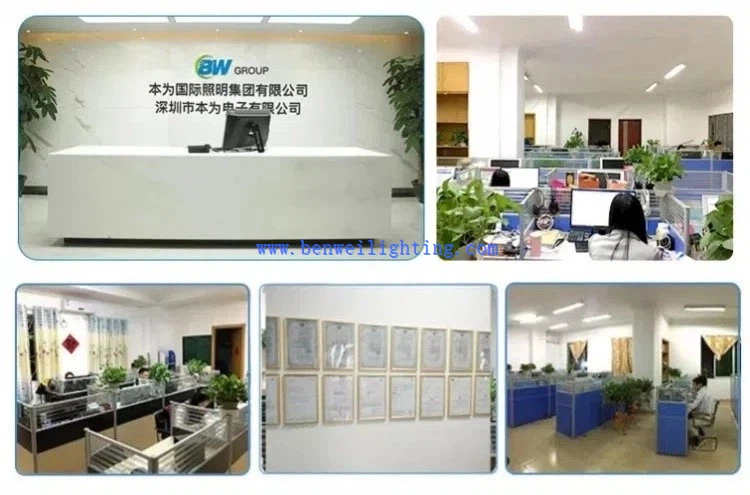
We are happy that we have total control over the manufacturing process and the quality of our products since we have our own facilities. Since we are producers rather than just brokers, we are dedicated to providing our customers with the best pricing. Since we are certain that the price and quality of our products are transparent, we advise customers to examine our samples first. Our commitment to quality and customer satisfaction drives us to continuously provide top-notch goods.
Our address
3rd Floor, 5th Building, Hebei Industrial Park, Hualian Community, Longhua District, Shenzhen, China