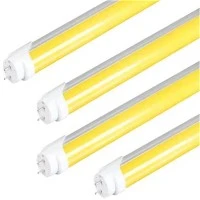
In recent years, LED lighting alternatives have become more popular, particularly in commercial and industrial environments. Because of its extended lifetime and energy economy, 2G11 LED tube lights are a preferred alternative over conventional lighting techniques.
The lifespans of 2G11 LED Tube Lights are noticeably longer than those of conventional lighting solutions like incandescent or fluorescent bulbs. 2G11 LED Tube Lights may last up to 50,000 hours, whereas the majority of conventional lighting solutions only last around 10,000 hours. As a result, LED lights may last almost five times as long as conventional lighting, significantly lowering the frequency of bulb replacements.
Apart from their longer lifetime, 2G11 LED Tube Lights are more resilient than conventional lighting, which makes them perfect for tougher settings. While LED lights are more resilient and less likely to shatter if bumped or pushed over, traditional lighting solutions may be more brittle and prone to damage.
The fact that LED lighting solutions use less energy than conventional lighting is another benefit. LED lights are a more ecologically responsible choice since they need a lot less energy to generate the same quantity of light. In addition to being beneficial for the environment, this lowers carbon emissions and saves a lot of money for both people and companies.
As more companies realise the advantages of 2G11 LED Tube Lights' endurance, durability, and energy economy, the adoption of LED lighting choices in commercial and industrial environments has grown over time. Along with the financial and environmental advantages, LED lights may also provide a more uniform and brighter light, which improves visibility and reduces eyestrain for anyone working in the area.
All things considered, 2G11 LED Tube Lights' endurance and durability when compared to more conventional lighting solutions are major benefits that have increased its usage. LED lighting alternatives will probably become even more common in all situations as long as sustainability and energy efficiency are prioritised globally.