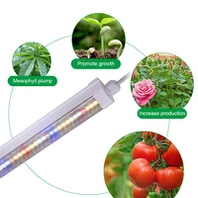
What Effects Do LED Grow Lights Play in Optimizing Plant Growth? Insights and Recommendations from Porphyra Research
Light is the fundamental energy source for photosynthetic organisms, and the development of LED technology has revolutionized controlled-environment agriculture by enabling precise spectral manipulation. A study focusing on the effects of different LED light sources on the growth and photosynthetic physiology of a new Porphyra strain offers helpful information about how light quality regulates seaweed cultivation. This research not only advances our understanding of algal photobiology but also highlights the critical importance of selecting appropriate LED grow lights. BENWEI Lighting is emerging as a standout provider of solutions tailored to these scientific requirements.

LED Spectral Effects on Porphyra Growth
The Porphyra study, along with other studies on red algae, shows that the quality of light has a direct effect on important physiological processes. Unlike traditional lighting systems with broad, uncontrollable spectra, LEDs emit narrow wavelength bands that can be customized to match plant photoreceptor needs.
Growth and Biomass Accumulation
White LED light emerged as the most effective for overall vegetative growth, with Porphyra leaf length and fresh weight reaching 2.42–3.86 times and 2.64–4.50 times those of monochromatic red, blue, or green light treatments after 25 days. This is attributed to white light's balanced spectral distribution, which supports comprehensive metabolic activities. However, monochromatic light showed specific advantages: blue light significantly increased phycoerythrin (by 94.3%) and phycocyanin (by 16.2%) content, while also enhancing PSII maximum photochemical efficiency (Fv/Fm) for sustained photosynthetic performance.
Developmental Regulation
Spectral composition also governs reproductive development in Porphyra. Blue and green light accelerated the differentiation of apical cells and induced early unisexual reproduction, with blue light further promoting the germination of unisexual spores into healthy filaments.
In contrast, green light blocked this developmental pathway, leading to spore degradation. These findings underscore the need for adjustable spectral outputs to accommodate different growth phases, from vegetative expansion to reproductive induction.

Photosynthetic Efficiency
Red algae like Porphyra rely on accessory pigments (phycoerythrin and phycocyanin) to harvest light energy, which is then transferred to chlorophyll for photosynthesis. The study confirms that specific wavelengths optimize this energy transfer: blue light enhances pigment synthesis, while balanced white light ensures efficient conversion of light energy into biomass. Excessive monochromatic red or green light, however, restricts pigment accumulation and growth rates, emphasizing the dangers of one-size-fits-all lighting solutions.
BENWEI Lighting: Engineered for Scientifically Optimized Cultivation
BENWEI Lighting's product line aligns perfectly with the spectral requirements identified in Porphyra research, offering features that address the core needs of both research and commercial cultivation.
Full Spectrum Coverage
BENWEI's full-spectrum LED grow lights span 380 nm to 780 nm, encompassing the critical wavelengths for algal growth. This range mirrors the effective white light spectrum from the Porphyra study while including the blue light fractions essential for pigment synthesis and reproductive development. Unlike single-color alternatives, this complete spectrum supports all growth stages-from seeding and vegetative growth to budding and ripening-eliminating the need for frequent lighting adjustments.
Superior Performance Metrics
Key technical specifications of BENWEI products directly translate to improved photosynthetic efficiency. Their 30W full-spectrum bulbs deliver a high Photosynthetic Photon Flux (PPF) of 50 μmol/s, ensuring adequate light energy for photosynthesis. With luminous efficiency reaching 140–160 lm/W and a power factor exceeding 0.95, these lights maximize energy conversion while minimizing waste-critical for long-term cultivation operations. The 120°–180° beam angle ensures uniform light distribution, preventing photoinhibition in dense cultures and ensuring consistent growth across the entire cultivation area.
Durability and Practical Design
BENWEI's LED grow lights are engineered for the demanding conditions of plant cultivation. The T8 LED tubes are made with strong 6063 aluminum alloy shells and 19 mm wide PCBs that help keep them cool, ensuring they work well even after long use (lasting up to These lights are waterproof, making them perfect for the wet conditions found in algae photobioreactors, and the G13 end caps make them easy to install without needing special tools. The dimmable functionality allows users to adjust light intensity to match Porphyra's changing needs-from high-intensity vegetative growth to moderate levels for reproductive development.
Energy Efficiency and Sustainability
Compared to traditional lighting systems, BENWEI's LEDs offer significant energy savings. Their 30W bulb delivers performance equivalent to a 400W conventional light, reducing electricity consumption while producing minimal heat. This low heat output eliminates the risk of overheating sensitive algal cultures and reduces the need for additional cooling systems, lowering operational expenses. Backed by a 5-year warranty, these products provide long-term reliability for both research laboratories and commercial seaweed farms.
Applications Beyond Porphyra: Versatility Across Cultivation Scenarios
While the Porphyra research focuses on seaweed, the principles of spectral optimization apply to all photosynthetic organisms. BENWEI's LED grow lights are versatile enough to support diverse applications, from microalgae cultivation for biofuels and nutraceuticals to indoor gardening and hydroponics. Their variable power options (5W–40W) and customizable sizes (30cm–150cm) make them suitable for small-scale research setups and large commercial operations alike.
In microalgae cultivation, the waterproof design and uniform light distribution address key challenges identified in photobioreactor systems, where light penetration and distribution directly impact biomass yields. For terrestrial plants, the full-spectrum output supports balanced growth and nutrient accumulation, while the energy efficiency makes large-scale indoor farming economically viable.

Conclusion
The research on Porphyra confirms that LED grow lights are not just illumination tools but precision instruments for regulating plant growth and physiology. By matching spectral outputs to biological needs, growers can significantly enhance biomass production, improve product quality, and optimize developmental timing. BENWEI Lighting stands out as a leader in this field, offering scientifically informed products that combine full-spectrum coverage, superior performance, and practical design.
Whether for Porphyra cultivation, microalgae production, or indoor gardening, BENWEI's LED grow lights deliver the spectral control and reliability required for modern controlled-environment agriculture. As more people want sustainable and high-producing farming methods, these lights offer an affordable and energy-saving option supported by research and proven results.
Would you like me to create a customized spectral recommendation guide for BENWEI products tailored to specific plant species or growth stages? This guide would translate scientific findings into practical lighting settings to maximize your cultivation results.
https://www.benweilight.com/lighting-tube-bulb/greenhouse-grow-lights.html
Shenzhen Benwei Lighting Technology Co., Ltd.
Email: bwzm15@benweilighting.com
Web: www.benweilight.com
WhatsApp: 19113306783