What Growth Potential Can Be Achieved Through Light Quality Optimization and Lighting Solutions?
Leafy vegetables are staple crops in controlled-environment agriculture, where light quality directly dictates growth rate, nutritional value, and metabolic balance. A pioneering study on the effects of different LED light combinations on pak choi's growth and nitrogen metabolism reveals critical insights: tailored spectral blends. Specifically, red-blue-purple (RBP) combinations outperform traditional lighting by enhancing biomass accumulation, optimizing nitrogen utilization, and elevating nutritional quality. This research illustrates the importance of precision lighting in modern farming.

Light Quality's Impact on Pak Choi
The study on 'Zaoshu No.5' pak choi demonstrates that not all LED light combinations yield equal results. By testing five light treatments-incandescent white light (control), red-blue (RB=3:1), red-blue-green (RBG=3:1:1), red-blue-purple (RBP=3:1:1), and red-blue-near infrared (RBF=3:1:1)-researchers identified the RBP blend as the optimal spectral configuration for comprehensive pak choi development.
Growth Performance Enhancement
All LED treatments significantly improved key growth metrics compared to the control group, but RBP stood out. This combination increased plant height, stem diameter, and aboveground and underground fresh/dry weights more effectively than other blends. Specifically, RBP treatment boosted aboveground fresh weight by up to 99.67% compared to the control. While also promoting robust root development-a critical factor for nutrient uptake and plant resilience. The superiority of RBP lies in its balanced spectral output, which addresses pak choi's dual needs for vegetative expansion and structural strength.
Nitrogen Metabolism Regulation
Nitrogen metabolism is central to pak choi's nutritional quality, and light quality directly modulates this process. The RBP treatment achieved the highest activity of nitrate reductase (NR) and nitrite reductase (NiR), while also increasing glutamine synthase (GS) and glutamate synthase (GOGAT) activity. At the genetic level, RBP upregulated the mRNA expression of NR, NiR, GS, and glutamate dehydrogenase (GDH), ensuring efficient nitrogen assimilation. RBP also reduced the buildup of harmful nitrites while increasing the uptake of ammonium and nitrate nitrogen, which is the perfect balance for safe, healthy food.
Nutritional Quality Improvement
The spectral optimization of RBP translated directly to enhanced crop quality. This treatment yielded the highest levels of soluble sugar, soluble protein, and vitamin C-essential nutrients for human health-surpassing both monochromatic and other composite light treatments. Chlorophyll a and b contents were also significantly higher under RBP, boosting photosynthetic efficiency and contributing to the crop's vibrant green color and increased biomass. These findings confirm that targeted spectral design can simultaneously improve crop yield and nutritional value.

BENWEI Lighting: Engineered for Pak Choi's Spectral Needs
BENWEI Lighting's product lineup aligns seamlessly with the scientific insights from the pak choi study, offering precision, efficiency, and versatility that modern growers demand.
Full-Spectrum Coverage with Critical Wavelengths
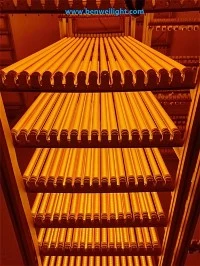
BENWEI's full-spectrum LED grow lights cover a range from 380 nm to 780 nm, which includes the red (650–670 nm), blue (440–485 nm), and purple (395–430 nm) wavelengths that are best for Unlike limited-spectrum alternatives. This comprehensive coverage eliminates the need for multiple fixtures to adjust for different growth stages. The lights' carefully calibrated red-blue-purple ratio mirrors the 3:1:1 RBP blend that proved most effective, ensuring pak choi receives the exact spectral input needed for robust growth and efficient nitrogen metabolism.
Superior Performance Metrics
BENWEI's technical specifications directly support pak choi's cultivation requirements. Their 30W full-spectrum bulbs provide a strong light output of 50 μmol/s, which is enough to help plants grow and take in nutrients without harming them with too much With a luminous efficiency of 140–160 lm/W and a color rendering index (CRI) exceeding 83 (and up to 95 for premium models), these lights ensure accurate color representation and efficient energy conversion. The 120°–180° beam angle spreads light evenly, which is important for growing pak choi plants because all the leaves need the same amount of light for even growth.
Durable, Grower-Friendly Design
BENWEI's lights are built for the rigors of controlled-environment agriculture. The T8 LED tubes feature 6063 aluminum alloy shells for superior heat dissipation. These lights maintain stable performance even during the 14–16 hour daily operation that is standard for leafy vegetable cultivation. With a 50,000-hour lifespan and IP67 waterproof rating, they withstand the high-humidity conditions of greenhouses and hydroponic systems, common in pak choi production. The dimmable feature lets growers change the brightness of the light during different stages of growth, using lower light for seedlings and brighter light for the vegetative stage, which matches pak choi's changing light requirements.
Energy Efficiency and Sustainability
BENWEI's LED grow lights offer significant energy savings compared to traditional lighting. Their 30W bulb delivers performance equivalent to a 400W incandescent light, reducing electricity consumption while producing minimal heat. This low heat output eliminates the risk of leaf burn, even when fixtures are installed 30–60 cm from plants, and reduces the need for additional cooling systems. Backed by a 5-year warranty, BENWEI's products provide long-term reliability for both small-scale hydroponics and large commercial operations.
Applications Beyond Pak Choi: Versatility for Modern Agriculture
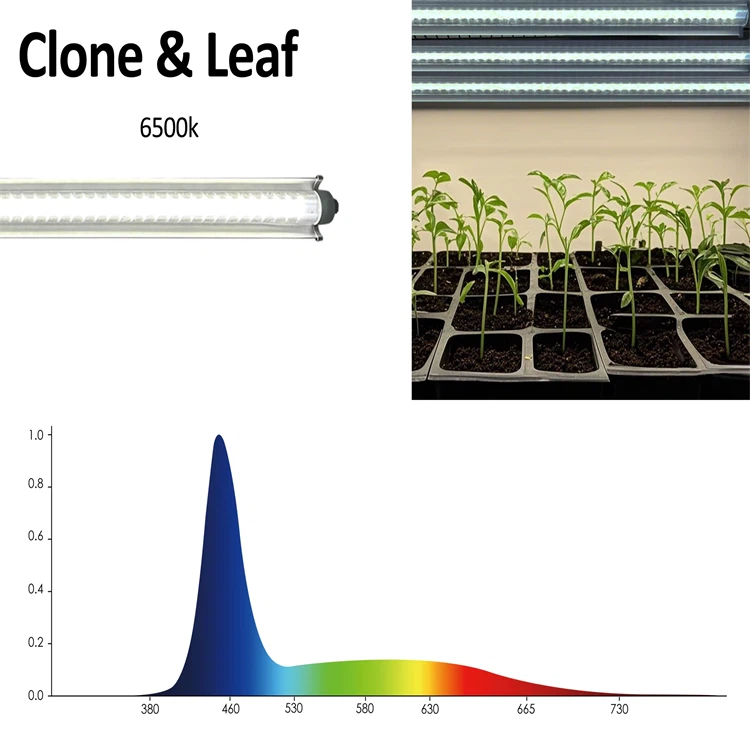
While optimized for pak choi, BENWEI's full-spectrum lights are versatile enough to support other leafy vegetables, including lettuce, spinach, and kale-crops with similar spectral requirements. Their adjustable color temperature (2700K–6500K) allows growers to fine-tune lighting for different crops: warmer temperatures (3000K) for leafy growth and cooler temperatures (6000K) for enhanced nutrient accumulation.
In hydroponic systems-where pak choi is commonly grown-BENWEI's waterproof design and uniform light distribution address key challenges of soilless cultivation, such as limited root space and the need for efficient nutrient utilization. For greenhouse growers, the lights serve as effective supplementary lighting during low-light seasons, ensuring consistent growth and quality year-round.
Conclusion
The pak choi research highlights a clear truth: successful controlled-environment agriculture depends on matching light quality to plant physiology. By focusing on the red-blue-purple spectral blend that promotes growth, nitrogen metabolism, and nutritional quality, growers can see huge increases in yield and value. BENWEI Lighting's full-spectrum LED grow lights use a scientific method that includes important light wavelengths, excellent performance, and smart design to support today's pak choi farming.
Whether for commercial greenhouses, hydroponic farms, or home gardening, BENWEI's products deliver the precision and efficiency required to unlock pak choi's full potential. As the demand for sustainable, high-quality leafy vegetables continues to grow, BENWEI Lighting stands as a trusted partner for growers seeking to bridge scientific research with real-world results.
Would you like me to develop a customized lighting schedule for pak choi cultivation using BENWEI products? This schedule will map specific light intensities and durations to each growth stage-from seedling to harvest-to maximize yield and nutritional quality.
https://www.benweilight.com/lighting-tube-bulb/greenhouse-grow-lights.html
Shenzhen Benwei Lighting Technology Co., Ltd.
Email: bwzm15@benweilighting.com
Web: www.benweilight.com
WhatsApp: 19113306783