The skills and art of LED linear lamp interior lighting design
In today's comprehensive construction of a well-off society, with the continuous improvement of living standards, people's awareness of lighting has been further enhanced. Modern electrical lighting is not only related to the principles of electricity and optics, but also related to the knowledge of architecture, physiology and hygiene, etc., which must be considered comprehensively in order to obtain satisfactory results. Modern architecture should not only pay attention to the constituent elements of indoor space, but also the aesthetic effect of lighting on the indoor environment, as well as the psychological effect resulting from it. Therefore, taking practical measures and earnestly doing a good job in building indoor lighting is an important link for people to pursue the perfect unity of artistic theme and visual comfort.
Illumination has a great impact on the indoor environment. Excessive changes in brightness can easily cause visual fatigue and even glare; however, an overly uniform brightness distribution will reduce the clarity of the sensed object and make the indoor atmosphere dull. Therefore, in atmosphere-based lighting occasions, it is necessary to change the brightness to create a pleasant atmosphere.
The visual impression of indoor lighting comes from the distribution of light and shadow in the lighting space. Different architectural compositions and diversified architectural styles will inevitably have different influences on the choice of luminous flux distribution in the lighting space. If the lighting arrangement method is consistent with the building's indoor space form, it can highlight the depth and level of the building space and deepen the feeling of the building space. For example, in the lighting design of a large conference hall, sufficient and uniform illumination should be considered, and shadows and glare should be avoided as much as possible. If the form of the building is a suspended ceiling with translucent diffuse materials, lights can be installed in the suspended ceiling to form a large-area luminous ceiling with uniform brightness, so that the lighting effect will not only simulate the environment of day and night lighting, but also form a soft diffused light. Illumination can fully express the sense of volume of the architectural space. When some tall halls are decorated with bas-relief and patterned corners, it is difficult for diffuse lighting to fully show the shape and three-dimensional effect of these decorations. At this time, you can appropriately reduce the light-emitting area of part of the ceiling and control the distribution of indoor colors to form changes in brightness and chromaticity in the field of vision; or add wall lamps, chandeliers, desk lamps and other local lighting devices to increase the level of light for rendering Indoor atmosphere.

The lighting of restaurants, cafes and other indoor spaces should take into account the impact on people's psychological factors. High brightness can make people excited and active; low brightness can make people relax and reverie. Therefore, indoor lighting brightness and its distribution should be determined by its category. The lighting of luxury restaurants and cafes should consider the illuminance to be moderate, the light should be soft and form a uniform diffusion, and the indoor lighting should be organically combined with the building structure, so that the entire space has a good lighting visual environment; for cafeterias or fast-food restaurants The lighting should be considered above the dining table with higher brightness; other parts of the lighting should be soft and concealed, so that people's attention can be focused on the dining table, to achieve the purpose of fast service and rapid circulation. If there is a light-transmitting wall panel in the restaurant, you can install a light between it and the building structure to form a light-emitting wall panel, which is a good and suitable background for the nearby vision, and can form a pleasing eye for the entire room The long-term view integrates the indoor and outdoor environments, and has the effect of expanding the indoor space.
In interior lighting design, while considering the use of functions, different artificial lighting methods, changes in lighting brightness, and distribution of light and shadow should be used to beautify the environment, enhance the atmosphere, and enhance the sense of space. The main practices and experiences are:
(1) According to different activities or work needs, the contrast should be reasonably configured to create a good visual physiological environment;
(2) Avoid glare, glare, and disparity in brightness ratio, prevent visual fatigue and bad visual psychological effects;
(3) Indoor lighting should be able to reflect the outline of the indoor structure, the spatial hierarchy, and the three-dimensional sense of indoor furniture and decorations;
(4) Use light to transmit a special decorative style, show the surface texture of fabrics or building materials, and reflect the beauty of interior decoration and interior colors.
Different light sources have different light colors, resulting in different environmental atmosphere and environmental artistic effects. Red, orange, and yellow low color temperature light sources give people a sense of enthusiasm, warmth, excitement and dynamics. In the lobby of the hotel, a large area of low color temperature light source is used for lighting, which can render a warm, comfortable, warm and friendly atmosphere, and give guests a feeling of being at home; the living room of the residence is a place where family members gather and share, using low color temperature light sources The lighting can make the living atmosphere of the living room more rich and warm. Blue, green, and purple high color temperature light sources can give people a sense of tranquility, coolness, elegance and peace, and are suitable for installation in hospital wards. In indoor spaces such as reading, writing, and office, a large area of high color temperature light source lighting can be used to create a quiet and elegant environment to improve concentration and work efficiency.
For dance halls, bars and other spaces full of excitement and ecstasy, the layout is organically combined with high and low color temperature light sources, the color brightness is dark and dark, the color is strong and dynamic, and the rotation changes and the colorful light colors are used to render a An unusually unrestrained and confusing atmosphere.
Color can make people feel far and near, low color temperature has a sense of reduction and proximity, and high color temperature has a sense of openness and far-reaching. When the indoor height is low, choosing a low color temperature light source will cause shrinkage and depression, forming an uncomfortable environment; using a high color temperature light source can form a feeling of expansion of the indoor space, thereby making up for the lack of physical space to a certain extent .
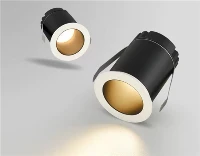
The reasonable arrangement of lamps and lanterns can make the illumination on the working surface uniform, the light is directed properly, there is no glare and shadow, the maintenance is convenient and safe, and it can be neat, beautiful, and consistent with the building. Use the change and distribution of light to create a variety of visual environments to enhance the indoor space effect and atmosphere; use a large number and simple structure of ceiling lamps or embedded point light source direct light lamps to form a complete architectural art together with the ceiling decoration of the room The pattern can produce a special style and deepen the sense of hierarchy, so that the indoor atmosphere is quiet and not noisy. When the shape of the decorative wall lamp is in harmony with the interior decoration, it not only plays the role of auxiliary lighting, so that the wall can get beautiful light, but also plays a decorative role, reflecting the spaciousness of the room. The chandelier (flower lantern, crystal lamp) can create a magnificent atmosphere.
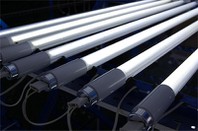
In civil buildings, such as halls, shopping malls and other places, linear lighting should be selected, and the beautiful decoration and environmental characteristics should be considered, and the light sources and lamps of various forms should be unevenly arranged. Strengthen the illuminance in some areas and highlight visual effects to create a dazzling atmosphere. In the main hall of the hotel, there are generally sofas, tables, bonsai and various handicrafts. Large chandeliers can be used to highlight the luxurious and warm atmosphere; or down-cast lamps are used to form a quiet and elegant environment; if Combining down-projection lamps with vertical lamps can make the main hall look spacious and gorgeous. The main hall with high space and large area uses large crystal lamps as the main lighting, which can reflect the gorgeous atmosphere; in low spaces, the use of down-shooting lamps as auxiliary lighting can give people an elegant and brisk feeling. Installing decorative wall lamps on a large area of the wall can play an auxiliary lighting role and also have a good decorative effect. Combining different lamps and lanterns organically can express the theme together, highlighting the elegant, gorgeous and warm atmosphere of the main hall.
It can be seen that when engaging in interior lighting design, attention should be paid to the space environmental conditions, and the color of the light source should be reasonably determined according to the functional requirements of the indoor space to obtain the best artistic effect that meets the functional requirements.
Therefore, it is necessary to select the shape and color of the lamps according to the different environments and uses of the indoor space, and arrange them reasonably. Utilizing the beautiful shape of lamps and the coordination of light and color, the indoor environment can have a certain specific atmosphere and artistic conception.
Indoor lighting art not only directly affects the indoor environment atmosphere, but also affects people's physiology and psychology. When designing indoor lighting, the shape and light distribution method of lighting fixtures should be determined according to the use function, visual effect and artistic concept of the indoor space environment. The organic combination and correct use of the three can create an atmosphere and artistic conception that is in harmony with the indoor space environment, fully embody the style of the architectural space, enhance the beauty of architectural art, and better meet people's aesthetic requirements and visual psychological functions , Fully achieve the purpose of improving the level of indoor lighting art.
Indoor lighting is a major event in people’s daily life. It should be based on the principles of electricity and lighting, for different forms of architectural space, and the economic conditions of the owner of the building. The perfect unity of output, economic benefits and visual effects.