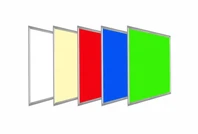
There are many kinds of eye protection lights on the Internet
There are many kinds of eye protection lights on the Internet, and each one is focusing on its own advantages. There is no blue light, high color rendering, large-area lighting, etc., but the difference seems to be small, but the price varies from tens of yuan to several thousand yuan. Wait. Many parents think that using a desk lamp is a certain advantage for protecting children's eyesight, but it is not clear what kind of lamp is better for the eyes. For a good desk lamp, light source, blue light, color temperature, brightness, and color rendering index are the goals that must be considered when buying a desk lamp. What do these goals mean? When these fingers reach what value, are they good for the eyes?

one. light source
Since the development of human beings, the eyes are most adapted to the shining of natural light. Therefore, the closer the lamp of the table lamp is to the natural light, the better. To determine whether the light source is close to natural light, the spectrum is one of the important criteria. At present, there are advanced technologies in the market such as Seoul Semiconductor’s SunLike LED light source, which is extremely similar to the solar spectrum, and actually reaches a 95% overlap. It is a full-spectrum light source close to the visible spectrum of natural light. The spectral characteristics of this full-spectrum light source have low blue light, high CRI, spectral continuity (completeness) and the characteristics of a healthy spectrum of 640-700nm. The relative proportions of red, orange, yellow, green, cyan, and blue light colors And the bandwidth (that is, the continuity of the spectrum) is very saturated (see the figure below), which simulates the sunlight at eight or nine o'clock in the morning, and emits comfortable and natural light evenly and successively.
Spectral comparison chart
two. Blue light damage
Blue light is a component of white light and cannot be completely removed. As long as excessive blue light and long-term blue light shine, it will affect the safety of the eyes. The main sources of blue light that hurt the eyes are TVs, computers, mobile phones, desk lamps, etc. Although not all blue light is harmful, but too strong blue light, or too strong ultraviolet light, these are definitely not good for human eyes.
The blue light damage that people are most concerned about is obtained by using a spectrometer to collect light and through data analysis. The blue light brightness value is 40. If it is lower than 100, it means it is classified as risk level zero, which means no risk. Our general desk lamps require RG0, which means that it cannot exceed 100.
RG0 is called non-hazardous, so RG1 is classified as a first-class hazard, but so far, in the standard, within the scope of promise, RG0 and RG1 are classified as qualified products. According to international standards, the blue light hazard safety levels of LED light source products are RG0, RG1 and RG2 from high to low. Of course, if it is the lighting used by children, the best level is RG0.
three. Light intensity
Illumination, in short, is the light is bright enough. The greater the illuminance value, the better the visual sense during reading and writing operations, and the higher the work efficiency. The uniformity of illuminance reflects the brightness and darkness of the lights. We know that people’s pupils will shorten due to the difference in light. If the light is uneven, we will keep shortening the pupils, and people’s eyes will simply get tired. The smaller the illuminance uniformity value is, the smaller the light and dark changes emitted by the lamp, and the more comfortable the human eye.
Lux is a unit of light intensity. According to the current "Hygienic Standards for Daylighting and Lighting in Primary and Secondary School Classrooms", the uniform illuminance value on the desks in the classroom should not be less than 300 lux.
The uniformity cannot be observed separately, and the illuminance must be summarized to judge, all of which have recommended standard values.
The illuminance is divided into two (levels) in the requirements of "GB/T 9473", A-level and AA-level, so now we evaluate it, it is 300 lux, it should be A-level, which is the most Bottom line. Then the AA grade will be higher than it, which is 500 lux, that is, its illuminance will be higher, and the AA grade product will be better than the A grade product.
Four. Color temperature
The so-called color temperature can be commonly understood as the temperature of the color. The higher the color temperature, the cooler the light, and the lower the color temperature, the warmer the light. The color temperature value is in K (read: Kelvin), and the relationship between super gentle light can be clearly felt from a picture.
This is why every time we walk into a cafe, we will feel like going home. Because of the low color temperature of the lights (around 2500K), the light is softer and more entangled and more relaxing. More interestingly, color temperature is also closely related to the time of day. For example, the light blue in the early morning (about 4000K) will keep people awake. Therefore, the natural light in the morning is most suitable for reading. After understanding this principle, everyone will know what color temperature to choose to illuminate the child. Yes, 4000K is the most scientific color temperature, which is neither too deserted nor too relaxing to cause drowsiness. And, according to the latest CQC1601 rules, the color temperature of the visual work desk lamp cannot exceed 4000K.