The Science of Lumen Depreciation: Understanding the Invisible Enemy
To appreciate the engineering behind this flood light, one must first understand why LEDs fail. Lumen depreciation is not a sudden failure; it is a slow degradation of the light source. Under industry standards, a fixture is typically considered at the end of its useful life when it reaches L70 (retaining 70% of initial lumens) or L80 (retaining 80%).
The Primary Culprits: Heat and Moisture
LEDs are semiconductor devices, and like all electronics, they are highly sensitive to thermal and environmental stress.
Thermal Stress: When an LED is operational, a significant portion of the electrical energy is converted into heat. If this heat cannot be efficiently extracted from the LED junction (the point where light is generated), the temperature spikes. High junction temperatures accelerate the degradation of the phosphor coating and the semiconductor material itself, causing a rapid drop in luminous efficacy and permanent color shift.
Moisture Ingress: Outdoor environments are subject to extreme temperature fluctuations between day and night, or summer and winter. When a fixture cools down, the air inside contracts, creating a vacuum that can pull in moisture through microscopic seals. Once inside, moisture condenses on the LED PCB and the driver, leading to corrosion, short circuits, and catastrophic failure.
The Financial Impact of Premature Degradation
For facility managers, lumen depreciation translates directly to increased operational expenditures (OPEX). A dimming light means either accepting a compromised level of safety and visibility or dispatching maintenance crews with heavy equipment (like cherry pickers) to replace fixtures prematurely. The cost of the replacement lamp is always the smallest expense; labor, equipment rental, and downtime are the true financial burdens.
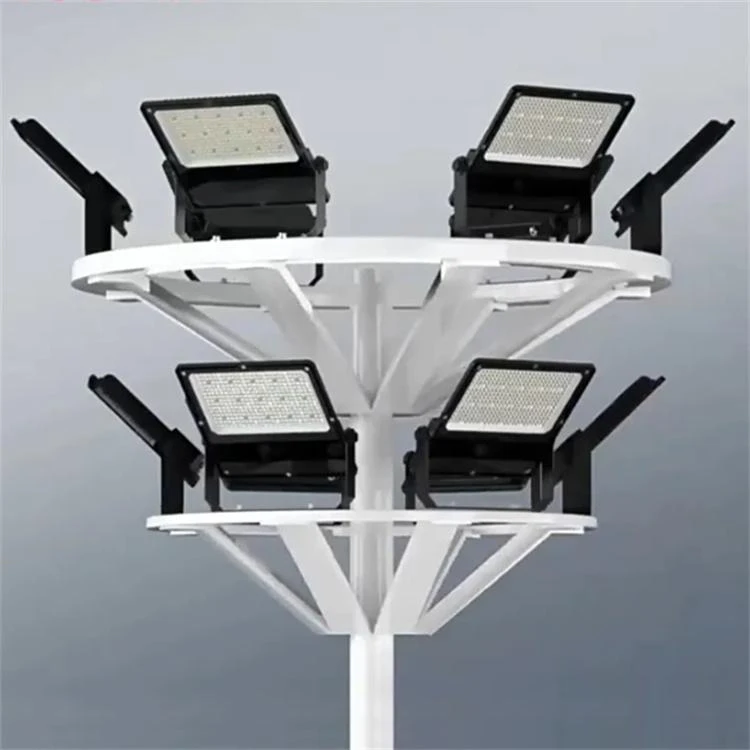
The Die-Cast Aluminum Advantage: A Masterclass in Thermal Management
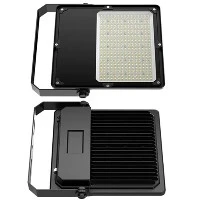
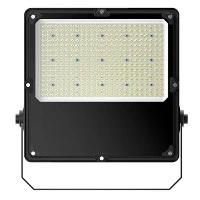
To combat thermal stress, this flood light is constructed using an ultra-robust, Die-Casting Aluminum Housing. This is not merely a structural shell; it is a highly engineered thermal regulation system.
Structural Integrity and Optimized Heat Dissipation
Unlike stamped steel or thin-walled plastics, die-cast aluminum offers exceptional thermal conductivity. The housing features a meticulously designed dense fin structure on the rear.
Maximizing Surface Area: These structural fins dramatically increase the surface area exposed to the ambient air. As the heat from the LED module transfers to the aluminum body, the fins facilitate rapid convective heat transfer, dissipating the thermal load into the atmosphere.
Reducing Junction Temperature: By keeping the LED junction temperature consistently low, the fixture prevents the thermal degradation of the 3030 SMD Light Source. This directly preserves the high efficacy output of 125-140 lm/W, ensuring that the light remains brilliantly bright from day one to year ten.
Beyond Heat: Corrosion Resistance and Structural Longevity
The die-cast aluminum housing does more than manage heat; it provides an impenetrable fortress for the internal components.
Phosphate Treatment & Powder Coating: The housing undergoes a rigorous surface treatment process, finished with a robust powder coating. This ensures exceptional resistance to UV radiation, salt spray (crucial for coastal ports), and industrial pollutants.
Wind and Impact Resistance: Built to withstand extreme weather, the heavy-duty aluminum body, combined with the Thickened Iron Brackets and Tempered Glass Cover, provides formidable IK08 impact resistance. It stands resilient against high-wind loads in high-mast applications and potential vandalism in public spaces.
The Thermal Respirator: The Breakthrough Technology Preventing Premature Failure
While the aluminum housing solves the heat equation, the integration of the Thermal Respirator solves the moisture and pressure equation. This small, ingenious component is the secret weapon that truly unlocks the 50,000-hour lifespan.
The Pressure Equalization Mechanism
As the flood light heats up during the day or night operation, the air inside the housing expands. As it cools down (e.g., during a sudden rainstorm or at dawn), the air contracts. This creates a "breathing" effect. Without a respirator, this pressure differential puts immense stress on the silicone seals and the tempered glass. Over time, this stress leads to seal failure and water ingress.
The Thermal Respirator (a breathable, waterproof membrane) allows air molecules to pass freely in and out of the housing to equalize pressure, while its micro-porous structure is too small for liquid water molecules to penetrate.
Eliminating Condensation and Moisture Ingress
By maintaining pressure equilibrium, the respirator completely prevents the vacuum effect that draws in humid air. Consequently, condensation cannot form on the Aluminum PCB or the internal lens.
Protecting the Driver: The Famous Brand Waterproof LED Driver is the heart of the fixture. By keeping the internal environment dry, the respirator prevents the corrosion of the driver's delicate circuitry, ensuring stable, flicker-free power delivery.
Maintaining Optical Clarity: No internal condensation means the UV-Proof Optical PC Lens and the Nano-Plastic Reflector remain permanently clear, preventing any light absorption or glare issues caused by water droplets.
Synergistic Defense: How These Technologies Combine to Guarantee 50,000 Hours
The 50,000-hour lifespan is not the result of a single feature, but the synergistic combination of thermal and environmental protection working in perfect harmony.
Maintaining Peak Luminous Efficacy
By eliminating the two main drivers of degradation-excessive heat and moisture-the fixture maintains its original lumen output. The 3030 SMD LEDs operate at optimal temperatures, ensuring that the phosphor does not degrade. The Anti-UV PC Lens prevents yellowing from prolonged sun exposure. As a result, at the 50,000-hour mark (which equates to approximately 5.7 years of continuous 24/7 operation, or over a decade of standard nightly use), the light output remains well above the industry-standard L70/L80 thresholds.
Protecting the Core Components
The internal architecture is designed for absolute reliability. The Waterproof Silicon Gel provides an additional layer of defense around the LED module, ensuring the electrical connections are hermetically sealed. The IP66 rating guarantees that the entire assembly is dust-tight and protected against powerful water jets from any direction.
The 360° Rotating Bracket for Precision
Furthermore, the 50,000 hours of life are fully utilized thanks to the Rotating Bracket. Constructed from thickened iron with a robust locking mechanism, it allows installers to precisely angle the fixture (e.g., 60° or 90° beam angles) without tools. This ensures that the high-efficacy light is aimed exactly where it is needed, maximizing the effectiveness of every single lumen produced over its lifetime.
Maximizing ROI: The Commercial Case for Premium Engineering
For B2B buyers, architects, and facility managers, the 50,000-hour lifespan is a powerful financial metric.
Zero Maintenance and Reduced Labor Costs
Traditional flood lights often require bulb replacements every 1-2 years. With a 50,000-hour lifespan, this fixture operates on a "install and forget" basis. For high-mast lighting (as seen in ports, stadiums, and highway interchanges), this eliminates the need for expensive crane or boom lift rentals, drastically reducing maintenance labor costs.
Energy Savings and Sustainability
Combined with the high luminous efficacy of the 3030 SMD chips, the fixture consumes significantly less power than legacy HID or halogen systems. With lower wattage (available from 20W up to 200W) delivering higher brightness, the return on investment (ROI) is realized within the first two years of operation through energy savings alone. Furthermore, reducing the frequency of fixture replacements significantly lowers the carbon footprint associated with manufacturing, shipping, and disposing of lighting equipment-perfectly aligning with corporate ESG (Environmental, Social, and Governance) goals.
Conclusion: Invest in Illumination That Outlasts the Decade
The true cost of a lighting fixture is not its purchase price, but its total cost of ownership. By meticulously engineering a Die-Casting Aluminum Housing to dissipate heat and integrating a Thermal Respirator to equalize pressure and eliminate moisture, this 20W-200W LED Flood Light sets a new standard for durability.
It is more than just a light; it is a highly resilient, precision-engineered asset designed to deliver uncompromising performance in the harshest environments. Protect your investment, eliminate maintenance headaches, and illuminate your projects with unwavering confidence.
Ready to upgrade your high-mast or industrial lighting system? Contact our engineering team today for a customized quote and discover how our 50,000-hour LED Flood Lights can transform your next project's bottom line.
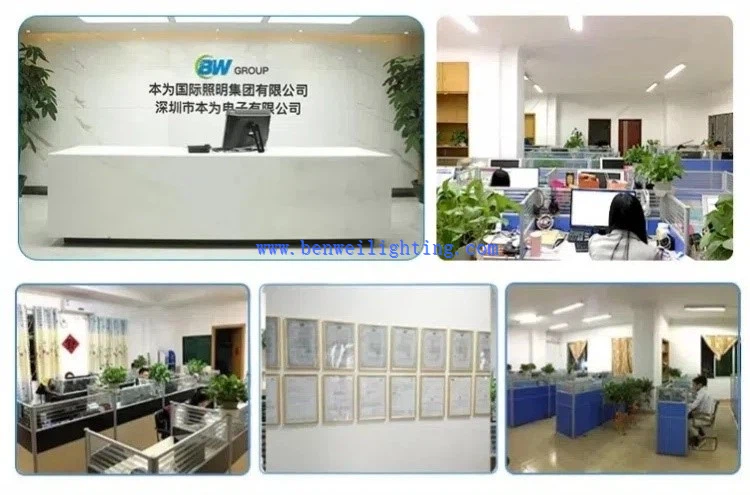
How To Cooperate With Us?
We are happy to have total control over the manufacturing process and the calibre of our products since we have our own facilities. Since we are producers rather than just brokers, we are dedicated to providing our customers with the best pricing. Since we are certain that the price and quality of our products are clear, we invite customers to see our samples first. Our commitment to quality and customer satisfaction drives us to continuously provide top-notch goods.
Our address
3rd Floor, 5th Building, Hebei Industrial Park, Hualian Community, Longhua District, Shenzhen, China