Innovative solutions like LED panel lights, which are extensively utilised in commercial, industrial, and residential settings, have been made possible by the advancement of LED lighting. The market is dominated by two types of LED panels: back-lit and edge-lit. Although both provide contemporary aesthetics and energy economy, there are notable differences in their uses, performance, and design. This essay thoroughly examines these variations to assist you in selecting the best choice for your requirements.
What Are Lights from LED Panels?
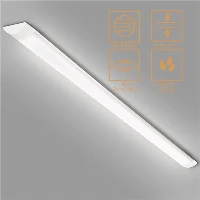
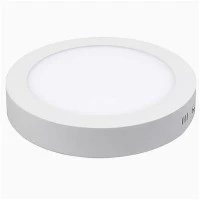
Traditional fluorescent ceiling lights are to be replaced by thin, flat LED panel lights. They make use of light-emitting diodes (LEDs) to produce consistent, glare-free illumination. Their longevity, adaptability to contemporary architectural styles, and energy efficiency are the main reasons for their appeal. The distribution of light within the fixture is the primary distinction between edge-lit and back-lit panels.
Design and Operation of Edge-Lit LED Panel Lights
LEDs placed around the fixture's edges (perimeter) make up edge-lit LED panels. These LEDs shine light sideways onto a clear sheet of PMMA or acrylic with micro-optical patterns called a light guide plate (LGP). To remove hotspots, diffuser layers soften the light after the LGP disperses it uniformly over the screen. Minimal light loss is ensured via a reflective backsheet.
Important characteristics of edge-lit panels
Ultra-Thin Profile: They are perfect for areas where aesthetics are important because they are typically 8 to 15 mm thick.
Lightweight: Simple to mount in recessed or suspended ceilings.
Energy Efficiency: Lowers power usage by using fewer LEDs (40–60 per panel).
How It Operates: Light enters the LGP via the edge-mounted LEDs. While diffusers guarantee consistent brightness, the LGP's micro-dots or etched patterns reroute light forward.
Design and Operation of Back-Lit LED Panel Lights
LEDs are uniformly spaced over the rear surface of back-lit LED panels. There is no need for a light guide plate because light is emitted directly through a diffuser. In order to control the heat output from the dense LED arrays, these panels frequently use aluminium heat sinks.
Important characteristics of back-lit panels
High Brightness: Higher lumen output is achieved by minimising losses through direct light emission.
Sturdy Construction: Integrated heat sinks for longevity and a thicker profile (20–40 mm).
An even dispersion of light devoid of edge-to-center gradients is known as uniform illumination.
How It Operates: Light is directly emitted by LEDs on the rear panel via a diffuser layer. Consistent brightness is ensured by the dense array of LEDs (200–300 per panel).
Important Distinctions Between Back-Lit and Edge-Lit Panels
1. Uniformity and Distribution of Light
Because edge-lit panels use light guide plates to disperse light, there may be small variations in brightness close to the edges. Hotspots or black areas may be visible on panels of lower quality. However, because the LEDs are dispersed over the surface, back-lit panels eliminate edge-to-center inconsistencies and offer perfect uniformity.
2. Visual Appeal and Thickness
Because edge-lit panels are so much smaller (8–15 mm), they blend in perfectly with contemporary, minimalist home design. Because of the LED arrays and heat sinks, back-lit panels are thicker (20–40 mm), which may be seen in spaces with low ceilings.
3. Brightness and Lumen Output The modest brightness of edge-lit panels (3,000–4,500 lumens for a 600x600mm screen) is caused by some light loss during transmission via the LGP. Direct light emission from back-lit panels produces a greater output (4,500–6,000+ lumens), which makes them perfect for high-illumination areas or work lighting.
4. Efficiency in Energy Use
Because there are fewer LEDs in edge-lit panels, they use less electricity. Although back-lit panels consume more energy and LEDs, they make up for it with better brightness and performance in demanding environments.
5. Heat Management Because edge-lit panels have fewer LEDs, they produce less heat, which eliminates the need for bulky heat sinks. To avoid overheating and prolong the life of LEDs, back-lit panels need strong heat dissipation systems (such as aluminium heat sinks).
6. Durability and Lifespan If the LGP yellows or is damaged over time, edge-lit panels may deteriorate and have a shorter lifespan (30,000–40,000 hours). Back-lit panels often survive more than 50,000 hours because of their stronger construction and improved heat management.
7. Cost Because edge-lit panels have fewer parts and simpler designs, they are typically less expensive up front. In the long term, the higher initial cost of back-lit panels is justified by their superior performance and lifespan.
Where Every Type Succeeds
LED Panels with Edge Lighting
Offices and Commercial Spaces: They fit in perfectly with contemporary office ceilings thanks to their slender form.
Residential Spaces: Ideal for living rooms, hallways, and kitchens when understated illumination is desired.
Low Ceiling Environments: In areas with limited height, minimal protrusion prevents a claustrophobic feeling.
LED Panels with Backlighting
Healthcare Facilities: Bright, shadow-free lighting is beneficial in labs and hospitals.
Retail Stores: Products are correctly shown in stores with high CRI (Colour Rendering Index) choices.
Industrial Settings: Sturdy structure can tolerate severe environments and vibrations.
Summary of Benefits and Drawbacks
Panels with Edge Lighting
Advantages: Compact, light, economical, and energy-efficient.
Cons: Shorter lifetime, possible uniformity problems, moderate brightness.
Panels for Backlighting
Pros: Longer lifespan, perfect uniformity, high brightness, and durability.
Cons: More power consumption, a bulkier design, and a greater initial cost.
Hybrid Solutions and Innovations
In order to overcome constraints, manufacturers are combining technologies:
Dual-Side Edge-Lit Panels: Two edges with LEDs increase homogeneity.
For improved thermal control, hybrid heat management combines heat sinks with LGPs.
Smart Features: IoT connectivity, colour adjustment, and dimming are now included into both varieties.
Selecting the Appropriate Panel
Take into account these elements:
Space Requirements: For designs that prioritise aesthetics or low ceilings, utilise edge-lit panels.
Brightness Requirements: Task-heavy settings, such as hospitals, are best suited for backlit displays.
Budget Restrictions: For projects with a tight budget, edge-lit panels are perfect.
Longevity: For long-term installations, back-lit panels provide a higher return on investment.
LED panels with edge and back lighting serve several purposes. While back-lit panels are superior in terms of brightness and longevity, edge-lit panels are superior in terms of appearance and energy efficiency. Users may maximise lighting options for cost, usefulness, and aesthetic appeal by being aware of their variances. Both varieties will keep developing as technology progresses, providing even more effectiveness and adaptability for today's lighting problems.