What Color Is Light In The 450–470nm Range? Why Is It The Core Of White LED? How Does It Affect Vision & Applications?
Light in the 450–470 nm band appears as pure, bright royal blue-the most widely used blue wavelength in modern LED lighting, displays, and optoelectronics.
This band is not just any blue; it is the foundation of all mainstream white LEDs. Below we explain its color characteristics, working principles, real‑world effects, common misunderstandings, and practical guidance for lighting and health.
What Does 450–470 nm Light Look Like?
Wavelength: 450–470 nm
Visual color: deep blue / royal blue
Peak position: Most white LED chips peak near 450–460 nm
Chroma features: high saturation, clear blue tone, minimal purple or green tint
Matching fluorescence: efficiently excites yellow phosphors to produce stable white light
This blue is visually distinct from shorter‑wave violet‑blue (≈400–440 nm) and longer cyan‑blue (≈480–500 nm).

Why Is 450–470 nm Blue The Core Of White LED?
1. The Principle Of White LED
Today's white LEDs almost all use the blue‑chip + yellow‑phosphor scheme:
GaN‑based LED chip emits 450–470 nm blue light.
Part of the blue excites yellow phosphor to emit broad‑spectrum yellow light.
Blue + yellow mix becomes white light whose warmth depends on the ratio.
Without this specific blue band, efficient, high‑brightness white LEDs would not exist.
2. Why This Band Rather Than Others?
High electro‑optical efficiency: best wall‑plug efficiency among blue LEDs
Stable excitation: matches commercial yellow phosphors perfectly
Moderate energy: less photobiological risk than shorter blue waves
Mature manufacturing: consistent mass production, low cost
How Does 450–470 nm Blue Light Work In Vision & Biology?
Insect Vision
Many flying insects (mosquitoes, moths, flies) are highly sensitive to near‑UV and blue‑violet (≈300–420 nm).450–470 nm blue is still more attractive to insects than warm yellow/orange light, which is why bug zappers use UV/blue‑violet and why yellow "bug lights" reduce insect attraction.
Human Vision & Circadian Rhythm
This band strongly suppresses melatonin and boosts alertness.
Used appropriately in daytime lighting; excessive evening exposure disrupts sleep.
Unlike high‑energy 400–450 nm blue, 450–470 nm poses low photobiological risk in regular lighting products.
Common Misunderstandings About 450–470 nm Blue Light
Myth 1: "All blue light damages eyes"
Fact:
Harmful blue mainly refers to high‑energy short‑wave blue ≈400–450 nm.
450–470 nm in qualified lamps (0‑class / 1‑class per GB/T 20145) is safe for daily use.
Retinal risk depends on spectral power distribution, duration, and distance, not just wavelength.
Myth 2: "Anti‑blue lights remove all blue"
Fact:Eliminating 450–470 nm blue ruins color rendering and brightness.Good anti‑blue products moderately reduce the short‑wave blue peak while keeping 450–470 nm for natural white light.
Myth 3: "Blue light = mosquito attractant"
Fact:Insects prefer near‑UV and 400–420 nm more. 450–470 nm is less attractive but still more noticeable to insects than 570–590 nm yellow.
Practical Applications Of 450–470 nm LED
1. General Lighting
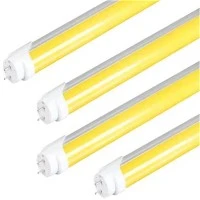
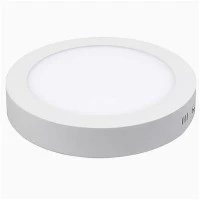
T8 tubes, panel lights, downlights, bulbs
CCT: 2700K–6500K
Basis for high CRI (>80, >90) lighting
2. Display & Backlight
LCD/LED TV, notebook, monitor backlight
Provides high brightness, wide color gamut
3. Flashlights & Identification Tools
455 nm flashlights for fluorescence detection, anti‑counterfeit, currency verification.
4. Medical & Beauty
450–470 nm band used in jaundice phototherapy, acne light therapy.
5. Plant Lighting
Important for chlorophyll absorption, photosynthesis, and morphogenesis.
Typical 450–470 nm Blue LED Module Parameters
| Item | Specification |
| Peak Wavelength | 450–470 nm |
| Forward Voltage | 2.8–3.6 V |
| Color Temperature | N/A (blue); white derived: 3000–6500 K |
| Luminous Efficiency | 100–160 lm/W (white package) |
| Material | InGaN/GaN chip |
| Viewing Angle | 120°/140° |
| Lifespan | 50,000 hrs |
| Warranty | 3–5 years |
Bottom Line & Practical Advice
450–470 nm blue light is the "heart" of white LED:
It enables efficient, high‑quality white light.
In normal qualified products, it is safe for daily use.
It is not strongly harmful but should be moderate at night to protect sleep.
What To Do
Choose certified 0‑class / 1‑class LED lamps for home/office.
Use warm white <4000K in bedrooms at night.
Reduce screen time before sleep; use night mode if needed.
For insect reduction: use 570–590 nm yellow lamps instead of trying to "block blue."