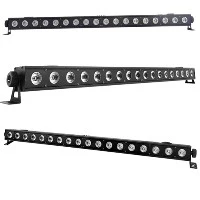
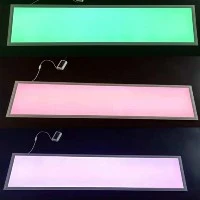
Introduction: The Electrical Realities of Global Touring
The Illusion of the "Plug and Play" Tour
In the modern live event industry, the visual spectacle of a concert or festival is powered by an increasingly complex array of LED technology. For the audience, the transition from a venue in New York to a stadium in London or a festival in Tokyo appears seamless. For the technical crew, however, every border crossing introduces a new set of infrastructural variables. The most fundamental and often overlooked of these variables is the electrical grid itself.
Touring lighting gear is subjected to a staggering variety of power conditions. It is expected to function flawlessly when plugged into a modern, clean power grid in a European arena, and to perform equally well when connected to a diesel generator at an outdoor festival site experiencing voltage sags and spikes. The assumption that the local power supply will perfectly match the fixture's requirement is a dangerous fallacy in the touring world. It is within this unpredictable environment that the wide voltage power supply emerges not merely as a convenience, but as an absolute operational necessity.
The Anatomy of Power Grid Inconsistency
To understand the value of wide voltage technology, one must appreciate the inherent instability of the global power grid. Mains voltage is rarely a constant. In the United States, the nominal voltage is 120V, while much of Europe and Asia operates on 220V-240V. However, these are nominal figures. In reality, voltages fluctuate continuously due to load variations, the distance from the local transformer, and the quality of the venue's wiring.
During the peak of a live show, when massive audio arrays and lighting rigs draw heavy current, voltage drops can occur. Conversely, when large loads are suddenly disconnected, voltage spikes can ripple through the system. Touring gear that is only designed to accept a narrow voltage range (e.g., strictly 120V) will suffer immediate and potentially catastrophic failure when subjected to these fluctuations. A wide voltage power supply is engineered to absorb these variations, providing a stable, regulated current to the LED drivers regardless of the chaos occurring at the wall socket.
The Thesis: Wide Voltage as a Strategic Investment
This paper posits that the specification of a high-power supply with wide voltage input and stable current output is the foundational pillar of a reliable touring LED bar. It is not enough for a fixture to possess a robust cast aluminum case and a high-transmittance acrylic lens; if the internal electronics cannot handle the electrical realities of the road, the entire investment is at risk. By examining the technical mechanics, operational benefits, and economic implications of wide voltage technology, this paper will demonstrate why it is the defining feature of professional-grade touring equipment.

Technical Principles of Wide Voltage Power Supplies
Defining Wide Voltage Input
A wide voltage power supply, often referred to as a universal input power supply, is designed to operate across a broad spectrum of AC mains voltages, typically ranging from 90V to 260V, without the need for manual voltage selection switches or external step-up/step-down transformers. The inclusion of "wide voltage input" in the specification of high-power LED lighting gear is a direct indicator of sophisticated engineering.
For touring professionals, this means that a single fixture can be deployed anywhere in the world. It can be plugged into a 110V circuit in a North American convention center, and moments later, connected to a 240V distro in a European festival tent, functioning perfectly without adjustment. This universality simplifies inventory management and eliminates the risk of catastrophic failure caused by accidental mis-plugging.
The Mechanics of Switch-Mode Power Supplies (SMPS)
The technology enabling wide voltage operation is the Switch-Mode Power Supply (SMPS). Unlike linear power supplies, which dissipate excess voltage as heat, an SMPS rapidly switches the input AC current on and off, converting it to a high-frequency signal. This signal is then rectified and filtered to produce the precise DC voltage required by the LED drivers.
The SMPS in a professional LED bar is engineered with sophisticated feedback loops and active Power Factor Correction (PFC). Active PFC ensures that the current drawn by the fixture is in phase with the voltage, maximizing efficiency and minimizing the strain on the venue's electrical infrastructure. The result is a "stable current output" that guarantees the LEDs receive consistent power, which is essential for maintaining precise color mixing and flicker-free dimming, even when the input voltage is fluctuating significantly.
Thermal Correlation: Why Power Stability Requires Advanced Cooling
It is a fundamental law of electronics that inefficiency generates heat. While high-quality SMPS units are highly efficient, the conversion process still produces thermal energy. In a touring environment, where fixtures are often operated at maximum output for hours, this heat must be dissipated effectively to prevent the power supply from entering thermal shutdown or failing prematurely.
The engineering of the power supply must therefore be intrinsically linked to the thermal design of the fixture. The "high-power supply" is housed within a cast aluminum case made of a three-layer material. This advanced heat-resistant layer and the robust aluminum construction act as a massive heat sink. Simultaneously, the built-in high-speed cooling fans actively evacuate hot air from the internal cavity. Without this comprehensive cooling system, the stability of the wide voltage power supply would be compromised, leading to lumen depreciation and driver failure.
The Operational Advantages in Touring Environments
Global Compatibility and Inventory Optimization
Eliminating the Need for Transformers
Historically, touring internationally required the use of heavy, bulky step-up or step-down transformers to adapt equipment to local voltages. These transformers add significant weight to the truck pack, consume valuable space, and introduce an additional point of failure into the electrical chain. Wide voltage LED bars render these transformers obsolete. They plug directly into the local power source, streamlining the rigging process and reducing freight costs.
Seamless International Deployment
For rental houses and touring production companies, a unified inventory of wide voltage fixtures means that gear can be moved between global branches without modification. A fixture rented in Los Angeles can be shipped to a tour in Berlin, knowing full well that it will perform identically. This versatility drastically improves the utilization rate of the equipment and simplifies the logistics of multi-national tours.
Resilience Against Volatile Power Grids
Generator Power and Brownouts
Outdoor festivals and temporary venues often rely on diesel generators for power. Generator power is notoriously "dirty," characterized by frequency variations, voltage sags (brownouts) when large loads kick in, and voltage spikes when loads are disconnected. A wide voltage power supply is designed to ride through these sags and spikes.
If a generator experiences a sudden voltage drop from 120V to 95V, a narrow-input fixture will likely shut down or fail completely. A wide voltage fixture, however, will automatically adjust its internal switching to maintain the required output to the LEDs. This resilience ensures that the show continues without a visible glitch, protecting both the visual integrity of the performance and the reputation of the production.
Preventing Catastrophic Failure
Voltage spikes can be devastating. A sudden surge of 300V into a fixture rated only for 120V will fry the internal components instantly. Wide voltage power supplies often incorporate advanced surge protection and overvoltage cutoffs. They are built to withstand the harsh electrical realities of unpredictable environments, acting as a shield for the delicate LED arrays and control circuitry within.
Flicker-Free Performance for Broadcast and Photography
In corporate events, televised concerts, and live-streamed festivals, the interaction between lighting and cameras is a critical consideration. Flicker occurs when the frequency of the AC power supply conflicts with the shutter speed or frame rate of the camera. This results in unsightly rolling bands or strobing on the video feed.
A high-power supply with wide voltage input and a stable current output is essential for flicker-free operation. The advanced electronics smooth out the ripples in the AC power, providing a continuous, uninterrupted flow of DC current to the LEDs. This ensures that the light output remains constant, delivering a clean, professional image for broadcasters and content creators, regardless of the quality of the venue's power.
Integrating Electrical Stability with Structural and Optical Excellence
The Cast Aluminum Three-Layer Housing: The Armor of the Power Supply
The "Cast aluminum case made of three-layer material" is not merely an aesthetic choice; it is the protective armor for the sensitive wide voltage power supply. The outer PVC layer provides wear-resistant and scratch-resistant properties, protecting the fixture from the inevitable bumps and scrapes of loading in and out.
More importantly, the imported alloy oxide layer offers effective anti-aging and oxidation resistance. Touring environments expose equipment to fluctuating humidity, dust, and temperature extremes. This layer prevents the housing from degrading, ensuring the structural integrity that holds the power supply securely in place. The advanced heat-resistant layer works in tandem with the cooling fans to ensure the power supply operates within its optimal temperature range, maximizing its lifespan.
Active Cooling and Power Longevity
The inclusion of a built-in high-speed cooling fan is vital for touring gear. The fan effectively relieves high temperatures, ensuring that the equipment works stably for a long time. In a touring context, "a long time" means enduring a three-hour show at full output, night after night, for months on end. The cooling system prevents the wide voltage power supply from thermally throttling, ensuring that the fixture's color output and intensity remain consistent from the first song to the encore.
Acrylic Optics: Preserving the Power Budget
The optical efficiency of the fixture directly impacts the electrical load. The utilization of an acrylic lens with transmittance above 92% means that more of the light generated by the LEDs reaches the stage. "Soft light and clear vision" are achieved without needing to drive the LEDs at maximum, power-hungry levels.
By optimizing the optical path, the power supply is not unnecessarily strained. The energy saving and low consumption characteristics of the fixture allow more units to be daisy-chained on a single circuit, reducing the need for complex distro setups and maximizing the efficiency of the venue's power grid. This is a significant advantage when power availability is a limiting factor in the rig design.
Economic and Strategic Implications for Professionals
Total Cost of Ownership (TCO) Reduction
For rental companies and large venues, the total cost of ownership is the ultimate metric. A cheaper fixture that lacks a wide voltage power supply may seem like a bargain initially, but the hidden costs quickly accumulate. These include the cost of replacing blown fixtures after a voltage spike, the labor cost of troubleshooting power issues on site, and the lost revenue from equipment being in repair.
The high-power supply with wide voltage input significantly reduces these risks. It minimizes downtime, reduces the need for a large inventory of spare parts, and ensures that the investment continues to generate revenue over a longer lifespan. The reliable performance in diverse environments translates directly to a healthier bottom line.
Reduced Maintenance and Downtime
Touring schedules are relentless. There is rarely time for complex repairs between shows. The robust engineering of the wide voltage power supply, protected by the cast aluminum housing and cooled by high-speed fans, results in a fixture that requires minimal maintenance. The stable current output prevents premature LED degradation, ensuring that the color calibration remains accurate over time. This reliability is crucial for maintaining the visual integrity of a show and reducing the stress on technical crews.
Asset Longevity and Resale Value
Professional touring gear is a capital asset. A fixture built with superior components-a three-layer cast aluminum case, acrylic lenses, and a high-power wide voltage supply-retains its value far better than consumer-grade equipment. The proven durability of the design instills confidence in buyers, ensuring a strong secondary market for the equipment when it is eventually retired from the primary inventory.
Conclusion: The Strategic Imperative of Wide Voltage Technology
The touring lighting industry is an unforgiving testing ground where only the most robust equipment survives. While the visual appeal of a linear LED bar-its ability to wash walls with vibrant color or create dynamic pixel-mapped effects-is what initially attracts designers, it is the internal engineering that guarantees its success.
The wide voltage power supply is the unsung hero of the touring rig. It is the technological bridge that allows a single fixture to perform flawlessly across diverse global power grids, to withstand the volatility of generator power, and to deliver the stable, flicker-free light required for modern broadcast and live performance. When this electrical stability is housed within a wear-resistant, three-layer cast aluminum case and paired with high-transmittance acrylic optics, the result is a fixture that is greater than the sum of its parts.
For the discerning touring professional, the specification of a wide voltage power supply is not a technical footnote; it is the foundational requirement for reliability. It is an investment in peace of mind, knowing that the show will go on, regardless of what the local power grid throws at it. By choosing LED bars that prioritize this technology, production companies and venues ensure that their equipment is prepared for the global stage, delivering flawless performance and exceptional return on investment for years to come.
How To Cooperate With Us?
Our firm prides itself on owning its own factory, guaranteeing complete control over the production process and the quality of our goods. We are not only agents; we are manufacturers committed to offering our clients the most competitive rates available. We invite consumers to evaluate our samples first, as we are assured that the quality and pricing of our items are self-evident. Our dedication to excellence and client satisfaction compels us to consistently perform at our best and provide superior quality products.
Our address
3rd Floor, 5th Building, Hebei Industrial Park, Hualian Community, Longhua District, Shenzhen, China