What Is a Track Light Used For? Exploring Its Versatile Applications Across Spaces
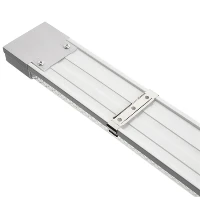
At its core, a track light is a modular lighting system consisting of a linear track (mounted on ceilings, walls, or even floors) and adjustable fixtures ("track heads") that slide along the track and pivot to direct light. Unlike fixed ceiling fixtures or recessed lighting, its defining advantage lies in flexibility – the ability to reposition, angle, and add/remove fixtures without rewiring. This adaptability has made it a staple in diverse settings, from high-end retail stores to cosy homes and from art galleries to industrial warehouses. To understand its true utility, we must examine how it solves specific lighting needs across commercial, residential, and specialised environments.
I. Commercial Applications: Driving Functionality and Sales
Commercial spaces rely on lighting to guide customers, highlight products, and shape brand perception – and track lighting excels at all three. Its adjustability makes it ideal for dynamic environments where layouts or displays change frequently, and its precision ensures that critical details are showcased.
1. Retail Spaces: Enhancing Merchandise Appeal
Retail is where track lighting proves its most transformative value. For brick-and-mortar stores, lighting directly impacts customer behaviour: a 2023 study by the Lighting Research Center found that targeted illumination can increase product visibility by 40% and boost impulse purchases by 15%. Track lighting delivers these benefits by:
Highlighting product details: In fashion boutiques, track heads with narrow beam angles (15–25 degrees) focus light on fabric textures, stitching, or jewellery facets, making items appear more luxurious. For example, high-end watch retailers often use dimmable LED track lights with 95+ CRI (Colour Rendering Index) to accurately render metal tones and gemstone colours.
Adapting to display changes: Department stores and fast-fashion outlets rearrange shelves weekly; track lighting eliminates the need for new wiring by letting staff slide fixtures to align with new product zones. A single 10-foot track can serve as both task lighting for a shoe display one month and ambient lighting for an accessories section the next.
Creating visual hierarchy: In grocery stores, track lights distinguish premium sections (e.g., organic produce) from standard aisles. Warm-white track heads (2700K–3000K) on fresh bakery items trigger appetites, while cool-white lights (4000K) on dairy products emphasise freshness.
2. Hospitality: Crafting Atmosphere and Experience
Hotels, restaurants, and cafes use track lighting to balance ambiance with functionality, creating spaces that feel inviting yet practical.
Restaurants and bars: Track lights with honeycomb grids (to reduce glare) are positioned above dining tables, casting focused light on plates without dazzling guests. In industrial-chic cafes, exposed-bulb track heads complement raw brick walls, while in fine-dining establishments, recessed track systems with subtle gold fixtures add elegance without cluttering the ceiling.
Hotel lobbies and lounges: Large-scale track systems with adjustable flood and spot fixtures layer light: wide-beam heads illuminate seating areas, while narrow-beam heads highlight artworks or architectural features like fireplaces. Luxury hotels like the Ritz-Carlton often integrate smart track lighting that shifts colour temperature from cool morning light to warm evening glow.
Event venues: Wedding halls and conference centres use portable track lighting (mounted on stands) to adapt to events – spotlighting a stage for speeches, then widening beams for cocktail hours. This eliminates the need for multiple fixed lighting setups.
3. Exhibition and Gallery Spaces: Honoring Art and History
Galleries and museums demand lighting that preserves artefacts while revealing their beauty – a balance track lighting achieves with unmatched precision. Curators prefer it for:
Controlled illumination: UV-free LED track lights prevent fading of paintings or textiles, while dimmable controls allow staff to adjust brightness based on the medium (e.g., 50 lux for watercolours and 100 lux for oil paintings).
Focused framing: Track heads angled at 30 degrees to the wall eliminate glare on glass-framed art, ensuring viewers see details without reflections. In the Louvre's Egyptian exhibit, track lighting highlights hieroglyphs on stone tablets without washing out delicate carvings.
Temporary exhibit flexibility: Pop-up galleries or travelling exhibits use modular track systems that can be assembled in just days. For example, the 2024 "Van Gogh Alive" immersive exhibit relied on 200+ track heads to project light onto canvases, adjusting angles to create dynamic visual effects.
II. Residential Applications: Balancing Style and Practicality
In homes, track lighting has evolved beyond its "industrial" stereotype to become a versatile solution for kitchens, living rooms, and even bedrooms. Its appeal lies in solving common residential lighting challenges: eliminating dark corners, highlighting decor, and adapting to changing family needs.
1. Kitchens: The Ultimate Task Lighting Solution
Kitchens are workhorses of the home, requiring lighting that targets countertops, stovetops, and sinks – areas often missed by overhead pendants. Track lighting excels here by:
Zoned illumination: A track above the countertop uses task-focused track heads (300–500 lumens) to light cutting boards and cooktops, while a parallel track above the island uses softer, wider-beam heads for ambient light. This "layered" approach reduces eye strain during meal prep.
Compatibility with cabinetry: For kitchens with limited under-cabinet space, ceiling-mounted track lights angle downward to light countertops, avoiding the need for bulky under-cabinet fixtures. In small kitchens, slim-profile track systems (less than 1 inch thick) save space while delivering bright, even light.
Durability: Wet-rated track heads (IP44 or higher) are safe for use near sinks or dishwashers, resisting moisture and grease buildup – critical for long-term kitchen use.
2. Living Rooms and Dining Areas: Accentuating Style
Living spaces benefit from track lighting's ability to highlight decor while providing flexible ambient light:
Accentuating architecture: Track heads directed at exposed beams, built-in bookshelves, or fireplace mantels add depth to rooms, making them feel larger. In open-concept homes, track lighting can even "define" spaces – e.g., a row of track heads above the dining table separates it from the living area without walls.
Supporting hobbies: For reading nooks, adjustable track heads with warm light (2700K) and narrow beams focus on armchairs, while in home offices integrated into living rooms, cool-white track heads (4000K) illuminate desks without disrupting the room's aesthetic.
Complementing decor styles: Modern homes use sleek, black aluminium track systems with minimalist fixtures, while farmhouse kitchens pair wood-accented tracks with Edison-style bulbs. Eclectic spaces mix fixture styles-e.g., a track with both globe and spot heads-to match diverse furniture pieces.
3. Bedrooms and Home Theaters: Creating Customizable Moods
Track lighting's dimming and angling capabilities make it ideal for bedrooms, where lighting needs shift from morning routines to evening relaxation.
Gentle wake-up light: Smart track systems (integrated with Alexa or Google Home) can be programmed to brighten gradually at sunrise, replacing harsh alarm clocks. Adjustable heads angle away from beds to avoid glare while dressing.
Home theatre ambiance: Recessed track lighting along the ceiling perimeter provides "bias lighting" that reduces eye strain during movie nights. Dimmable to 10% brightness, it preserves screen contrast while preventing total darkness.
Small-space efficiency: In studio apartments, a single track can serve multiple functions – lighting the bed, desk, and seating area – eliminating the need for multiple fixtures.
III. Specialized Applications: Solving Unique Lighting Challenges
Track lighting is also used in industrial, healthcare, and educational settings, where precision, durability, or adaptability is essential.
1. Industrial and Warehouse Spaces
Factories and warehouses require lighting that is bright, durable, and easy to maintain – and track lighting delivers.
High-lumen performance: Industrial-grade track heads (1000+ lumens) with wide beam angles illuminate large areas, reducing shadows on assembly lines. LED versions last 50,000+ hours, minimising downtime for bulb replacements.
Safety compliance: Explosion-proof track heads (rated for Class 1, Division 1 environments) are used in chemical warehouses or oil refineries, resisting sparks and moisture.
Adaptable to equipment: As warehouses add new shelving or machinery, track fixtures can be repositioned to light dark corners, avoiding the cost of installing new fixed lighting.
2. Healthcare Facilities
Hospitals and clinics use track lighting to balance patient comfort with clinical precision:
Examination rooms: Track heads with 90+ CRI accurately render skin tones and wound colours, aiding diagnosis. Dimmable controls let doctors adjust brightness without dazzling patients.
Patient rooms: Track lighting avoids the "institutional" feel of fluorescent lights. Adjustable heads angle away from beds to let patients read, while soft ambient light promotes rest.
Cleanliness: Sealed, dust-proof track fixtures are easy to sanitise and comply with hospital infection control standards (e.g., CDC guidelines for surface cleanliness).
3. Educational Institutions
Schools and universities use track lighting to support diverse learning activities:
Classrooms: Track systems with both task and ambient heads adapt to lectures (bright, even light) and group work (focused light on tables). Smart versions work with occupancy sensors to turn off when rooms are empty, which saves energy.
Art Studios: Art departments rely on track lighting with adjustable colour temperature (2700K–6500K) to mimic natural light, helping students match paint colours accurately. High-CRI heads reveal subtle differences in texture for sculpture or textile projects.
Libraries: Track heads directed at bookshelves eliminate dark corners, while dimmable ambient light creates a quiet, focused atmosphere. Modular tracks let libraries reconfigure lighting as shelves are rearranged.
IV. Why Track Lighting Outperforms Alternatives
To fully grasp its utility, it's helpful to compare track lighting to other common lighting solutions:
Vs. Recessed Lighting: Recessed lights are fixed, so they can't adapt to layout changes. Track lighting's portability improves it for dynamic spaces (e.g., retail, home offices).
Vs. Pendant Lights: Pendants provide ambient light but lack precision. Track lighting combines ambient, task, and accent lighting in one system.
Vs. Floor Lamps: Floor lamps take up floor space and have limited reach. Track lighting saves space while covering larger areas.
Moreover, modern advancements-like LED integration and smart controls-have expanded their utility. LED track lights use 75% less energy than halogen versions, while smart systems let users adjust brightness, colour, and timing remotely. For example, a restaurant manager can dim track lights for dinner service via a phone app, or a homeowner can turn off bedroom track lights while away.
Conclusion: More Than Just a Light – A Flexible Solution
Track lighting's purpose extends far beyond "illuminating a space". It is a problem-solving tool that adapts to how people live, work, and interact with their environments. In retail, it drives sales by showcasing products; in homes, it balances style and function; in galleries, it honours art; and in hospitals, it supports care. Its modular design, precision, and compatibility with new technologies ensure it remains relevant even as lighting trends evolve.
Whether you're a business owner rearranging a store, a homeowner renovating a kitchen, or a curator designing an exhibit, track lighting offers a level of flexibility no other lighting system can match. It is not just a fixture – it is a versatile, future-proof solution for any space that demands both form and function.
Together, we make it better.
Shenzhen Benwei Lighting Technology Co., Ltd.
Mobile/WhatsApp: (+86)18673599565
Email: bwzm15@benweilighting.com
Skype: benweilight88
Web: www.benweilight.com
Add: F Building, Yuanfen Industrial Zone, Longhua, Bao'an District, Shenzhen, China