When selecting tube lights, many customers' first reaction is that "transparent and bright equals good." However, if you observe the lights at warehouses, gas stations, or the entrances of older convenience stores, you might notice a type of tube light with a yellow cover that emits a warm, yellowish glow. These are not defective products made from leftover materials; they are a specific product line designed for a clear purpose. Today, we'll explain the ins and outs of yellow-cover LED tube lights so you can make informed purchasing decisions.
What are yellow-cover tube lights?
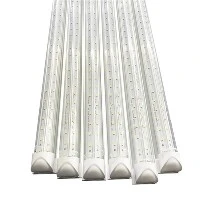
Simply put, the polycarbonate (PC) housing of a standard LED tube is tinted yellow, or the internal LED chips are selected to have a low color temperature and an amber hue. Visually, the tube itself appears yellow, and when illuminated, it casts a warm yellow light-distinctly different from the common cool white or warm white tubes.
Why is the light yellow? The principle is simple.
The yellow cover acts as a light filter, blocking most of the blue-violet spectrum while allowing longer-wavelength yellow and orange light to pass through. This is crucial because many insects-especially moths, mosquitoes, and flies, which are highly phototactic (attracted to light)-are particularly sensitive to ultraviolet and blue light; yellow light is far less attractive to them. This is the primary reason for using yellow-light tubes.
Key application scenarios
① Insect-repellent lighting
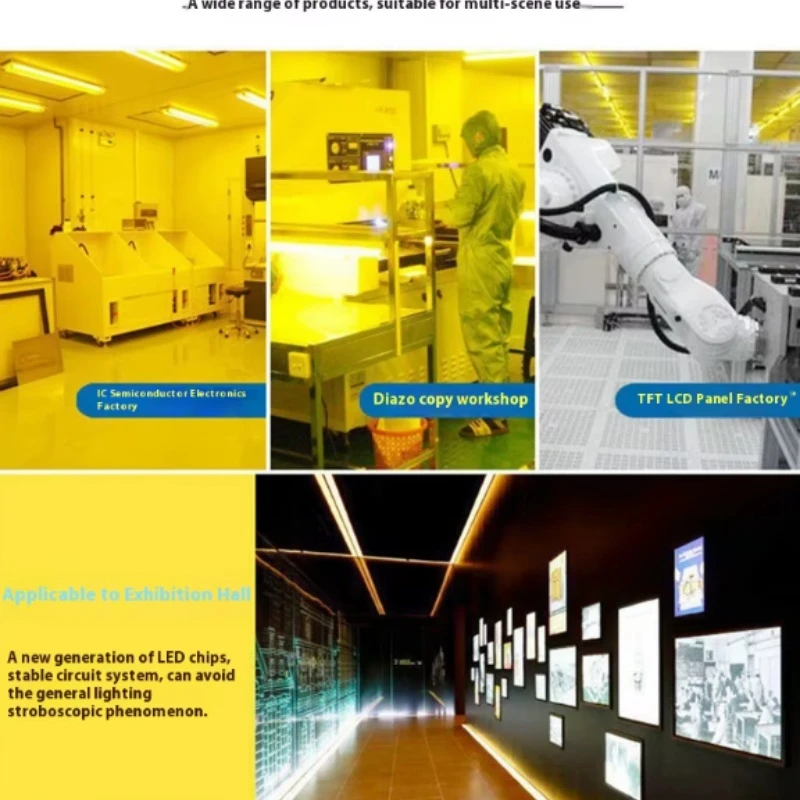
This is the most common use case. Warehouses, food processing plants, commercial kitchens, and convenience store entrances are places where insect swarms are a major nuisance. Yellow-light tubes significantly reduce the number of insects gathering around the light, offering a much more convenient solution than installing window screens or sticky insect traps.
② Outdoor courtyard and pathway lighting
Installing yellow-light tubes in courtyards, on terraces, or along the verandas of guesthouses during summer allows you to sit outside at night without being pestered by swarms of insects circling the light, greatly improving the overall experience. This is also an area where inquiries from overseas residential customers have been increasing over the past two years. ③ Explosion-proof, chemical, and gas station environments
Certain explosion-proof yellow light tubes are used in environments containing dust or flammable gases. Yellow light has a longer wavelength and is less irritating to certain sensitive substances; it also aligns with industry conventions regarding the use of warning and safety colors.
④ Darkrooms and film processing areas
Traditional photography darkrooms and film developing facilities require the exclusion of blue light and ultraviolet rays. Yellow light tubes perfectly meet the need for "illumination without exposing light-sensitive materials." While this customer base is niche, repeat purchase rates and word-of-mouth recommendations are strong.
⑤ Night shifts and corridor night lights
In settings such as hospital corridors, hotel night lights, and duty rooms, warm yellow light is softer than harsh white light. It reduces eye fatigue during long night shifts and does not cause the sudden alertness that white light triggers when turned on at night.
Choosing between yellow and transparent covers
If a customer prioritizes brightness, a transparent cover offers higher luminous flux utilization, appearing brighter at the same wattage.
However, if the customer requires insect resistance, specific ambiance, or suitability for specialized environments, the functional value gained by sacrificing some brightness with a yellow cover becomes a critical requirement; these two product types cannot be compared solely based on lumen data.
Key parameters to consider when purchasing
Luminous flux and lumen depreciation: Yellow light tubes inherently have lower light transmission than transparent ones; inform customers of this beforehand to avoid post-sales misunderstandings.
Ingress Protection (IP) rating: For outdoor areas, warehouses, and commercial kitchens, the rating should be at least IP65.
Wiring method: Double-ended vs. single-ended wiring directly affects installation compatibility at the customer's site.
Certifications: For exports to Europe and the US, necessary certifications such as CE, RoHS, and UL must be obtained to prevent customs clearance issues.
Summary
LED tubes with yellow covers are essentially products where "functionality takes precedence over brightness." Their core value lies in meeting niche needs such as insect resistance, suitability for explosion-proof environments, darkroom applications, and soft night lighting. They are not intended to replace standard tubes but rather to solve problems that ordinary white light tubes cannot address. When selecting products for foreign trade or independent online stores, clearly articulating the specific application scenarios is often more effective at winning over customers with distinct pain points than simply listing technical specifications.
If you are looking for LED tube lights with yellow covers suitable for warehouses, outdoor courtyards, gas stations, or specialized environments, please share your specific use cases and requirements with us. We can recommend the appropriate specifications and parameters based on your setting and support small-batch prototyping and customization; feel free to leave a message or send an inquiry at any time.