In my years of working with panel lights, the question I'm asked most often by clients isn't about wattage or dimensions, but rather: "Should I choose 3000K, 4000K, or 6500K?"
While this may seem like a simple question, choosing the wrong option can be costly. If you install 3000K lights in an office, employees might feel drowsy; if you use 6500K lights in a hotel corridor, guests might feel like they've just walked into a hospital. Furthermore, since panel lights are typically installed in large batches, discovering that the color temperature is incorrect after installation leads to very high rework costs.
First, let's clarify: What exactly is color temperature?
Color temperature is measured in Kelvin (K) and describes whether the light emitted by a source is "warm" or "cool." Lower values indicate light that leans toward yellow or "warm" tones, while higher values indicate light that leans toward white or "cool" (bluish) tones.
It is important to note that color temperature and brightness are two different things. A 6500K light is not necessarily brighter, and a 3000K light is not necessarily dimmer. Brightness is determined by lumens (lm) and illuminance (lux), whereas color temperature simply defines the "color tendency" of the light. Many clients conflate these two concepts, leading to poor decision-making during the selection process.
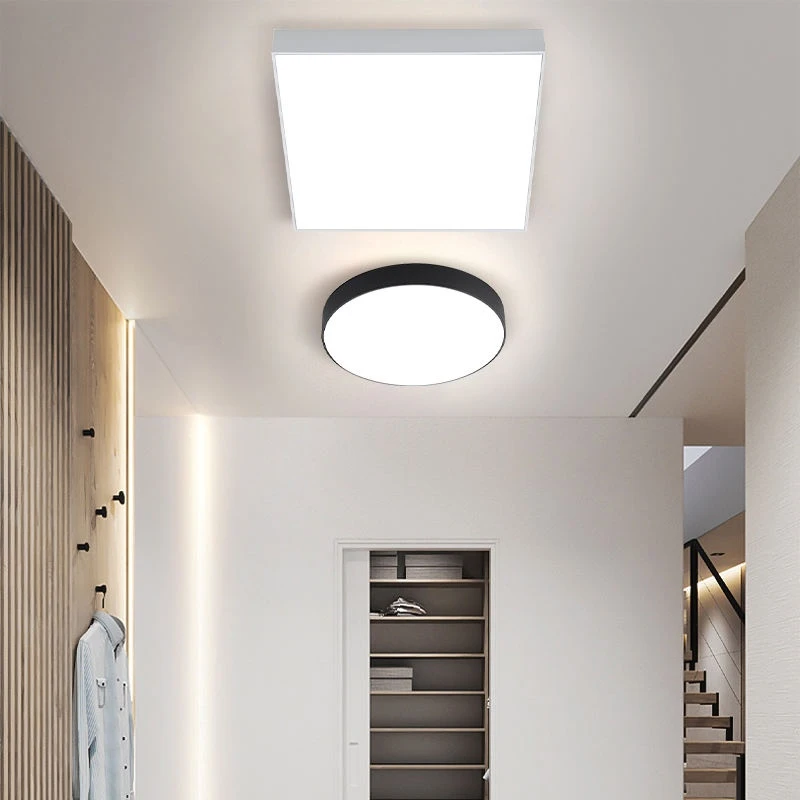
Because panel lights are flat, large-area light sources, the visual impact of color temperature is more pronounced than it is with downlights or spotlights-making the right choice even more critical.
3000K Warm White: Where is it best used?
3000K light has a yellowish tint, creating a warm, inviting atmosphere that helps people relax. Suitable settings:
Hotel rooms, corridors, and lobbies: Creates a warm, upscale atmosphere.
Restaurants, cafés, and teahouses: Makes food look more appetizing under warm light.
Residential bedrooms and living rooms: Gentle on the senses in the evening, helping to promote relaxation.
Boutiques, beauty salons, and hair salons: Enhances skin tone, making it appear more vibrant and healthy.
Points to consider:
Not ideal for work environments that require long periods of intense concentration.
Not recommended for tasks requiring precise color differentiation (e.g., printing or design), as warm light can cause color distortion.
4000K Neutral White Light: The safest, "all-purpose" choice.
Falling between warm and cool light, 4000K appears clean and natural-neither overly yellow nor blue.
If a client is unsure of what they need, I typically recommend this option first, as it has the broadest appeal.
Suitable settings:
Offices and conference rooms: Bright and refreshing without being harsh or glaring.
Classrooms and training centers: Comfortable for extended periods of reading and writing.
Supermarkets and retail stores: Renders product colors naturally.
Hospitals and clinics (consultation rooms and corridors): Clean and professional, yet not cold or sterile.
Public areas in shopping malls and elevator lobbies.
Points to consider:
While its strength is that it's a "safe" choice, it also means it lacks a distinct character. If you want to emphasize a specific mood or atmosphere, this may not be the best option.
6500K Cool White Light: Suitable settings.
6500K approximates the color of midday sunlight; the light leans toward a cool, bluish-white, which helps keep the mind alert and focused. Suitable Environments:
Factory floors and assembly lines: Require high visibility and clear detail.
Warehouses and logistics centers: Large spaces where cool white light creates a sense of openness and clarity.
Laboratories and testing facilities: Require an environment that feels "clean" and sterile.
Parking lots and underground garages: Enhance alertness and provide a brighter visual environment.
Design studios and drafting rooms (ideally paired with high color-rendering index [CRI] lighting).
Points to Consider:
Not ideal for spaces intended for long-term rest or relaxation, such as hotel rooms or private residences.
Some individuals are sensitive to light with a blueish tint; prolonged exposure may lead to visual fatigue.
In small spaces with low ceilings, such lighting can make the environment feel oppressive and cold.
Before Choosing a Color Temperature, Ask Yourself These Questions
Rather than memorizing specific settings for each scenario, consider the following:
What is the primary activity in the space? Working, resting, or just passing through? Choose neutral or cool white light for work, and warm white for rest.
How long will people spend there? Avoid overly cool-toned light in spaces where people stay for extended periods.
What is the interior design style? Spaces featuring wood, beige, or warm tones pair better with 3000K; spaces with white walls, gray tones, or metallic finishes are better suited to 4000K or 6500K.
Is accurate color recognition required? In places like clothing stores, art studios, or quality-control stations, you must consider the Color Rendering Index (CRI) in addition to color temperature.
How much natural light is present? In spaces with ample daylight-which tends to be cool-toned-using warmer artificial lighting in the evening can create a more comfortable atmosphere.
Summary
3000K: Best for creating ambiance and a sense of relaxation.
4000K: A safe, versatile choice-suitable for offices, educational settings, and commercial spaces.
6500K: Ideal for industrial and warehouse settings where clarity and a bright, open feel are essential.
Choosing a color temperature isn't about determining which is "better," but rather about defining the "desired atmosphere" for a given space. Start by considering how the space will be used, and you'll generally make the right choice. If you're still unsure, ordering samples to compare in person is the most cost-effective approach. Need advice on product selection or a price quote?
We offer a full range of LED panel lights in 3000K, 4000K, and 6500K color temperatures, available in various sizes (such as 600×600, 300×1200, etc.). We also provide adjustable color temperature options and customized solutions.
If you are working on a lighting project for a hotel, office building, factory, or commercial space, please let us know the application environment, the area of the space, and the required quantity. We will recommend the most suitable color temperatures and specifications for your specific needs, and provide free samples along with a price quote.
https://www.benweilight.com/lighting-tube-bulb/led-panel-60x60-4000k.html