Which Light Is Ideal for Construction?
Overview
Proper illumination is a need, not a luxury, in the busy and sometimes dangerous field of construction. It acts as the driving force behind worker safety, increased productivity, and the smooth completion of challenging tasks. Construction sites are dynamic settings with varying lighting needs. They might be wide open-air regions or small, enclosed rooms. With so many lighting alternatives on the market, choosing the best light for construction is an important choice that may have a big influence on a project's success. This article will examine the several kinds of lights that are frequently used in construction, assess their benefits, drawbacks, and characteristics, and finally clarify what the ideal lighting option is for specific building situations.
Important Construction Lighting Requirements
Safety is the top priority.
Any construction project must prioritize safety, and keeping a safe working environment depends heavily on lighting. Sufficient lighting removes shadows and gloomy areas where dangerous objects like exposed cables, uneven surfaces, or large machinery might go unnoticed. Whether they are handling products, climbing ladders, or running heavy machinery, workers must have a clear view of their surroundings to prevent mishaps. Emergency exits and safety signs should always be easily accessible, and lights should be bright enough to draw attention to any hazards such exposed holes or unstable buildings.
Sturdiness in Adversities
Dust, trash, dampness, and sharp temperature swings are all commonplace on construction sites. Lighting fixtures need to be strong enough to endure these difficult circumstances. They should have a high ingress protection (IP) rating to keep dust and water out of the internal components and be shock-resistant to withstand vibrations from building operations. A long-lasting lighting system guarantees steady performance throughout the project, minimizing the need for expensive and time-consuming repairs and maintenance.
Increasing Productivity
On building sites, improved productivity is closely correlated with well-lit areas. When workers can see well, they can do duties more precisely and effectively. Proper lighting improves attention and accuracy when using power tools, installing complex components, or reading blueprints. Additionally, because artificial lighting makes up for the loss of natural light in the evenings and early mornings, well-lit work environments allow for extended working hours, particularly on projects with tight deadlines.


Adaptability and Flexibility
Construction projects are always changing, and different lighting configurations are needed at different phases. The finest construction lights have to be adaptable enough to meet these evolving requirements. They ought to be simple to alter in terms of placement, brightness, and direction. Large-area lighting, for instance, could be required in the early phases of site preparation, while more specialized and concentrated illumination is crucial in the latter phases of interior finishing. Quickly and simply repositioning or adjusting lights saves time and work and improves project efficiency overall.
Cost-Effectiveness
Lighting is not an exception to the rule that cost is a major factor in building. Long-term operating expenses and initial expenditure should be balanced in the perfect lighting system. Some high-quality lights may cost more up front, but because of their longevity and energy efficiency, they may end up being more economical in the long term. Energy-efficient lights lower power costs, while long-lasting ones require less upkeep and repair.
Light Types Used in Construction
Halogen Lighting
In construction illumination, halogen lights have long been a mainstay. An electric current is sent via a tungsten filament that is housed inside a halogen-filled bulb to power them. Excellent color reproduction results from the filament's brilliant, white light, which is akin to natural sunshine, when heated. This makes them appropriate for jobs like painting, tiling, and finishing that call for precise color discrimination.
Halogen lights do have a number of disadvantages, though. They are extremely inefficient, turning a large amount of electrical energy into heat instead of light. Because the bulbs may get quite hot, this increases energy consumption and increases the risk of a fire. This heat may be a major risk on a building site if combustible materials like wood, insulation, and solvents are present. Furthermore, halogen lights require more frequent replacements and higher maintenance expenses due to their short lifespan, which is often about 1,000 to 2,000 hours.

Halide Metal Lights
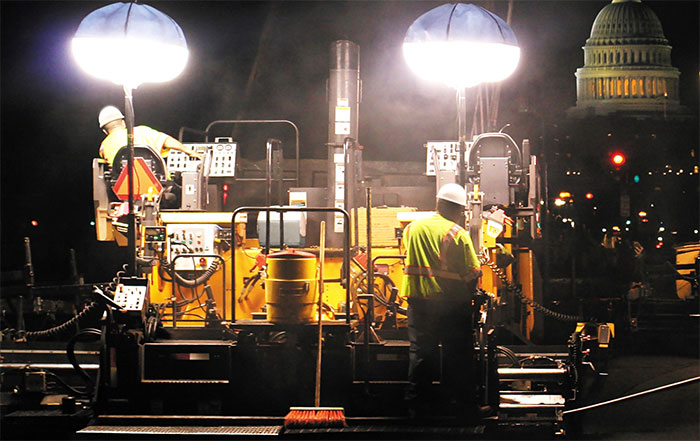
One kind of high-intensity discharge (HID) lighting is metal halide lighting. By generating an electrical arc within a tube containing a combination of metal halide salts and mercury vapor, they emit a brilliant, white light. Because of their great brightness output, these lights can efficiently light up big regions. They are frequently utilized on outdoor construction sites for tasks like road construction, building foundations, and enormous warehouses that are being built.
A respectable color perception is made possible by metal halide lamps' comparatively high color rendering index (CRI). They take a while to warm up, though, taking a few minutes to achieve maximum brightness. When instant illumination is needed on a building site, this may be a big annoyance. Additionally, because they need certain ballasts and could be susceptible to voltage variations, they are more difficult to install and maintain.
Lights using High Pressure Sodium
Another kind of HID lighting is high-pressure sodium (HPS) lighting. They are renowned for their remarkable energy efficiency and give off a yellow-orange light. Particularly in expansive outdoor spaces like parking lots, construction yards, or the edges of large-scale building projects, HPS lamps are an affordable option for general site lighting because to their high light output and very low power consumption.
Maintenance expenses are further decreased by HPS lamps' extended lifespan, which normally ranges from 24,000 to 28,000 hours. However, the low CRI of their yellow-orange light indicates poor color reproduction. As a result, they are less appropriate for jobs requiring precise color recognition, including painting or thorough inspection. Furthermore, HPS lights have a warm-up period, much like other HID lights, and might not be the best choice for applications requiring immediate lighting.
LED lights, or emitting diode lights
In recent years, the construction lighting business has seen a transformation thanks to LED lights. They function by transferring an electric current via a light-emitting semiconductor material. LEDs are a strong candidate for the best construction light because of their many benefits.
First of all, they are extremely energy-efficient, producing little heat and turning a significant portion of electrical energy into light. They are a safer choice for building sites as this lowers power costs and removes the possibility of a fire caused by overheating. Second, LED lights frequently last 50,000 hours or beyond, which is an incredibly long lifespan. As a result, maintenance expenses and the frequency of bulb changes are greatly decreased.
Additionally, LED lights are instant-on, meaning they switch on to full brightness straight away, which is essential in a fast-paced construction setting. They can attain high CRI values and come in a variety of color temperatures, which makes them appropriate for a range of activities, from detailed inside work to general site illumination. Additionally, LED construction lights are incredibly resilient to stress, vibration, dust, and moisture-all of which are frequent occurrences on building sites. With features like dimming capabilities, adjustable heads, and various beam angles, many LED lights provide a great deal of versatility in focusing light where it is most required.
Elements Affecting the Selection of the Best Construction Lighting
Project Location and Scale
Choosing the right lighting for a construction project depends heavily on its size and location. Large-scale outdoor projects that require high-powered lights with a broad coverage area include erecting skyscrapers and constructing highways. Large wide areas can be illuminated by LED floodlights or metal halide lamps with a high capacity. On the other hand, more portable and compact lighting options, including handheld LED work lights or small-sized LED fixtures, are more useful for smaller interior jobs or restoration work in cramped areas.
Workplace Characteristics
The lighting selection is also influenced by the particular operations being performed on the building site. Lights with a high CRI, like premium LED lights, are crucial for jobs requiring a high degree of accuracy and precise color perception, such as delicate carpentry, plumbing installation, and electrical wiring. However, lights that offer broad and powerful lighting, such as metal halide or HPS lamps, may be enough for general construction tasks like excavation, concrete pouring, or operating heavy gear.
Financial Limitations
A major constraint on every building project is the budget. Although LED lights provide the highest long-term value in terms of durability and energy savings, projects with limited funds may be put off by their higher initial cost. In these situations, halogen or HPS lights can be thought of as more cost-effective options in the short run, but the total cost analysis should account for their greater energy consumption and more frequent replacement requirements.
Conditions of the Environment
The lighting choice is also influenced by the local environmental factors at the building site, such as weather trends, humidity levels, and sunshine exposure. To avoid water damage, lights with a high IP rating are required in places with high humidity or regular rain. Lights should be able to operate dependably in both hot and cold climates in areas with severe temperatures.
In conclusion
Selecting the ideal lighting for construction is a complex choice that necessitates a thorough analysis of several variables. Although every kind of light has advantages and disadvantages of its own, LED lights have become the industry standard because of their unique blend of energy economy, longevity, adaptability, and durability. They take care of several of the most important aspects of construction lighting, such as cost-effectiveness, productivity, and safety. However, depending on the project's size, nature, and budget, alternative light types, including metal halide or high-pressure sodium lights, could still be more appropriate in some particular circumstances. Construction professionals may make an informed decision that will improve the safety, effectiveness, and success of their projects by fully evaluating the available lighting alternatives and comprehending the particular requirements of each project.
The Best Construction Lighting: https://www.benweilight.com/industrial-lighting/best-work-light-for-construction.html