What is the Best Light for Growing Herbs?
Growing herbs indoors requires more than just soil and water-light is the lifeblood that drives photosynthesis, shapes growth, and enhances flavor. With a wide range of artificial light options available, from traditional incandescent bulbs to cutting-edge LEDs, choosing the best light for herbs can be overwhelming. This article evaluates the most common grow light types, their suitability for herb cultivation, and the key factors to consider when selecting the ideal light source to ensure healthy, flavorful, and productive herbs.
Herbs, whether culinary staples like basil and parsley or aromatic varieties like rosemary and thyme, have specific light requirements rooted in their natural habitats. Most herbs originate from sunny regions such as the Mediterranean, where they receive 6–8 hours of direct sunlight daily. When grown indoors, they need artificial light that mimics the intensity, spectrum, and duration of this natural exposure. The "best" light for herbs is one that delivers the right balance of blue and red wavelengths (critical for photosynthesis), provides sufficient intensity without causing heat stress, and fits the grower's space and budget.
LED Grow Lights: The Top Contender
Light-emitting diode (LED) grow lights have emerged as the gold standard for indoor herb gardening, and for good reason. These lights offer a unique combination of efficiency, versatility, and performance that makes them ideal for most herbs.
Spectrum Control
LEDs can be engineered to emit specific wavelengths of light, allowing manufacturers to tailor their spectrum to the needs of plants. Herbs thrive under a balanced mix of blue (400–500 nm) and red (600–700 nm) light: blue wavelengths promote compact, bushy growth and strong leaf development, while red wavelengths support flowering (when needed) and the production of essential oils that give herbs their aroma and flavor. Many LED grow lights also include small amounts of green light (500–600 nm), which, despite being less efficiently absorbed by chlorophyll, helps with overall plant health and leaf structure.
Full-spectrum LEDs, designed to replicate the natural light spectrum, are particularly effective for herbs. They provide a broad range of wavelengths, ensuring that all stages of growth-from seedling to mature plant-are supported. A study published in Scientia Horticulturae found that basil grown under full-spectrum LEDs had 30% higher chlorophyll content and 25% more leaf biomass than basil grown under traditional fluorescent lights, highlighting the benefits of a well-balanced spectrum.
Energy Efficiency
LEDs are far more energy-efficient than other light sources, converting up to 90% of electrical energy into usable light (compared to 5–10% for incandescent bulbs). This efficiency translates to lower electricity bills, especially for growers who run lights 12–16 hours a day. For example, a 30-watt LED can produce the same light intensity as a 100-watt fluorescent bulb, reducing energy consumption by two-thirds over time.
Heat Output
One of the biggest advantages of LEDs for herbs is their low heat emission. Unlike incandescent or high-intensity discharge (HID) lights, which generate significant heat, LEDs stay cool to the touch, even after hours of use. This is crucial for herbs, which are sensitive to temperature fluctuations. Excessive heat can cause leaf scorching, wilting, or premature bolting (flowering), especially in compact growing spaces like windowsills or shelves. LEDs can be positioned 6–18 inches above the herb canopy without risk of heat stress, ensuring maximum light absorption.
Durability and Longevity
LEDs have an impressive lifespan, typically lasting 50,000–100,000 hours-far longer than fluorescent tubes (10,000–20,000 hours) or incandescent bulbs (1,000–2,000 hours). This longevity reduces the need for frequent replacements, saving both time and money. Additionally, LEDs are solid-state devices with no fragile filaments or glass components, making them more resistant to damage from bumps or vibrations.
Versatility in Design
LED grow lights come in various forms, from small panel lights ideal for windowsills to strip lights that fit under cabinets and large arrays for grow tents. This versatility makes them suitable for any indoor space, whether you're growing a few herbs on a kitchen counter or a larger collection in a dedicated growing area. Some LED models also feature dimming controls or adjustable spectrums, allowing growers to fine-tune light intensity and wavelength ratios as herbs progress through different growth stages.
Fluorescent Lights: A Reliable Alternative
Fluorescent lights have long been a staple in indoor gardening, and while they are less advanced than LEDs, they remain a viable option for growing herbs, especially for budget-conscious growers.
Types of Fluorescent Lights
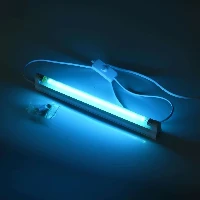
T5 Fluorescent Tubes: These are the most efficient and powerful fluorescent lights for herbs. T5 tubes have a diameter of 5/8 inch and produce high light output with a balanced spectrum. They are available in "daylight" (6500K) and "warm white" (3000K) variants, or as full-spectrum tubes designed for plant growth. T5s are ideal for seedlings, microgreens, and mature herbs like parsley and mint.
T8 and T12 Fluorescent Tubes: T8 tubes (1 inch in diameter) and T12 tubes (1.5 inches in diameter) are older technologies with lower light output and efficiency than T5s. They are less expensive but require more energy to produce the same light intensity as T5s. T8s can work for low-light herbs like chives, but T12s are generally too weak for most herb varieties.
Spectrum and Intensity
Full-spectrum fluorescent tubes provide a mix of blue and red wavelengths, though they are less precise than LEDs. Daylight T5 tubes (6500K) emit more blue light, supporting leafy growth, while warm white tubes (3000K) lean toward red wavelengths, which can aid flowering. For most herbs, combining daylight and warm white tubes or using full-spectrum versions ensures balanced growth.
Fluorescent lights produce moderate light intensity, measured in photosynthetic photon flux density (PPFD). T5 tubes deliver 100–300 μmol/m²/s at a distance of 4–12 inches, which is sufficient for herbs with low to medium light needs, such as basil, parsley, and thyme. However, they may struggle to provide enough intensity for light-hungry herbs like rosemary, which require higher PPFD levels.
Heat and Placement
Fluorescent lights generate more heat than LEDs but less than incandescent or HID lights. T5 tubes, in particular, produce minimal heat, allowing them to be placed 4–12 inches above herbs. T8 and T12 tubes run cooler than T5s but still need to be positioned 6–18 inches from the canopy to avoid overheating.
Cost and Maintenance
Fluorescent lights have a lower upfront cost than LEDs, with T5 fixtures and tubes typically costing 30–50% less than equivalent LED setups. However, they have higher long-term costs due to lower energy efficiency and shorter lifespans. Fluorescent tubes also degrade over time, losing 20–30% of their light output after 6–12 months of use, requiring regular replacements to maintain herb health.
High-Intensity Discharge (HID) Lights: Overkill for Most Herbs
HID lights, including metal halide (MH) and high-pressure sodium (HPS) lamps, are powerful light sources used in commercial growing operations. While they produce intense light, they are generally overkill for home herb gardens.
Metal Halide (MH) Lights
MH lights emit a blue-rich spectrum, making them suitable for vegetative growth. They produce high PPFD levels (500–1000 μmol/m²/s) and are used for large-scale cultivation of high-light plants. However, their high intensity and heat output make them impractical for small herb setups. A 400-watt MH lamp can raise temperatures in a small space by 10–15°F, risking damage to herbs, and their energy consumption is significantly higher than LEDs or fluorescents.
High-Pressure Sodium (HPS) Lights
HPS lights emit mostly red and orange wavelengths, which promote flowering and fruiting. They are even more powerful than MH lights but have a poor spectrum for leafy herbs, often leading to leggy growth and reduced flavor. HPS lights also generate excessive heat and require ventilation systems, adding to their complexity and cost.
For home growers, HID lights are unnecessary unless cultivating herbs in large grow tents (10+ square feet) or commercial settings. Their high wattage (250–1000 watts) and heat make them inefficient and risky for small-scale herb gardens.
Incandescent and Compact Fluorescent (CFL) Lights: Limited Use
Incandescent bulbs and compact fluorescent lights (CFLs) are common household lighting options, but they are rarely the best choice for herbs.
Incandescent Bulbs
Incandescent bulbs emit mostly red and infrared light, with little blue light-an unfavorable spectrum for herbs. They convert only 5–10% of energy into light, wasting the rest as heat, which can scorch herbs. Even high-wattage incandescent bulbs (100+ watts) fail to provide sufficient PPFD for healthy herb growth, making them unsuitable for all but the most shade-tolerant herbs like mint (and even then, results are poor).
Compact Fluorescent Lights (CFLs)
CFLs are more efficient than incandescent bulbs and come in full-spectrum variants. They produce low to moderate intensity (50–150 μmol/m²/s) and can work for very small herb setups, such as a single basil plant on a windowsill. However, their light output is uneven, with "hot spots" of intensity and shaded areas, leading to uneven herb growth. CFLs also generate more heat than LEDs and have shorter lifespans, making them a temporary solution at best.
Key Factors in Choosing the Best Light for Herbs
To determine the best light for your herbs, consider these critical factors:
1. Herb Species and Light Needs
Different herbs have varying light requirements:
High-Light Herbs: Rosemary, basil, and oregano need intense light (PPFD 200–400 μmol/m²/s). LEDs are ideal here, as they can deliver the required intensity without excessive heat.
Medium-Light Herbs: Parsley, thyme, and cilantro thrive with moderate intensity (PPFD 100–200 μmol/m²/s). T5 fluorescents or mid-range LEDs work well.
Low-Light Herbs: Mint and chives tolerate lower intensity (PPFD 50–100 μmol/m²/s). CFLs or low-wattage LEDs can suffice, though LEDs are still preferable.
2. Growing Space
Small Spaces (Windowsills, Countertops): Compact LED panels or T5 fluorescent fixtures fit well, providing focused light without taking up too much room.
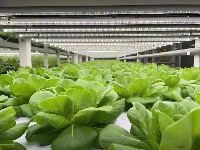
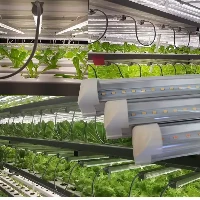
Medium Spaces (Shelves, Grow Tents): Full-spectrum LED arrays or multiple T5 tubes ensure even coverage for several herb plants.
Large Spaces: While rare for home herb gardens, large setups can use high-output LEDs; HIDs are unnecessary and inefficient for herbs.
3. Spectrum Quality
The best lights for herbs offer a balanced spectrum with sufficient blue (400–500 nm) and red (600–700 nm) wavelengths. Look for lights labeled "full-spectrum" or those explicitly designed for "vegetative growth," as these prioritize the wavelengths herbs need most. Avoid lights with excessive green or yellow light, which herbs cannot absorb effectively.
4. Energy Efficiency and Cost
LEDs have higher upfront costs but lower long-term expenses due to energy savings and long lifespans. Fluorescents are cheaper initially but cost more over time. For growers planning to maintain herbs long-term, LEDs are the economical choice.
5. Heat Management
Herbs are sensitive to heat, so lights with low heat output are preferable. LEDs excel here, as they can be placed close to plants without risk. Fluorescents are acceptable but require careful positioning, while HIDs and incandescents are too hot for most indoor herb setups.
6. Adjustable Features
Lights with dimming controls, adjustable spectrums, or variable height settings offer flexibility. For example, dimming LEDs during the seedling stage and increasing intensity as herbs mature prevents stress. Adjustable spectrums allow growers to shift from blue-heavy light (vegetative growth) to red-heavy light (if flowering is desired, though most herbs are grown for leaves).
Real-World Performance: How Different Lights Affect Herb Growth
Studies and practical experience highlight the differences in herb growth under various lights:
Basil: A study in HortTechnology compared basil growth under LEDs, T5 fluorescents, and HPS lights. LEDs produced basil with 25% more leaf biomass, higher chlorophyll content, and stronger flavor compounds (eugenol and linalool) than T5s. HPS lights resulted in leggy growth and lower flavor intensity.
Rosemary: Rosemary grown under high-output LEDs (35–50 watts per square foot) developed denser foliage and higher essential oil content than those under T5 fluorescents, according to research from the University of Florida. The LEDs' higher intensity and precise spectrum supported the herb's need for strong, woody growth.
Parsley: Parsley thrived under both LEDs and T5 fluorescents, with similar growth rates. However, LEDs required 40% less energy, making them more cost-effective over time.
Mint: Mint, a more shade-tolerant herb, grew adequately under CFLs but showed better vigor under LEDs, with larger leaves and more robust stems.
Practical Recommendations
Based on the above analysis, LED grow lights are the best choice for growing herbs for most indoor gardeners. They offer the optimal combination of spectrum control, energy efficiency, low heat output, and versatility. For specific scenarios:
Small-scale gardens (1–2 square feet): A 20–60 watt full-spectrum LED panel, such as a 30-watt LED grow light with a 120-degree beam angle, works well for herbs like basil, parsley, and thyme.
Medium setups (3–5 square feet): A 60–120 watt LED array or a 4-foot T5 fluorescent fixture with 2–4 full-spectrum tubes can support multiple herb varieties, including rosemary and oregano.
Budget-focused growers: T5 fluorescent tubes are a reliable alternative, though they will require more energy and frequent replacements compared to LEDs.
Avoid: Incandescent bulbs, T12 fluorescents, and HID lights, as they are inefficient, produce excessive heat, or fail to provide the right spectrum for herbs.
Conclusion
The best light for growing herbs is one that meets their specific spectrum, intensity, and heat tolerance needs while fitting the grower's space and budget. LED grow lights stand out as the top choice, offering precise spectrum control, energy efficiency, and low heat output-all critical for healthy, flavorful herbs. Fluorescent lights, particularly T5 tubes, are a viable alternative for those with limited funds, though they require more maintenance and energy. By prioritizing full-spectrum light, appropriate intensity, and heat management, growers can ensure their indoor herbs thrive, providing a fresh, aromatic supply year-round.
The best light for growing herbs: https://www.benweilight.com/lighting-tube-bulb/powerful-herb-growing-light.html