How Many Watts of Grow Light Do Herbs Need?
When it comes to growing herbs indoors, understanding the right amount of light is crucial, and wattage is a key factor in determining the effectiveness of grow lights. While the duration of light exposure (photoperiod) is important, the wattage of the grow light directly influences light intensity, which in turn affects photosynthesis, growth rate, and overall health of herbs. This article explores how wattage correlates with herb growth, factors that influence wattage requirements, and practical guidelines for choosing the right wattage for different herbs and growing setups.
Wattage measures the amount of electrical power a grow light consumes, but it is not a direct indicator of light output. However, it is a useful starting point for estimating the intensity of light a fixture can produce. Over the years, advancements in lighting technology have made wattage a more nuanced metric: traditional incandescent bulbs, for example, convert most energy into heat rather than light, making them inefficient for plant growth, while modern LEDs (light-emitting diodes) convert a higher percentage of energy into usable light, meaning lower wattage LEDs can often match or exceed the light output of higher wattage incandescent or fluorescent bulbs.
For herbs, the goal is to provide enough light intensity to drive photosynthesis without wasting energy or causing heat stress. Light intensity is more accurately measured by photosynthetic photon flux density (PPFD), which quantifies the number of photons in the 400–700 nm range (photosynthetically active radiation, PAR) reaching the plant canopy per second. However, wattage remains a practical reference for growers, especially when selecting lights for small-scale setups like windowsills, shelves, or small grow tents.
The wattage required for herbs depends on several factors, including the type of grow light, the size of the growing area, the specific herb species, and their growth stage. Let's break down these factors to understand their impact:
Type of Grow Light
Different types of grow lights have varying efficiencies, meaning the same wattage can produce different light outputs:
LED Grow Lights: LEDs are the most energy-efficient option, converting 80–90% of electrical energy into light. They produce less heat and can target specific wavelengths (blue and red, which are most useful for herbs). For LEDs, wattage directly correlates with light output, making them easy to gauge. A 20-watt LED can often provide sufficient light for a small cluster of herbs.
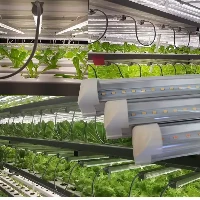
Fluorescent Lights: T5 and T8 fluorescent tubes are commonly used for herbs. They are less efficient than LEDs but more efficient than incandescent bulbs. Fluorescent lights typically require higher wattage than LEDs to achieve the same light intensity. A T5 fluorescent tube, for example, uses 24–54 watts and is suitable for small to medium herb gardens.
Incandescent Bulbs: These are the least efficient, with only 5–10% of energy converted into light (the rest is heat). They are not recommended for herbs because they produce excessive heat and poor light spectrum, but if used, they would require much higher wattages (60–100 watts) to be effective, which is impractical and risky for plant health.
High-Intensity Discharge (HID) Lights: HID lights, such as metal halide (MH) and high-pressure sodium (HPS) lamps, are powerful but energy-intensive. They are overkill for most herb gardens due to their high wattage (250–1000 watts) and heat output, though they may be used in large commercial setups. For home growers, HIDs are rarely necessary for herbs.

Size of the Growing Area
The wattage needed increases with the size of the area to be illuminated. A general rule of thumb is to aim for 20–40 watts per square foot for herbs, but this varies by light type. For example:
A small windowsill garden (1–2 square feet) growing basil, parsley, or mint would thrive with a 20–40 watt LED or a 24–32 watt T5 fluorescent tube.
A medium-sized shelf or grow tent (3–4 square feet) might require a 60–120 watt LED panel or two 54-watt T5 fluorescent tubes.
A larger setup (5+ square feet) could need a 150–200 watt LED or multiple fluorescent tubes, ensuring even light distribution across the entire area.
Uneven light distribution can lead to uneven growth, with herbs in shaded areas becoming leggy or stunted. To avoid this, growers should space lights appropriately: for LEDs, panels with a wide beam angle (120–180 degrees) cover more area, while fluorescent tubes should be arranged parallel to the length of the growing area to ensure uniform coverage.
Herb Species and Growth Stage
Different herbs have varying light requirements based on their natural habitats and growth habits:
Basil: A fast-growing herb that demands moderate to high light intensity. It requires 30–50 watts per square foot when grown under LEDs, or 40–60 watts per square foot under fluorescent lights. Insufficient wattage can lead to weak stems and sparse leaves, reducing yield and flavor.
Parsley: More tolerant of lower light than basil but still needs adequate intensity. Parsley thrives with 20–40 watts per square foot (LED) or 30–50 watts per square foot (fluorescent). Lower wattage may result in slow growth and smaller leaves.
Cilantro: Prefers moderate light to prevent bolting. It does well with 25–40 watts per square foot (LED) or 35–50 watts per square foot (fluorescent). Higher wattage combined with excessive heat can trigger early flowering, which is undesirable if leaves are the target.
Mint: Adaptable but benefits from consistent light. Mint requires 20–35 watts per square foot (LED) or 30–45 watts per square foot (fluorescent). Too little wattage leads to sparse growth, while too much can cause leaf burn.
Rosemary: A woody herb with higher light needs due to its dense foliage. It requires 35–50 watts per square foot (LED) or 45–60 watts per square foot (fluorescent). Inadequate wattage results in leggy growth and reduced aroma.
Thyme and Oregano: These Mediterranean herbs need moderate to high light. They thrive with 30–45 watts per square foot (LED) or 40–55 watts per square foot (fluorescent). Proper wattage ensures compact growth and rich flavor.
Growth stage also influences wattage needs. Seedlings and young herbs have smaller leaf surfaces and require lower wattage (e.g., 20–30 watts per square foot for LEDs) to avoid stress. Mature herbs, with larger canopies, need higher wattage (30–50 watts per square foot for LEDs) to penetrate dense foliage and support continuous leaf production.
Heat Output and Ventilation
Wattage is closely linked to heat production, especially with less efficient light sources. Incandescent bulbs and HID lights generate significant heat, even at moderate wattages, which can damage herbs. For example, a 100-watt incandescent bulb produces enough heat to raise the temperature around herbs by 5–10°F, increasing the risk of wilting or scorching. LEDs and fluorescent lights produce less heat, but high-wattage LEDs (100+ watts) can still generate warmth, requiring adequate ventilation in enclosed spaces like grow tents.
Growers should consider the distance between the light and the herbs when selecting wattage. Higher wattage lights need to be positioned farther away to prevent heat stress:
LEDs: 6–18 inches from the canopy, depending on wattage. A 20-watt LED can be 6–12 inches away, while a 100-watt LED may need to be 12–18 inches away.
Fluorescent Tubes: 4–12 inches from the canopy. A 24-watt T5 tube can be 4–8 inches away, while a 54-watt tube should be 8–12 inches away.
Practical Guidelines for Wattage Selection
To determine the right wattage for your herb garden, follow these steps:
Measure the growing area: Calculate the square footage (length × width) of the space where herbs will be grown. For example, a shelf that is 2 feet long and 1.5 feet wide has an area of 3 square feet.
Choose the light type: Decide whether to use LEDs or fluorescent lights (the most practical options for herbs). LEDs are preferred for their efficiency and lower heat output.
Apply the wattage per square foot: For a 3-square-foot area using LEDs, multiply the square footage by 20–40 watts. This gives a range of 60–120 watts, meaning a 60–100 watt LED panel would be suitable.
Adjust for herb type: If growing light-loving herbs like basil or rosemary, lean toward the higher end of the range. For herbs like mint or parsley, the lower to middle range is sufficient.
Consider growth stage: For seedlings, start with the lower end of the wattage range and increase as the herbs mature.
Monitor plant response: Check herbs regularly for signs of insufficient or excessive wattage. Symptoms of low wattage include pale leaves, leggy growth, and slow development. Signs of high wattage include brown leaf tips, wilting, or curled leaves, even with proper watering.
Research supports these guidelines. A study published in HortTechnology compared the growth of basil under 30-watt, 60-watt, and 90-watt LED lights in a 2-square-foot area. The 60-watt LED produced the highest fresh weight and leaf count, with the 90-watt LED causing mild heat stress despite higher light intensity. Another study on rosemary found that 40–50 watts per square foot (LED) resulted in the densest foliage and highest essential oil content.
Common Mistakes to Avoid
Overestimating wattage needs: Using a 100-watt light for a small 1-square-foot garden wastes energy and risks heat damage. A 20–30 watt LED is sufficient for such a space.
Ignoring light spectrum: Wattage alone is not enough; even high-wattage lights with poor spectrum (e.g., mostly green light) will not support herb growth. Choose full-spectrum lights with balanced blue and red wavelengths.
Neglecting distance: Placing a high-wattage light too close to herbs can cause damage, even if the wattage is correct for the area. Follow recommended distance guidelines based on wattage.
Using incandescent bulbs: Their inefficiency and high heat output make them unsuitable for herbs, regardless of wattage.
Conclusion
The number of watts needed for growing herbs depends on the light type, growing area, herb species, and growth stage. For most indoor setups, 20–50 watts per square foot is sufficient, with LEDs requiring the lower end of the range and fluorescent lights the higher end. Small herb gardens (1–2 square feet) can thrive with 20–60 watt lights, while larger areas (3–5 square feet) need 60–150 watts. By matching wattage to the specific needs of the herbs and monitoring their response, growers can ensure healthy, productive plants with robust flavor and aroma.
https://www.benweilight.com/lighting-tube-bulb/5000k-herb-growing-light.html