What is the Difference Between 365 nm and 395 nm UV LED Lights?
When searching for UV-A blacklights, you can come across two different specifications: 365 nm or 395 nm. Both of these numbers refer to the wavelength of the light. What exactly does that mean, and which of the options is preferable? Continue reading if you want to learn more!
A Review of the Foundations: Light and Wavelength
Before we can answer the question of which wavelength, 365 nm or 395 nm, is more suitable for your application, it is essential that we first have an understanding of the fundamental concepts behind light and wavelength.
As you may remember, different wavelengths of visible light manifest themselves to our eyes as distinct colorations. For instance, light with a wavelength of 450 nanometers has a regal blue colour, whereas light with a wavelength of 630 nanometers has a vibrant red colour. Visible light is defined as having a wavelength that ranges from 400 nm to 800 nm, whereas light with a wavelength that is shorter than 400 nm is classified as ultraviolet light and is not visible.
Even if the human eye is unable to perceive light with a wavelength that is less than 400 nanometers, the value of the wavelength is still highly significant. For instance, ultraviolet light with a wavelength of 365 nm is classified as "UV-A," whereas ultraviolet light with a wavelength of 290 nm is considered to be "UV-B." The wavelength is what determines the type of ultraviolet light, and this is an essential distinction among the many categories of ultraviolet light in terms of the applications that may be performed and even the necessary measures for safety.
Therefore, on a fundamental level, you should take into consideration the fact that 395 nm is approximately 30 nm closer to visible light (violet) than 365 nm is. In other words, 365 nm is "deeper" into the UV spectrum than 395 nm is. This is because 365 nm is longer than 395 nm.
365 nm and 395 nm for Applications in the UV-A Spectrum
Options at 365 nm and 395 nm fall within the range of wavelengths that are classified as UV-A. UV-A lights, in general, are helpful for making and analysing fluorescence effects, as well as for curing plastics and paint. In addition, these lights can speed up the drying process for paint and plastics. In comparison to the more damaging UV-B and UV-C rays, the wavelengths of UV-A light are much less harmful.
UV Bulb Types & Socket Specifications
|
Socket Type/Spec |
Typical Applications |
Wavelength Options |
Key Features |
|---|---|---|---|
|
E26/E27 (Medium Screw) |
Household UV lights, bug zappers, portable curing lights |
365 nm, 395 nm, 405 nm |
Direct replacement for standard sockets; available in A19, PAR, or globe shapes |
|
GU10 (Bi-Pin Twist-Lock) |
Track lights, focused UV lights |
365 nm, 395 nm |
Narrow beam; directional UV light |
|
G23 / 2G11 (Push-In) |
UV retrofits for fluorescent fixtures |
365 nm |
Designed to replace compact fluorescent UV bulbs in existing fixtures |
|
T5/T8 Linear Tubes |
Commercial bug zappers, industrial inspection |
365 nm, 395 nm |
Continuous, large-area, long-distance illumination |
When choosing UV bulbs, matching the socket type to your fixture is just as important as picking the right wavelength. For most home or small business needs, E26 or GU10 UV LED bulbs offer the simplest plug-and-play solution.
What exactly does a difference of 30 nm indicate then?
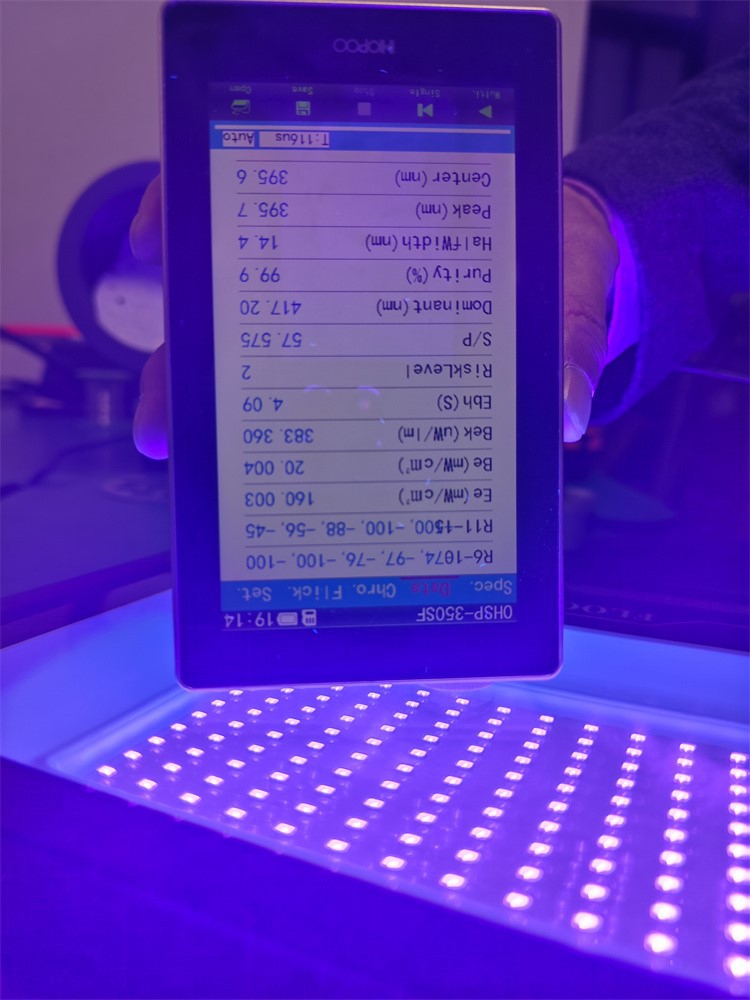
The primary distinction is that the LED with a wavelength of 395 nm emits a significantly higher amount of visible light than the LED with a wavelength of 365 nm. The light emitted by the 395 nm LED is distinctly violet, whereas the light emitted by the 365 nm LED is muted and bluish-white in colour. This is because the 365 nm LED emits the leftover light energy that "tails" off into the visible spectrum. Both types emit light in the ultraviolet range A and are capable of producing "blacklight" or "curing" effects in general.
Why is there a distinction in the total amount of light that is visible? What you will see is that LEDs with wavelengths of 365 nm and 395 nm both emit light throughout a range of wavelengths that are both higher and lower than their respective wavelengths. In other words, LEDs with a wavelength of 395 nm do not exclusively emit at that wavelength.
The 395 nm LED releases the most amount of energy at its peak wavelength of 395 nm, although it also emits a fair amount of energy at 400 nm and even 410 nm. The term peak wavelength describes the wavelength at which the LED emits the most energy. The vast majority of these wavelengths are located in the visible, violet part of the electromagnetic spectrum.
Naturally, the LED with a wavelength of 395 nm also generates light at wavelengths that are shorter than 395 nm. The light energy at these shorter wavelengths is particularly efficient in producing fluorescence effects and starting UV-A processes. However, it is essential to keep in mind that a sizeable percentage of the light energy is being discharged in the visible, violet region of the electromagnetic spectrum.
When looking at the spectral output at 365 nm, on the other hand, you will find that almost all of the light energy is contained solely within the range of UV-A wavelengths that are invisible to the human eye, with emission energy gradually decreasing before reaching 400 nm. This will maximise the quantity of UV-A energy in comparison to the amount of energy from visible light, and it is recommended for the majority of applications involving UV-A.
When an LED with a wavelength of 365 nm is illuminated, however, the colour that is emitted is most likely a drab, bluish-white hue. This is due to a phenomenon known as "leakage" of visible light, in which extremely minute but detectable amounts of visible wavelength energy (also known as white light) are also emitted. Although the fraction of this visible light energy is so minimal that it is displayed as "0" in the spectral charts, the visible light is indeed perceptible and may be an annoyance in some applications such as ultraviolet photography. In such circumstances, the application of additional strategies for filtering visible light might be required.
365 nm for the Brightest and Most Powerful Fluorescence
In addition to the benefit of 365 nm UV lights not releasing violet light, many things will glow best at 365 nm, as proven by absorption spectrum measurements. 365 nm UV lights have the advantage of not emitting violet light.
As a consequence of this, light with a wavelength of 365 nm may be more suitable for applications in which more potent fluorescence effects are needed. In situations in which achieving maximum performance is of the utmost significance, opting for light with a wavelength of 365 nm, which has the added benefit of emitting less visible and violet light, is likely to be the most effective course of action.
Variation in Both Cost and Productivity
Chips with a wavelength of 365 nm tend to be less efficient and more expensive than chips with other wavelengths because of the way LED diodes are made. In general, 365 nm LEDs come with a price premium, and as a result, 395 nm LED products are better suited for individuals who are on a budget. The actual price difference will vary on the product type, but in general, 365 nm LEDs do come with a price premium.
Features:
● 365nm wavelength, long lifespan, high transmission rate and better sterilization effect.
● UV Curing paint, coatings and adhesive are also available.
● 395nm wavelength, Create stunning atmospheres for gigs, parties and DJ stage etc.
● Works great with UV body paints & fluorescence.
● Perfect for Poster and Party.
Specification:
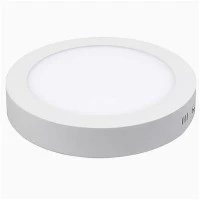
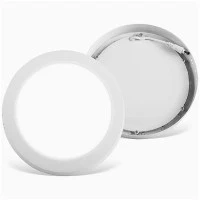
| Product Name: | fluorescent uv curing lamp |
| Wattage: | 18w |
| Wave length: | 395nm |
| Material: | Aluminum Alloy +PC cover |
| Beam angle: | 120-180 degree |
| Led chips: | SMD2835 |
| Input Voltage(V): | AC85-265V |
| Warranty: | 5 years |

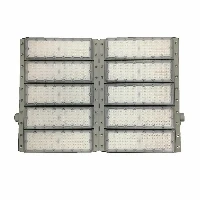
In addition to fluorescent tubes, we also offer floodlights with higher wattage.
UV365nm 100W

UV395nm 100w