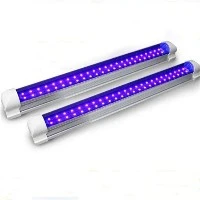
Although both LED UV and sunshine UV are classified as ultraviolet light, they differ greatly in a number of ways, such as how they are produced, their properties, their uses, and how they affect living things.
Mechanism of Generation
Sunlight UV is a naturally occurring byproduct of the sun's nuclear fusion events. Hydrogen atoms fuse into helium at the sun's core due to extreme heat and pressure, releasing a tremendous amount of energy in the form of electromagnetic radiation, including ultraviolet light. When this radiation reaches Earth from space, it passes through the atmosphere, where some of it is scattered or absorbed.
Conversely, LED UV is produced artificially. Electroluminescence is the basis for how LED (light-emitting diode) UV lamps operate. The LED's semiconductor material releases energy in the form of photons when electrons recombine with electron holes when an electric current flows across it. LEDs can be made to emit UV light by carefully selecting the semiconductor materials and their makeup.
Features of the Spectra
UVA (320–400 nm), UVB (280–320 nm), and UVC (100–280 nm) are the three primary varieties of the broad spectrum that make up sunlight's UV component. While UVC is nearly entirely absorbed by the Earth's ozone layer, UVA makes up the majority of sunlight that reaches the Earth's surface, followed by UVB.
In contrast, it is possible to design LED UV to emit extremely particular UV wavelengths. For instance, certain LED UV sources are made to solely generate UVA light at specific wavelengths, such 395 nm or 365 nm. Unlike the broad-spectrum UV from the sun, this narrow-band emission enables more accurate control over how the UV light interacts with materials or biological samples.
Stability and Intensity
Weather, latitude, season, and time of day all have a considerable impact on how intense the UV rays of sunlight are. On a clear day near the equator, the UV intensity can be rather high at noon, but on cloudy or nighttime days, it can plummet to almost zero. It is challenging to depend on sunlight UV for reliable applications because of this fluctuation.
The intensity of LED UV sources is far more consistent and manageable. With the use of electronic drivers, they can be tuned to a certain output level, and once established, their intensity remains largely consistent over time. For uses like UV curing in industrial operations, where a steady UV dose is necessary for appropriate material bonding or hardening, this stability is essential.
Uses
UV radiation from sunlight has a variety of environmental and natural consequences. When applied sparingly to the skin, it is necessary for both humans and animals to produce vitamin D. On the other hand, prolonged exposure can cause sunburn, skin damage, and a higher chance of developing skin cancer. In nature, ultraviolet radiation from the sun also contributes to the breakdown of organic materials and the control of certain ecological processes.
There are many scientific, industrial, and medical uses for LED UV. LED UV is used to cure inks, adhesives, and coatings in the printing and coating industries. Better-quality finishes and quicker curing times are made possible by the exact control of wavelength and intensity. Because particular wavelengths can destroy bacteria, viruses, and fungi, LED UV can be utilized for disinfection in the medical area. It is also being investigated for phototherapy uses, like the treatment of skin conditions, where the particular UV wavelength can target impacted cells without seriously harming nearby healthy tissue.
Consequences for Safety and Health
One of the main risk factors for skin aging and skin cancer is exposure to UV radiation from the sun, particularly UVB and excessive UVA. Long-term exposure can harm skin cells' DNA, resulting in mutations and the growth of malignancies. It may also result in eye conditions like cataracts.
If not used correctly, LED UV can potentially be dangerous. Direct exposure to high-intensity LED UV can harm the skin and eyes in a manner comparable to that of sunlight, even though the total exposure levels can be more controlled. However, safety precautions can be put in place to reduce these risks more successfully because the wavelength and intensity can be carefully controlled. For instance, workers in industrial environments can be protected by wearing clothes and eyewear that block the particular UV wavelengths that the LED sources generate.
In conclusion, even though both sun UV and LED UV emit ultraviolet light, they are best suited for rather distinct uses due to their variations in spectrum features, intensity control, applications, and safety concerns. Comprehending these distinctions is essential to optimizing their advantages while reducing possible hazards in diverse situations.
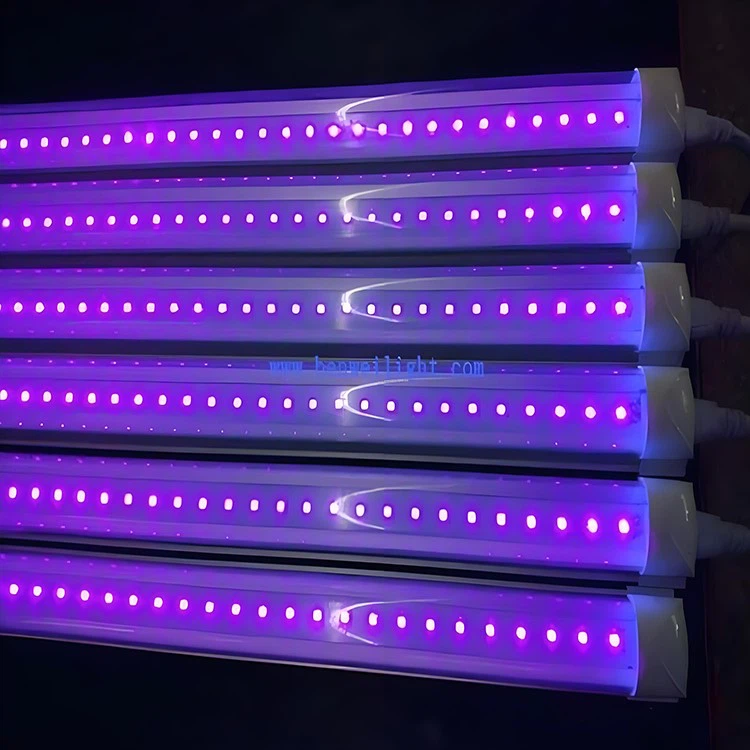
http://www.benweilight.com/professional-lighting/uv-lighting/uv-light-black-light-for-halloween.html