One important environmental component affecting poultry's physiology, behaviour, and productivity is light. The development, reproduction, feed efficiency, and general wellbeing of all animals-from chicks to laying hens and broilers-are impacted by appropriate lighting management. The science underlying poultry light needs is examined in this article, which also describes how various life phases and production systems are impacted by light intensity, duration, wavelength, and quality.
Light's Function in the Physiology of Poultry
Through the pineal gland and retina, light affects poultry, controlling hormones such as gonadotropin-releasing hormone (GnRH) (reproductive function) and melatonin (sleep-wake cycles). Birds are more sensitive to changes in light than humans because of a light-sensitive area in their skull called the parietal eye. Important physiological functions that are impacted by light include:
Circadian Rhythms: Birds use cycles of light and dark to control when they eat, drink, and sleep.
Sexual Maturity: By promoting ovarian growth, photoperiod (daylength) causes chickens to begin laying.
Growth and Metabolism: Chicks and broilers that receive enough light are more active and consume more feed.
Behavioural Health: Stress, feather pecking, cannibalism, or a decrease in social contact can all result from inadequate illumination.
Light Needs by Stage of Life
Females (0–6 Weeks)
Objective: Encourage development, growth, and stress alleviation.
For the first three days, there should be 23–24 hours of light to promote eating and water consumption.
Days 4–14: Reduce gradually to 18–20 hours while continuing to be active to avoid fatigue.
Weeks 3–6: Depending on the breed and housing method, cut down to 12–16 hours.
The intensity of light
10–20 lux during the first week (bright enough for chicks to find water and eat).
Weeks after that: 5–10 lux to reduce feather pecking and excitability.
Wavelength: Blue or green light may make young girls more anxious, therefore warm white light (2,700–3,000 K) is better.
Important Points to Remember:
Distribute the lighting evenly to avoid the chicks congregating in places that are too bright or too dark.
Dark Periods: Starting on day 4, introduce brief periods of darkness (one to two hours) to help the chicks become used to their natural cycles and avoid panicking in the case of brief outages.
7–18 Week Pullets
The objective is to postpone sexual maturity until the laying hens achieve their ideal body weight, which is usually 18 to 20 weeks.
Duration of Light: Stable Photoperiod: If rearing chicks in natural daylight, keep the daylength constant (e.g., 10–12 hours) or progressively reduce the number of light hours (essential for seasonal hatches).
Avoid Long Days: During this period, prolonged exposure to light (14+ hours) might cause early laying, which results in tiny eggs and lower lifetime output.
Light Intensity: 5–10 lux (low light to promote composure and lower energy expenditure for exercise).
Wavelength: High-intensity blue light might hasten maturity in certain breeds; neutral white light (4,000–5,000 K) is ideal.
Important Points to Remember:
Natural vs. Artificial Light: To regulate photoperiod in open-sided homes around spring hatches when daylength lengthens, use light-blocking drapes.
Breed Variability: Compared to slower breeds (like Plymouth Rocks), fast-maturing breeds (like Leghorns) could need more stringent light regulation.
Hens (18+ Weeks) Laying
Objective: Reduce stress, preserve shell quality, and promote steady egg production.
Duration of Light: Stimulatory Photoperiod: Throughout the laying cycle, gradually extend the number of light hours to 14–16 hours at the time of lay (18–20 weeks).
Avoid Excess: 16 hours of light exposure might result in prolapse, exhaustion, or decreased egg quality.
At bird height, the light intensity should be between 10 and 20 lux (bright enough to let hens see the meal and navigate, but not so bright as to incite conflict).
Wavelength:
Blue or Green Light: Research indicates that blue light (450–495 nm) can boost white-shelled breeds' egg production by 5–10%, but it may also cause them to become more active.
Red Light: It is appropriate for flocks that are prone to violence since it encourages tranquilly and lessens pecking.
Important Points to Remember:
Light Timing: To correspond with natural foraging habits, extend light in the morning (for example, from 5 AM to 9 PM) as opposed to the evening.
Transition Period: To prevent stress, progressively increase the number of light hours (0.5–1 hour every week). Hens may deposit eggs in unusual places as a result of sudden increases.
Meat chickens, or broilers
Goal: Reduce stress and limb issues while increasing feed intake and development rate.
Light Duration: 23 hours of continuous light during the first week to promote quick development and feeding.
After the first week, use intermittent lighting, which alternates between 18 and 20 hours of light and 4 to 6 hours of darkness to save energy and promote rest. Some systems simulate natural foraging cycles by using pulse illumination, which is on for one to two hours and off for one hour.
To make feeding easier, the first week's light intensity should be between 10 and 20 lux.
In the weeks that follow, use 5–10 lux to lower activity and focus energy on development.
Wavelength: Red light is frequently used to lessen antagonism in crowded systems, although blue or green light may improve feed conversion in broilers.
Important Points to Remember:
Energy Efficiency: While sustaining growth rates, intermittent illumination can lower power use.
Foot Pad Health: Better foot wellbeing and less litter scratching may result from dim illumination in later weeks.
A Look at Technology and Light Quality
Sources of Light
Although inefficient (using 90% of energy as heat), incandescent bulbs produce warm light. hardly seldom utilised in contemporary poultry systems.
Although fluorescent lights are more energy-efficient than incandescent ones, they can cause stress when they flicker at low voltages. For simulating natural light, full-spectrum fluorescent is the best option.
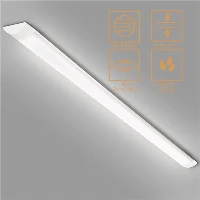
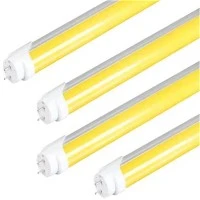
LED lights are the best option for poultry since they
Energy Efficiency: Compared to incandescent, this uses 80% less energy.
Customisable Wavelengths: Able to emit particular hues (white, blue, and red) to influence productivity or behaviour.
Long Lifespan: Lowers upkeep for big flocks.
Full-spectrum advantages are provided by natural light, but in industrial contexts, it must be supplemented under strict supervision (e.g., employing timers to increase daylength in winter).
Distribution and Intensity of Light
One foot-candle is equivalent to 10.76 lux. Using a light meter, measure the amount of light at bird height (18 inches for mature hens, for example).
Uniformity: Make sure there are no hotspots or shadows. Lamp placement in multi-tier systems should be adjusted to reach lower levels.
Dimming controls: Reduce tension during sunrise/sunset mimics by enabling gentle changes between light and dark periods.
Effects of Colour Temperature and Wavelength
Warm Light (2,700–3,500 K): Ideal for laying and brooding chickens, it encourages serenity.
Cool Light (4,000–6,500 K): Promotes activity and alertness, which is good for encouraging feed intake in broilers or chicks.
Light in One Colour:
Red Light: Preserves egg production in layers, decreases aggressiveness, and increases feed efficiency in broilers.
Blue light: Promotes layer egg production and broiler development, although it can also make some breeds more anxious.
Green Light: By lowering feather pecking in pullets, this measure may enhance wellbeing.
Lighting Management Issues and Solutions
Variations by Season
Problem: Unmanaged flocks produce fewer eggs during the short winter days.
Solution: To keep 14–16 hours of light throughout the year, use artificial light. To avoid early lay, gradually cut down on light in the spring for pullets hatched in the winter.
Problems with Behaviour
Feather Pecking/Cannibalism: Frequently associated with blue wavelengths or intense light.
Solution: Use red or amber light, lower the intensity to 5–10 lux, or provide environmental enrichment (e.g., greens, perches).
Light Transition Stress: Abrupt changes in light can trigger fear (e.g., "piling" in chicks).
Solution: For gentle changes, use timers or dimmers (e.g., 30-minute sunrise/sunset 模拟).
Costs of Energy
LED Retrofitting: LED systems save 50–70% on energy over time, while having greater initial expenses.
Sensor-Based Systems: Adapt light intensity to ambient light levels using photocells.
New Developments in Lighting for Poultry
Circadian lighting is the practice of optimising hormone control by simulating natural light cycles, such as boosting red light in the evening and blue light in the morning.
Dynamic lighting programs use varying wavelengths to promote particular behaviours throughout the day (e.g., red light during rest, blue light when eating).
IoT integration: intelligent timers and sensors that automatically modify illumination in response to real-time information (such as temperature or bird activity).
Using Lighting Strategically
An essential component of poultry production and welfare is effective lighting management. Adapting the length, intensity, and quality of light to each stage of life allows farmers to:
Make sure the chick develops healthily.
Improve the chickens' egg quality and lay timing.
Increase the broiler's growth efficiency.
Cut down on energy expenses and behavioural issues.
As technology develops, poultry surroundings may now be controlled like never before thanks to smart systems and poultry LED lights. Understanding and putting these light needs into practice may significantly enhance bird health and financial outcomes, whether you're running a commercial enterprise or a backyard flock.
Poultry breeders may maximise the potential of their flocks and promote sustainable, humane methods by seeing light as an essential nutrient rather than a convenience.