What is the suitable spectrum for a night light? Why is 590nm more suitable than 660nm?
For sleep use, a blue-light free night light should utilize long-wavelength light above 590nm. The goal is to minimize disruption to the body's circadian rhythm.
1. Core Principle
Light at night affects sleep primarily by suppressing melatonin secretion. Specialized cells in the human eye (ipRGCs) are most sensitive to blue light (460-495nm). Longer wavelengths (yellow, orange, red) stimulate these cells much less, thereby causing minimal disruption.
2. Spectrum Analysis & Selection
| Spectrum Type | Recommended Wavelength | Key Benefit | Consideration |
|---|---|---|---|
| Amber/Orange Light | 590-610nm | Best balance: Very low circadian disruption while providing adequate visual brightness for safe navigation. | The recommended choice for general sleep-friendly night lights. |
| Deep Red Light | >620nm (preferably >630nm) | Negligible impact on melatonin; ideal for preserving dark adaptation (e.g., for astronomy). | Environment may be too dim; color perception can feel unnatural. |
| Spectra to Avoid | <550nm, especially 460-495nm blue peak | Standard white LEDs (blue chip + phosphor) contain this peak and must be avoided. | "Filtered" products may still have blue light leakage. |
3. Selection & Usage Guidelines
Light Source: Choose LEDs specifically labeled "blue-light free," "amber," or "red." Standard "warm white" bulbs (e.g., 2700K) are not suitable.
Brightness & Placement: Keep brightness low (<10 lumens is sufficient). Install at a low position (e.g., near the floor) to avoid direct eye exposure.
Smart Features: Models with motion sensors or auto shut-off minimize unnecessary light exposure.
Special Applications:
Nurseries: Deep red light (>630nm) is an excellent choice for minimal disruption.
Darkrooms/Astronomy: Use strict deep red light.
Plant Growth Lights: Have different spectral requirements and should be evaluated separately.
Conclusion: The best practice is to use a pure amber LED night light (peak 590-610nm) at the lowest effective brightness and install it in a low position. While deep red light (>620nm) is less disruptive, its impractical visual output makes amber light the superior choice for general sleep environments.
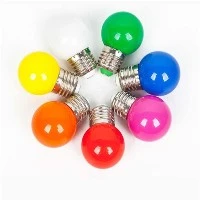
590nm Amber light Bulb