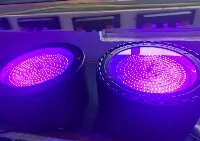
Before delving into UV-LED technology, we must first clarify several core concepts to ensure we are discussing the same subject matter. This will prevent misinterpretations and cross-purpose communication. Here, UV refers to UV-curable materials such as UV coatings, UV inks, and UV adhesives; LED specifically denotes ultraviolet LED light sources; and UV-LED is defined as "the curing of UV materials using ultraviolet LED light sources as the irradiation source".
As we all know, the conventional curing light source for UV coatings is the medium-pressure and high-pressure mercury lamp. In recent years, driven by energy conservation and environmental protection policies, coupled with the rapid advancement of UVLED (ultraviolet LED) technology that has laid the groundwork for industrial-scale applications, the market has witnessed a surging upsurge in UV-LED adoption. Emerging technologies always attract widespread attention and enthusiasm. However, as industry practitioners, a clear understanding of UV-LED is imperative. Here, we would like to share our research experience in the UV-LED field over the past two years.
The shift in light sources (the differences between LEDs and mercury lamps will be elaborated later) has led to a transformation in UV coating formulation systems as well as a revolution in the entire coating and curing processes. For the UV-LED system, we identify five key research directions spanning both technical and market dimensions.

Research on UV-LED Photocuring
As defined earlier, UV-LED photocuring relies on ultraviolet LED light sources to cure UV materials. Therefore, achieving effective curing is the primary objective of all research efforts. Photocuring requires two indispensable components: light (the energy source) and UV materials (the receptor). A change in the light source inevitably disrupts the equilibrium of the entire system, with the core lying in the interdisciplinary R&D to align UV coatings with LED light sources.
It is widely recognized that shorter LED wavelengths correspond to higher energy levels and higher costs. Conversely, photoinitiators requiring lower excitation energy feature longer absorption wavelengths and also command higher prices. This creates a seesaw-like relationship between light sources and initiators. Thus, expanding the performance boundaries of both and identifying the optimal balance between LED light sources and UV materials have become the focus of UV-LED R&D initiatives.
Research on LED Light Source Systems
Mercury lamp technology is highly mature in terms of development and application, and has long been regarded as the standard light source. In contrast, ultraviolet LED technology is still in its infancy, boasting enormous potential for future growth. Additionally, the LED industry chain is highly extensive, encompassing crystal growth, chip dicing, chip packaging, light source module integration, as well as power supply control and heat dissipation system design. Each stage exerts a critical impact on the quality of the final product-the UVLED light source. Therefore, understanding and expanding the performance boundaries of LEDs are essential for advancing the entire UV-LED ecosystem.
Differences Between LED Light Sources and Mercury Lamps (Advantages, Disadvantages, and Common Misconceptions About LEDs)
To prevail in market competition, a thorough understanding of both one's own strengths and competitors' weaknesses is essential. Since we aim to replace traditional mercury lamps with UVLEDs, it is crucial to first compare the two technologies and analyze their respective advantages, disadvantages, and limitations.
UV coatings cure because photoinitiators in their formulations absorb ultraviolet light of specific wavelengths, generating free radicals (or cations/anions) that initiate monomer polymerization. To illustrate this principle, we will first examine the emission spectra of mercury lamps and ultraviolet LEDs.

This chart is a classic and commonly seen comparison of the emission spectra of UV LEDs and mercury lamps. As can be observed from the diagram, the emission spectrum of a mercury lamp is continuous, spanning from the ultraviolet to the infrared range. In particular, the light intensity is concentrated in the UVB to short-wave UVA band. By contrast, the emission spectrum of an LED is relatively narrow, with the two most common wavebands featuring peak wavelengths at 365 nm and 395 nm (including 385 nm, 395 nm, and 405 nm).
Currently, the primary UV light with industrial applicability falls within the UVA band, specifically the LED light sources with wavelengths of 365 nm and 395 nm as illustrated in Figure 1. Within this wavelength range, most photoinitiators exhibit relatively low molar extinction coefficients. Consequently, UV-LED systems generally suffer from low initiation efficiency and severe oxygen inhibition, which are detrimental to surface curing.
Note: The claim frequently made by many UVLED manufacturers or LED UV coating suppliers about the "excellent sandability of LED UV coatings" is, strictly speaking, a direct result of inadequate surface curing. The real challenge does not lie in achieving good sandability, but in enabling controllable sandability-striking a balance between wear resistance and ease of sanding. Furthermore, some manufacturers resort to deceptive practices: installing a mercury lamp behind the LED array, where the mercury lamp actually plays the dominant curing role.
That said, we also note that in the 365 nm and 395 nm wavebands, LEDs deliver significantly higher light intensity than mercury lamps, which facilitates deep-layer curing of UV materials.
(For reference, many traditional UV curing systems incorporate a gallium lamp (with a dominant emission wavelength of 415 nm) alongside mercury lamps, precisely to enhance deep-layer curing efficacy.)
This misconception typically arises from the premise that only 30% of the light emitted by mercury lamps is ultraviolet (UV), whereas UVLEDs emit 100% UV light. However, the true determinants of system-level energy consumption are photoelectric conversion efficiency and effective light efficiency. Mercury lamps actually boast high photoelectric conversion efficiency-their shortcoming lies in the fact that a large portion of the emitted light consists of visible and infrared rays, with UV light (the only component useful for curing UV materials) accounting for a mere 30%. In contrast, UVLEDs have significantly lower photoelectric conversion efficiency, currently hovering around 30% for UVA wavelengths (which is roughly equivalent to the UV light efficiency of mercury lamps).
According to the law of conservation of energy, the remaining 70% of electrical energy is converted into heat. This explains two key differences between the two technologies:
LEDs earn their reputation as "cold light sources" because the heat generated dissipates from the back of the lamp panel, leaving the light-emitting surface cool to the touch. Conversely, mercury lamps radiate heat forward through their reflectors and infrared emissions.
This is precisely why UVLED light sources generally require air-cooling systems, and high-power UVLEDs even mandate water-cooling units sized to handle 70% of the light source's electrical power for lamp head heat dissipation.
The genuine energy-saving advantages of LEDs stem from two unique traits: instant on/off capability and precision irradiation via optical design, which enhances effective light efficiency. However, leveraging these benefits requires integration with infrared detection and intelligent control systems-technologies that most UV LED equipment manufacturers on the market currently lack the R&D capacity to develop.
Ozone Generation: Their emission spectrum includes far-ultraviolet light below 200 nm, which produces substantial amounts of ozone. (This is the root cause of the pungent odor reported by factory workers operating mercury lamp systems.)
Mercury Pollution from Disposal: Mercury lamps have a short service life of only 800–1000 hours. Improper disposal of spent lamps leads to secondary mercury pollution, a problem that remains intractable to this day.
Reports indicate that the energy required annually to treat mercury waste is equivalent to the combined generating capacity of two Three Gorges Dams. Worse still, there is currently no viable technology for the complete elimination of mercury from waste streams.
UV LEDs are entirely free from these issues. Since the Minamata Convention on Mercury formally entered into force in China on August 16, 2017, the phase-out of mercury lamps has been placed on the official agenda. While the Convention includes an exemption for industrial mercury fluorescent lamps where no alternatives exist, it also stipulates that signatory parties may propose adding such products to the restricted list once viable substitutes become available. Thus, the timeline for the full phase-out of mercury lamps in UV curing applications hinges entirely on the technological advancement and industrialization of UV LED solutions.
It supports localized precision curing for applications such as 3D printing.
By pairing LEDs with different photoinitiators, it allows for precise control over curing degrees and depths.
Customizable Light Source ConfigurationLEDs feature a modular lamp bead design, which allows flexible adjustment of length, width, and irradiation angle. This versatility enables the creation of point light sources, line light sources, and area light sources, tailored to meet the specific requirements of diverse curing processes.
Light Source Parameter Requirements for UV Material Curing
Wavelength: 365 nm, 395 nm
Irradiance (Light Intensity, Optical Power Density): mW/cm²
Total Energy Dose: mJ/cm²
The photocuring process cannot proceed without the three core parameters mentioned above: wavelength, light intensity, and total energy dose.Wavelength determines whether photoinitiators can be activated; light intensity dictates UV initiation efficiency and directly impacts surface curing (oxygen inhibition resistance) and deep curing performance; while total energy dose ensures thorough curing of the material.
Compared with mercury lamps, the most prominent advantage of LEDs lies in their formulable and tunable properties. Within the performance limits of the LED itself, its parameters can be optimized to the greatest extent to meet specific curing requirements. In UV-LED photocuring experiments, the core objective is to continuously expand the performance boundaries of both the light source and UV materials, and identify the optimal balance between them. Specifically for LEDs, this means determining the ideal LED light source parameters based on the coating formulation to achieve optimal curing results.
LED Luminescence Principle and Current Development Status of UVLED Chips
Based on the principle of electron transition (details omitted; interested readers may refer to online resources for more information), when electrons in an atom return from an excited state to a ground state, they release energy in the form of radiation at different wavelengths (i.e., emit electromagnetic waves of varying wavelengths).
Therefore, there are two primary approaches to manufacturing UV-emitting light sources:
The first approach is to identify an atom whose electron energy difference between the excited state and ground state falls exactly within the ultraviolet spectrum. Traditional mercury lamps are the most widely used UV light sources based on this principle.
The second approach leverages the semiconductor luminescence principle (details omitted; interested readers may refer to online resources for more information). Briefly, when a forward voltage is applied to a light-emitting semiconductor, holes injected from the P-region to the N-region and electrons injected from the N-region to the P-region recombine with electrons in the N-region and holes in the P-region respectively within a few micrometers near the PN junction, generating spontaneous fluorescent radiation.
As is widely known, the band gap of group III-V semiconductor materials ranging from aluminum nitride to gallium nitride or indium gallium nitride (InGaN) falls precisely within the spectrum from blue light to ultraviolet light. By adjusting the material ratio of aluminum indium gallium nitride, we can produce ultraviolet and visible light sources across a wide range of wavelengths.


While theoretically, light of any wavelength can be produced by adjusting the composition of luminescent materials, the range of UVLED chips available for commercial production remains quite limited due to various constraints. High-power chips suitable for industrial applications are basically concentrated in the UVA band (365–415 nm). In recent years, UVB and UVC technologies have also seen vigorous development, but they are basically confined to low-power civilian and consumer markets such as disinfection and sterilization.
There are several key reasons for this:
Crystal Material Structure Determines Luminous Efficiency (Photoelectric Conversion Efficiency)Gallium Nitride (GaN) and high-efficiency Indium Gallium Nitride (InGaN) can still be used for the 365–405 nm range within UVA. By contrast, UVB and UVC chips rely entirely on Aluminum Gallium Nitride (AlGaN)-a material with inherently low luminous efficiency-instead of the more commonly used GaN and InGaN. This is because GaN and InGaN absorb ultraviolet light below 365 nm. As a result, the luminous efficiency of UVB and UVC chips is extremely low. For instance, LG's 278 nm chip has a mere 2% photoelectric conversion efficiency.
Heat Dissipation Challenges Arising from Low EfficiencyAccording to the law of conservation of energy, a 2% photoelectric conversion efficiency means that 98% of the electrical energy is converted into heat. Moreover, the service life and luminous efficiency of LED chips are inversely proportional to temperature. Such high heat generation imposes extremely stringent requirements on heat dissipation systems. With existing cooling technologies, it is simply impossible to achieve effective heat dissipation for high-power UVB and UVC chips.
Low UV Transmittance of Packaging and Lens MaterialsTo protect LED chips, encapsulation is essential. Since LEDs emit light omnidirectionally, lenses are required to concentrate the light beam. However, apart from quartz glass, most materials have very low UV transmittance-and transmittance drops sharply as the wavelength shortens. Consequently, even though the inherent luminous efficiency of UVB/UVC chips is already low, a significant portion of the light is absorbed by the lenses, resulting in extremely weak usable light output that is barely sufficient for industrial applications.
Low Crystal Yield and High Production CostsCurrent UVB and UVC chips are produced using the same reactors as UVA chips. In addition to inherent material defects, issues such as mismatched thermal expansion coefficients between the substrate and the crystal lead to extremely low crystal yields, which in turn keep production costs prohibitively high.
Overall, due to the low luminous efficiency, high costs, and stringent heat dissipation requirements of UVB and UVC technologies, the development of high-power UVB and UVC light sources for industrial applications will remain elusive until major technological breakthroughs are achieved.

Key R&D Focuses of LED Light Source Systems
An LED chip is only one critical component of an LED light source. When conducting R&D on LED light sources, we must adopt a systematic, holistic approach. Beyond LED wavelength tuning, the R&D scope encompasses a series of downstream processes including packaging technology, optical design, heat dissipation systems, power supply systems, and intelligent control systems.
Currently, there are four mainstream packaging structures for LED chips:
Vertical Mount Structure
Flip-Chip Structure
Vertical Structure
3D Vertical Structure
Conventional LED chips typically adopt a vertical mount structure with a sapphire substrate. This structure features a simple design and mature manufacturing processes. However, sapphire has poor thermal conductivity, making it difficult for heat generated by the chip to transfer to the heat sink- a limitation that restricts its application in high-power LED systems.
Flip-chip packaging represents one of the current development trends. Unlike vertical mount structures, heat in flip-chip designs does not need to pass through the chip's sapphire substrate. Instead, it is directly transferred to substrates with higher thermal conductivity (such as silicon or ceramic) and then dissipated into the external environment via a metal base. Additionally, since flip-chip structures eliminate the need for external gold wires, they enable higher chip integration density and improved optical power per unit area. That said, both vertical mount and flip-chip structures share a common flaw: the LED's P and N electrodes are located on the same side of the chip. This forces current to flow horizontally through the n-GaN layer, leading to current crowding, localized overheating, and ultimately limiting the upper threshold of drive current.
Vertical-structure blue-light chips evolved from vertical mount technology. In this design, a conventional sapphire-substrate chip is flipped and bonded to a highly thermally conductive substrate, followed by laser lift-off of the sapphire substrate. This structure effectively addresses the heat dissipation bottleneck, but involves complex manufacturing processes- particularly the challenging substrate transfer step- which results in low production yields. Nevertheless, with advancing technology, vertical packaging for UV LEDs has become increasingly mature.
A novel 3D vertical structure has recently been proposed. Compared to traditional vertical-structure LED chips, its primary advantages include the elimination of gold wire bonding, enabling thinner package profiles, enhanced heat dissipation performance, and easier integration of high drive currents. However, numerous technical hurdles must be overcome before 3D vertical structures can be commercialized.
Given that UVLEDs generally exhibit lower luminous efficiency compared to general lighting LEDs, vertical structure packaging is the preferred choice to maximize light extraction efficiency.
Since LEDs emit light omnidirectionally, and their inherent luminous efficiency is already relatively low, scientific and rational optical design is required to enhance effective light efficiency (i.e., the light efficiency of frontal irradiation). Common optical components include reflectors, primary lenses, and secondary lenses.
In addition, ultraviolet light undergoes high attenuation when passing through media. Therefore, multiple factors must be evaluated when selecting lens materials-such as quartz glass, borosilicate glass, and tempered glass-with priority given to materials with high UV transmittance. This not only maximizes light output but also prevents excessive temperature rise caused by material light absorption under prolonged UV exposure.
As previously mentioned, according to the law of conservation of energy, only a portion of electrical energy is converted into light energy, while a large proportion is dissipated as heat. For the UVA band, the typical energy conversion ratio is 10:3:7 for electricity, light, and heat respectively. The effective service life of LED chips is closely correlated with their junction temperature. In the photocuring process, high optical power density often requires high-density integration of LED chips, which imposes stringent requirements on heat dissipation systems.
Thus, achieving efficient heat dissipation and ensuring that the junction temperature of all LED chips remains within a reasonable and balanced range necessitates rigorous scientific design, computer simulation, and practical testing.
Research on UV Coating Formulations
Limitations of Photoinitiators & A System-level Approach to Resin and Monomer ReactivityAs illustrated in the preceding introduction to LED technology, high-power LED light sources suitable for industrial applications are currently confined to the UVA band, specifically wavelengths above 365 nm. Having defined the performance boundaries of LED light sources, we can now see that the selection of compatible photoinitiators is rather limited, as most photoinitiators exhibit low molar extinction coefficients at wavelengths above 365 nm.
To address the issue of low initiation efficiency of LED-compatible photoinitiators, R&D efforts should not be limited to the photoinitiators themselves. Instead, we need to adopt a system-level perspective that integrates resins, monomers, photoinitiators and even auxiliary additives into a holistic research framework, thereby enhancing the curing efficiency of LED UV systems.
Formulation Design and Coating Process Development for LED Curing (Impacts of Photoinitiators, Resins, Monomers, Temperature, Surface Dryness, Through Dryness, Pigments and Fillers)To improve the absorption of long-wavelength UV light by photoinitiators, it is often necessary to incorporate benzene rings, nitrogen (N), phosphorus (P) and other atoms into their molecular structures. While this modification enhances long-wavelength UV absorption, it also leads to increased coloration of the photoinitiators.
Furthermore, due to the low light absorption efficiency of these initiators, large quantities of highly reactive resins and monomers-typically high-functionality acrylic resins and monomers-must be added to accelerate the overall reaction rate of the coating system. However, this approach tends to produce coatings with high hardness yet poor flexibility, which restricts their range of applications.
That said, the generally low molar extinction coefficients of LED UV photoinitiators also offer a unique advantage: they allow higher UV light transmittance through the coating layer, which is conducive to deep curing of thick films.
Coating Performance Requirements for Different Storage, Transportation, Construction Conditions and Application ProcessesIn the coating industry, various application techniques such as roller coating, spray coating and curtain coating impose distinct viscosity requirements on coatings. Meanwhile, different substrates demand tailored coating properties in terms of wettability and adhesion. Additionally, varying transportation and storage conditions necessitate corresponding levels of storage stability for the coatings. Therefore, all these factors must be fully considered during coating formulation design.
Coating Film Performance Requirements for Diverse Applications Different application fields impose varying performance requirements on coating films, including glossiness, colorimetric properties, hardness, flexibility, abrasion resistance and impact resistance. Consequently, coating development must strike a balance between curing efficacy and film performance.
Research on Coating Processes
Coating is a systematic engineering process. Optimizing coating processes can further expand the application boundaries of UV-LED technology. As an industry saying goes, "Three parts rely on the coating; seven parts depend on the application process". Ultimately, both coatings and light sources achieve their intended performance only through proper application.
Moreover, optimizing coating processes in conjunction with UV coatings and LED light sources can significantly compensate for the limitations of both materials and light sources. For example, heating can reduce the viscosity of high-resin-content coatings that are overly viscous at room temperature, making them suitable for different application methods. Additionally, heating can improve the fluidity of the coating system, enhance molecular activity, ensure more complete initial curing reactions and yield smoother film surfaces.
Research on Upstream and Downstream Industry Chains
Over the past two years, the shortage and skyrocketing prices of photoinitiators triggered by environmental protection campaigns have inflicted tangible losses on downstream enterprises and severely hindered the development of LED UV technology. This underscores that the connectivity of upstream and downstream industry chains and the smoothness of supply chain systems are the fundamental guarantees for the healthy development of an industry and the market success of its products and technologies.
While many industries evolve from scratch through the mutually reinforcing dynamics of technological innovation, industrial development and demand surge, these factors must be comprehensively evaluated during the marketization process.
Furthermore, from an investment perspective, conducting research on and deploying upstream and downstream industry chains can not only ensure stable supply when products enter the market, but also enable enterprises to share in the dividends of industry growth.


http://www.benweilight.com/professional-lighting/uv-lighting/uv-light-black-light-for-halloween.html