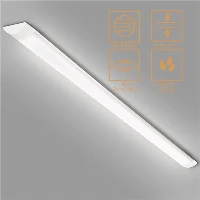
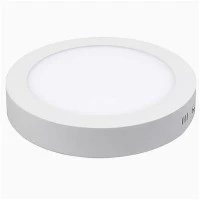
It is often acknowledged that LED panel lights are an economical and energy-efficient substitute for conventional fluorescent or incandescent lighting. However, because of their higher initial cost, many people are hesitant to embrace them. To assist consumers in making wise judgements, this article examines the initial outlay needed for LED panels, calculates their long-term savings, and offers real-world examples.
Overview of LED Panel Lighting
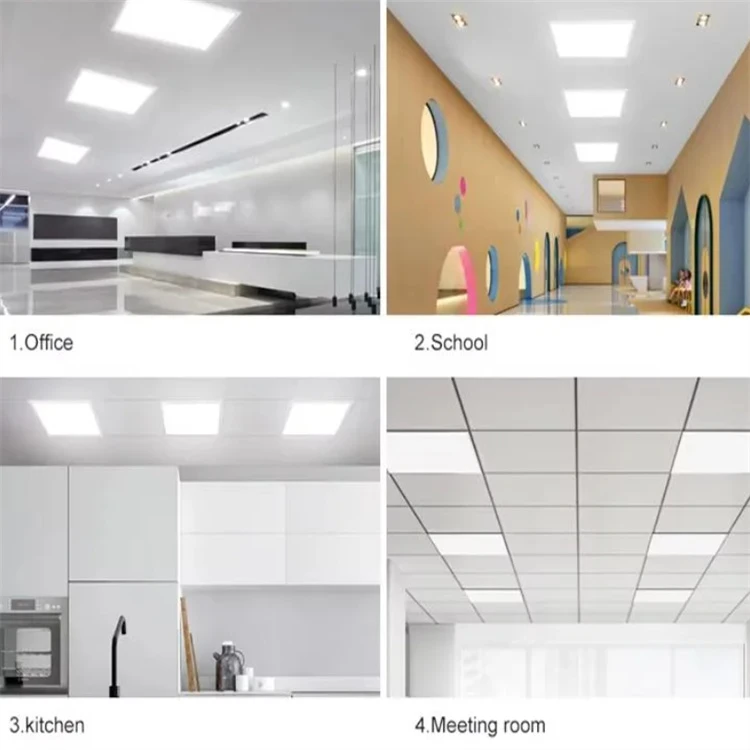
LED panel lights are thin, flat lighting fixtures that give ceilings consistent lighting. They are used in modern homes, workplaces, hospitals, and schools because of their
energy efficiency (power consumption is 50–70% lower than that of fluorescents).
extended life (30,000–50,000 hours as opposed to 10,000 hours for fluorescents).
aesthetic appeal (a design that is elegant and free of glare).
Notwithstanding these advantages, proper financial planning is necessary for the changeover. We break out the expenses and savings below.
LED Panel Lights' Upfront Costs
a. LED Panel Cost
Residential-grade panels: 2x2 or 2x4 feet, 20–20–60 per unit.
Commercial-grade panels (increased brightness, intelligent features, or specialised designs): 50–50–150+ per unit.
For instance, a 500 square foot office that needs 10 panels may have to pay between $500 and $1,500 up front.
c. Costs of Installation
If replacing existing fixtures with a suitable grid ceiling, DIY installation costs nothing.
Professional installation costs between $50 and $150 per hour, depending on the intricacy and style of ceiling.
Typical situations:
Suspended ceilings: Easy to install (drop-in).
Ceilings made of concrete or plasterboard: 200–200–500 for installation, wiring and cutting.
b. Extra Expenses
Smart controllers and dimmers: 20–20–100 per switch.
150–150–500 for wiring modifications (if outdated circuits lack capacity).
100–100–300 for design consultancy (for big commercial layouts).
Total Range Up Front:
300–300–1,000 for residential use (for 5–10 panels).
Business: 2,000–2,000–10,000+ (for 50–100 panels installed by an expert).
LED Panel Lights' Long-Term Savings
a. Energy Conservation
Compared to conventional illumination, LED panels use a lot less power:
Each fluorescent troffer panel uses 80–100 watts.
Each LED panel uses 25–40 watts and has a comparable brightness.
The formula is (Wattage × Hours/day × Days/year) ÷ 1,000 × Electricity rate = Annual Energy Cost.
For instance:
The annual cost of an office with ten LED panels (30W each, 10 hours per day, 0.12/kWh) is equal to (30×10×260)÷1,000×0.12=0.12/kWh.
Fluorescents that are equivalent (80W each):
(80 × 10 × 260) ÷ 1,000 × 0.12 = 2,496 is the annual cost. The annual savings is 2,496. The annual savings is 2,496 minus 936, which is 936 = 1,560**.
a. Lower Maintenance Expenses
Lifespan: LEDs require fewer replacements since they last three to five times as long as fluorescents.
Replace fluorescent bulbs every one to two years.
LED panels should be changed every five to ten years.
Labour savings: Lower maintenance staffing expenses, particularly in commercial settings, result from fewer replacements.
For instance, a school with 100 fluorescent light fixtures may spend $2,000 a year on replacements compared to $2,000 a year on LEDs.
c. Rewards for the Environment
Rebates: ConEd and Duke Energy are two utilities that provide 5–5–50 per LED panel.
Tax deductions: Energy-efficient business lighting is eligible for a deduction under Section 179D (U.S.).
For instance, a 5,000 LED project may be eligible for a $1,000 refund, which would lower the project's net cost to $4,000.
d. Efficiency and Health Advantages
In offices, flicker-free lighting can lessen eye strain and even increase productivity.
A high CRI increases task accuracy in industries or hospitals, which has an indirect financial advantage.
ROI and Payback Duration
a. Formula for Payback Period
(Upfront Cost - Rebates) ÷ Annual Savings = Payback (years).
For instance:
Office upgrade: $4,000 net cost (5,000 upfront, 5,000 upfront, and $1,000 refund).
1.560 (energy) + 1,560 (energy) + 1,600 (maintenance) = 3,160 per year. The payback period is 3,160 days. $4,000 ÷ $3,160 = 1.26 years is the payback period.
b. ROI for life
Over a ten-year span:
3,160×10 = 3,160×10 = 31,600 in total savings.
31,600–31,600–4,000 = $27,600 is the net profit.
Case Studies a. Homeowners' Residential Retrofit
Scope: Install LED panels in place of 15 fluorescent kitchen lights.
The total upfront cost is $1,200 (900 panels + 900 panels + 300 installation).
220 (energy) + 220 (energy) + 100 (bulb replacements) = $320 is the annual savings.
3.75 years for payback.
A commercial office that is 50,000 square feet
Installing 500 LED panels is the scope.
The initial cost is $40,000 (30,000 panels plus $30,000 panels plus $10,000 for installation).
$5,000 in rebates.
Savings per year: $15,000 for energy, $15,000 for energy, and $8,000 for maintenance, or $23,000.
(40,000–40,000–5,000) ÷ $23,000 = 1.5 years is the payback period.
Cost vs. Savings Factors a. Electricity Rates
High-rate regions (like California, where the rate is 0.22/kWh) experience faster payback than low-rate regions (0.08/kWh).
b. Usage Times
Hospitals and other places with round-the-clock operations save more money than spaces with sporadic use.
d. Quality of LEDs
Savings might be lost if inexpensive, uncertified LEDs die too soon.
Mitigation and Hidden Costs
Disposal: LEDs save the expense of fluorescent recycling, which costs $1–$5 per tube.
Compatibility: It can need 20–20–50 upgrades to retrofit outdated dimmers.
Even while LED panel lights cost more up front than conventional lighting, they generally pay for themselves in one to four years due to the energy, maintenance, and productivity benefits they provide over time. While households benefit from lower costs and contemporary aesthetics, business customers benefit from incentives and tax perks that speed up return on investment. Making the switch to LEDs a sustainable and financially viable decision requires putting an emphasis on high-quality materials and expert installation.
Concluding Remark:
Short-term: More expensive up front.
Long-term: Significant cost savings, improved user experience, and environmental advantages.
https://www.benweilight.com/ceiling-lighting/flat-led-panel/flat-panel-receesed-led-lights.html