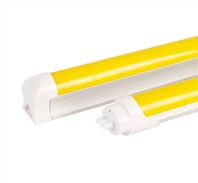
LED stands for Light Emitting Diode. It is a type of lighting that is rapidly gaining popularity due to its energy-saving properties and because it reduces carbon emissions. Unlike traditional lighting, LED lights are much more efficient, durable and long-lasting. They are also much safer and do not pose any environmental hazard as they are free from toxic materials.
First invented in 1962, LED technology has come a long way since then, and today it is used in a wide range of applications such as street lights, car headlights, displays screens, and more. LED bulbs work by using a semiconductor material to convert electricity into light energy. Traditional bulbs use a filament which burns out over time whereas an LED is very durable and can last for years without needing to be replaced.
One of the biggest advantages of LED lighting is its efficiency. They are highly energy-efficient and use only a fraction of the energy used by traditional bulbs. This means that they can save you a lot of money on your energy bills, and, of course, reduce your carbon footprint.
With the increasing need to reduce our carbon emissions, the adoption of LED lighting has helped to reduce energy consumption and make our planet a better place.
Another advantage of LED lighting is that they do not emit heat like traditional bulbs, making them much safer to use. This makes them ideal for use in enclosed spaces, such as in small rooms, or where there is a risk of fire. LED bulbs also work well in outdoor settings and can withstand harsh weather conditions.
Finally, LED lighting is also a popular choice because of its versatility. They can be used in a wide range of applications, from task lighting to mood lighting. LED bulbs also come in different shapes and sizes, and can be customized to suit different needs and preferences.
In conclusion, LED lighting is a sustainable, energy-efficient, and highly versatile lighting option. With the increasing global trend of adopting eco-friendly options, LED lighting has become an ideal solution for reducing carbon emissions and saving energy. Its durability, safety, and versatility also make it a popular choice for a wide range of settings and applications.