What Will Be the Biggest Trend in Downlights in 2025? The Rise of Human-Centric Intelligent Lighting

As we approach 2025, the lighting industry stands at the intersection of technology, wellness, and sustainability. For manufacturers, exporters, and sourcing professionals, understanding the next wave of trends is crucial for staying competitive. While sleek designs and energy efficiency continue to be essential features, a more profound and transformative trend is gaining prominence.
The biggest trend in downlights for 2025 is not a single product but a holistic system: The integration of Human-Centric Lighting (HCL) and advanced connectivity into ultra-discreet, sustainable fixtures. This shift moves downlights from being simple sources of illumination to becoming intelligent, responsive components of a building's health and efficiency ecosystem.
This article will break down the core elements of this mega-trend, providing data-driven insights to guide your product development and sourcing strategies for the coming year.
1. Human-Centric Lighting (HCL): Beyond Illumination to Well-Being
Human-centric lighting is the science of using light to support human health, well-being, and performance by mimicking the natural dynamic patterns of daylight.
The Science and The Demand
Our circadian rhythms-the internal processes that regulate our sleep-wake cycle-are highly sensitive to the color temperature and intensity of light. Cool, bright blue light promotes alertness, while warm, dim amber light signals relaxation.
Market Growth: The global human-centric lighting market is projected to grow from USD 1.2 billion in 2023 to over USD 4.1 billion by 2028, at a remarkable CAGR of 27.9% (MarketsandMarkets, 2023). This explosive growth is fuelled by awareness in key sectors.
Application in Downlights: In 2025, we will see a surge in demand for tunable white downlights. These fixtures can seamlessly adjust their correlated color temperature (CCT) from 2200K (warm, candle-like glow) to 5000K (cool, midday sun).
Residential: Downlights in homes will automatically provide energising lighting in the morning and transition to relaxing tones in the evening.
Commercial: Offices will use HCL to reduce employee fatigue and boost productivity. A study by the American Society of Interior Designers (ASID) found that 71% of employees reported improved well-being and satisfaction in spaces with human-centric lighting elements (ASID, 2024).
Healthcare & Hospitality: Hospitals use HCL to support patient recovery, while hotels use it to enhance guest comfort and create a premium experience.
2. The Sustainability Imperative: Efficiency as a Standard

Sustainability is no longer a marketing buzzword but a core purchasing criterion, driven by global regulations and corporate ESG (Environmental, Social, and Governance) goals.
Energy Efficiency and Longevity
The baseline for 2025 is ultra-high efficiency. Downlights that do not meet stringent energy standards will be left behind.
Luminous Efficacy: The benchmark is shifting. While standard LEDs offer 100-120 lumens per watt (lm/W), the new standard for premium downlights in 2025 will be 140 lm/W and above. This directly translates to lower operational costs and a smaller carbon footprint.
The DLC Premium Requirement: In North America, the DesignLights Consortium (DLC) Premium qualification is becoming a prerequisite for major utility rebates and commercial projects. Sourcing DLC Premium-certified downlights will be essential for accessing these markets.
Circular Economy: Expect increased focus on recyclable materials, minimal packaging, and designs that allow for easy repair and component replacement, moving away from the disposable fixture model. The European Union's Ecodesign for Sustainable Products Regulation (ESPR) is a key driver of this trend.
3. Invisible Integration and Minimalist Aesthetics
The "less is more" philosophy continues to dominate design. The downlight itself is becoming as invisible as possible, putting the focus entirely on the quality of light it produces.
The Slimmest Profile Yet
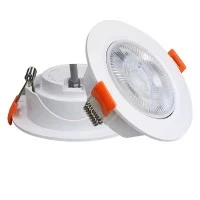
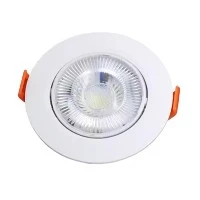
The era of the bulky "can light" is over. The trend is toward ultra-thin, "wafer" or "slim" downlights.
Product Evolution: These fixtures, often less than 15 mm (0.6 inches) thick, install directly into the ceiling without a traditional housing. They offer a flawless, seamless appearance that aligns with modern minimalist aesthetics.
Market Advantage: For exporters, these products are highly attractive due to their ease of shipping (lower volume and weight) and simpler installation, which reduces labour costs for the end client. They are expected to capture over 60% of the residential recessed lighting segment by 2025, according to industry analysis (Global Lighting Association, 2024).
4. The Connectivity Ecosystem: The Smart Downlight as a Data Node
A downlight in 2025 is not an island. It is an intelligent node in a connected building.
Beyond Basic Dimming: Integrated Sensors and Controls
The biggest shift is the movement of sensors from separate devices to being embedded within the downlight itself.
Integrated Occupancy and Vacancy Sensors: Downlights will automatically turn off in empty rooms, maximising energy savings without requiring a separate sensor installation.
Daylight Harvesting: Built-in photosensors will measure ambient light and dim or brighten the downlights accordingly, maintaining optimal light levels and saving energy.
Data Collection: Networks of connected downlights can provide valuable data on space utilisation, occupancy patterns, and energy consumption, enabling smarter facility management.
The global smart lighting market, which is the umbrella for these connected downlights, is forecast to reach USD 27.9 billion by 2026, up from USD 14.9 billion in 2021 (Market Research Future, 2024).
5. Specialization and Customization for Niche Applications
Finally, the one-size-fits-all approach is fading. We will see increased demand for downlights tailored for specific applications.
High-CRI for Premium Spaces: In retail, hospitality, and high-end residential, the demand for high Colour Rendering Index (CRI) is now a given. The new standard is CRI >95, and even >98, with excellent R9 (saturated red) values, to make colours, textures, and complexions appear vibrant and true-to-life.
Specialist Form Factors: Linear downlights, square downlights, and downlights with customisable bezel finishes (brushed brass, matte black, and colour options) will be specified to complement specific architectural details.

Conclusion: Sourcing for the Future
The biggest trend in 2025 is the convergence of human-centric intelligence, seamless sustainability, and invisible design. The downlight of the future is not just a light source; it is a well-being device, an energy-saving tool, and a data point-all packaged into a nearly invisible disc in the ceiling.
For businesses on the Foreign Trade Express platform, the opportunity is clear. The market is shifting from low-cost, basic downlights to high-value, intelligent, and specification-grade products. Partnering with manufacturers who are investing in R&D for tunable white technology, high efficacy, and integrated connectivity will be the key to capturing growth in 2025 and beyond.
Are you ready to source the downlights of the future? Contact us to explore our range of 2025-ready, intelligent, human-centric downlight solutions designed for the global market.
References:
MarketsandMarkets. (2023). *Human-Centric Lighting Market by Offering (Hardware, Software, Services), Application (Commercial, Industrial, Residential, Healthcare), Installation Type (New, Retrofit), and Geography – Global Forecast to 2028*.
American Society of Interior Designers (ASID). (2024). Impact of Design Report.
Global Lighting Association. (2024). *Lighting Market Report & Outlook 2024-2025*.
Market Research Future. (2024). *Smart Lighting Market Research Report – Global Forecast till 2026*.
DesignLights Consortium (DLC). (2023). Technical Requirements for Solid-State Lighting.
FAQ
Any question or wanna send an inquiry!
Q1. How soon is the lead time?
A: For sample order, 7-17 days if no stock. For bulk order, 15-30 days.
Q2. Can your products' label, packaging, design be customized?
A: Yes, we offer customization service on these.
Q3. How can we guarantee quality?
A: Always a pre-production sample before mass production; Always final Inspection before shipment.
Q4. How do you ship the goods and how long does it take to arrive?
A: We usually ship by DHL, UPS, FedEx or TNT. It usually takes 3-5 days to arrive. Airline and sea shipping also optional.
Q5. What is your payment way?
A: Paypal / Visa / Western Union / online transfer / apply pay / T/T all works for us for payment.
https://www.benweilight.com/lighting-tube-bulb/10w-ceiling-downlights.html
Shenzhen Benwei Lighting Technology Co.,Ltd
Telephone: +86 0755 27186329
Mobile(+86)18673599565
Whatsapp :19113306783
Email:bwzm15@benweilighting.com
Skype: benweilight88
Web: www.benweilight.com