From a pastime, indoor gardening has grown to be a crucial part of food production and urban sustainability. Regardless of the outside weather, both amateurs and pros can grow plants all year round in the controlled environment of indoor gardens.
One essential component lies at the core of this botanical endeavor: illumination. In addition to guaranteeing strong plant growth, proper illumination enhances photosynthesis, which is crucial for plant health and productivity.
Let's now discuss how indoor gardening lighting technologies are developing, with a particular emphasis on LED grow lights in comparison to more conventional lighting techniques. Knowing how these various light kinds function is crucial for anyone hoping to grow plants successfully as indoor gardening gains popularity.
Understanding LED Grow Lights
An Overview of LED Technology and the Operation of LED Grow Lights
Light Emitting Diode, or LED, technology has transformed horticultural lighting in addition to general lighting. An LED is a semiconductor that, when an electric current passes across it, emits light. LEDs produce light by moving electrons within a semiconductor material, as opposed to conventional incandescent bulbs, which produce light by heating a filament until it glows.
When compared to traditional bulbs, this method uses a lot less energy and generates very little heat. LED grow lights are made up of several tiny LEDs that may be set to emit particular light wavelengths that are best for absorbing and growing plants. By adjusting the light to the demands of the plants, this specificity enables LED grow lights to not only be more energy-efficient but also promote healthier and more fruitful plant growth.
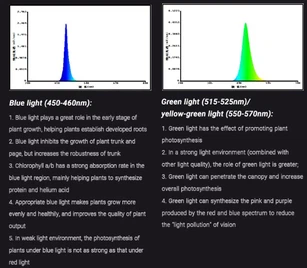
LED-based grow lights capture the entire spectrum of light, including the vital red and blue ends, which are essential for the growth of healthy plants. Red light is essential for flowering and fruiting, while blue light encourages the growth of leaves and stems.
LED grow lights may mimic the natural solar spectrum by modifying the light spectrum, giving indoor gardens the same kind of sunshine that plants would experience outside. They are therefore ideally suited for every phase of plant growth, from germination to maturity.
Can LED Lights Grow Plants?
Without a doubt, LED lights are capable of growing plants, and they do so quite successfully. Plants grown under LED lighting can flourish, exhibiting rapid growth, vibrant hues, and great yields, according to research and real-world applications.
This accomplishment can be attributed to LED lights' capacity to produce light spectra that are tuned and closely match the photosynthetic absorption profiles of plants.
LED lights are made to emit particular wavelengths that are perfect for photosynthesis, in contrast to traditional lighting, which frequently needs additional lights or filters to reach the right spectral properties.
Which LED light is best for growing plants?
The type of plant being grown, its stage of development, and its particular requirements for light intensity and spectrum must all be taken into account when choosing the ideal LED light for plant growth.
Since full spectrum LED grow lights replicate natural sunshine and offer a balanced spectrum that promotes all stages of plant development, they are widely acknowledged as the most effective for indoor gardening.
These lights are very beneficial since they affect other physiological characteristics including flavor, nutrition, and flowering time in addition to promoting photosynthesis.
Choosing lights with changeable spectrums and intensities is advised for gardeners wishing to invest in LED technology. More control over the growing environment is made possible by this function, which makes it possible to optimize circumstances for various plant species and stages of growth.
What are the Benefits of LED Grow Lights for Indoor Gardening
Increased Plant Yield and Growth
One feature that distinguishes LED grow lights from conventional lighting solutions is their ability to be adjusted to particular wavelengths that are ideal for plant growth. More efficient photosynthesis is stimulated by this spectral efficiency, which leads to larger yields, quicker development, and healthier plants.
LEDs can optimize the photosynthetic process and improve overall plant health by enhancing both vegetative growth and blooming stages with a spectrum that is specific to the demands of plants.
Gardeners can urge plants to blossom or bear fruit at preferred times by simulating seasonal light fluctuations through the customization of light output. Increased productivity and the potential for multiple harvests per season are two major advantages for food production and commercial activities that can result from this control over plant biology.
Environmental Benefits and Safety
Compared to conventional grow lights, LEDs are a more eco-friendly choice. They are safer to dispose of and have a less environmental impact because they don't contain dangerous materials like mercury, which is included in some fluorescent bulbs.
LEDs' decreased energy usage helps to reduce greenhouse gas emissions, which brings indoor gardening techniques into compliance with more environmentally friendly and sustainable standards.
Another important benefit of choosing the best LED grow lights is safety. Conventional lighting systems, particularly those with large heat outputs, can seriously increase the risk of fire and harm plants by producing heat.
LEDs improve safety in the growing environment by lowering the risk of fire and heat stress on plants because they generate very little heat. Because of this, LEDs are not only a safer option for growers but also a more effective one, encouraging safer cultivation conditions and healthier plant growth.
Traditional Lighting Methods
Overview of Traditional Lighting Options such as Fluorescent and HID Lights
Fluorescent and High-Intensity Discharge (HID) lamps are the two main traditional lighting options for indoor gardening; each has a specific function within the range of horticultural requirements. Because of its high efficiency and comparatively low starting cost, fluorescent lights-especially those in the T5, T8, and CFL configurations-are widely used.
They are most frequently used to cultivate low-light plants, like as herbs, or to start seedlings. Although they are typically less bright than other options, these lights emit a broad spectrum of light that can be appropriate for different phases of plant growth, making them less suitable for larger plants or those that need a lot of light.
Larger-scale or commercial indoor gardens have historically employed HID bulbs, which include both Metal Halide (MH) and High Pressure Sodium (HPS) lamps. These lamps are more powerful than fluorescent lights.
MH lamps are appropriate for the early phases of a plant's life cycle because they emit a cooler, bluer light that encourages robust vegetative growth. In contrast, HPS lights provide a redder, warmer light that promotes the stages of flowering and fruiting.
Although the intensity of HID lamps makes them useful for encouraging development, they are also significantly less energy efficient than LEDs, produce a lot of heat, and have a shorter lifespan, which means they need to be replaced more frequently.
LED Grow Lights and Conventional Lighting Techniques: A Comparison
There are a number of notable differences between LED grow lights and conventional lighting techniques, especially in terms of application, control, and efficiency. When it comes to energy economy and light spectrum management, LEDs outperform both fluorescent and HID lights.
LEDs give the same or more light intensity at a fraction of the power consumption and with low heat production compared to traditional lights, which use more electricity and produce more heat. Over time, this efficiency results in reduced environmental impact and cheaper recurring expenditures.
When it comes to spectrum management, LEDs provide unmatched benefits. While excellent for broad purposes, traditional lighting offers a fixed spectrum that cannot be modified without the addition of additional lights or filters to satisfy the unique light needs of various plant species or growth phases.
LEDs, on the other hand, may be set to emit certain light wavelengths to optimize photosynthesis and can be modified as necessary to accommodate different stages of plant growth, from germination to flowering.
Although there are some uses for conventional lighting techniques, LED grow lights perform better in practically every way, from plant productivity and health to operating costs and environmental effects.
They are the best option for anyone who is serious about indoor gardening, whether for personal or professional use, due to their effectiveness and versatility.


Key Differences Between LED Grow Lights and Traditional Lighting Methods
Energy Efficiency: Comparing Energy Consumption and Cost-Effectiveness
One important feature that sets LED grow lights apart from conventional lighting techniques is their energy economy. Compared to fluorescent and HID lights, LEDs are made to use a lot less electricity.
For instance, LEDs are significantly more efficient than HID bulbs, which typically only convert about 40% of their energy into light, with an 80% conversion rate. Because of this distinction, LEDs can produce the same amount of light as conventional choices while consuming less power, which over time can result in significant energy savings.
Cost-effectiveness is a direct result of this efficiency.
Light Spectrum: Outlining the Impact of Various Light Spectrums on Plant Development
The light spectrum provided by each lighting system can have a significant impact on plant growth. A fixed spectrum, which is often broad but not necessarily ideal for all growth phases, is emitted by conventional lights like HPS or MH lamps.
For example, HPS lights release more red light, which is more suited for blooming, while MH lamps are rich in blue light, which is perfect for vegetative growth.
LED grow lights, on the other hand, may be designed to emit the exact wavelengths required for the best possible plant growth and photosynthesis. In order to replicate natural sunshine and encourage healthier and more balanced growth at every stage of a plant's life cycle, LEDs can be made to emit a whole spectrum of light.
Customizing light to meet the demands of individual plants speeds up growth cycles and enhances yield quality.
Heat Emission: Comparing LED vs Conventional Lights' Heat Output
Another important distinction between LED lights and other lighting techniques is heat emission. In particular, HID lamps produce a lot of heat, which can cause temperatures to rise too high and damage plants if the lights are positioned too near to the leaves.
In order to control the heat levels in the growing area, extra cooling systems must be used.
Compared to conventional choices, LEDs release a lot less heat, which lowers the danger of heat damage to plants and eliminates the need for intricate ventilation and cooling systems.
Because of their reduced heat production, LEDs may be positioned closer to the plants, giving them bright, direct light without running the risk of overheating and maximizing their potential for development.
Durability and Lifespan: A Comparison of LED and Conventional Lighting's Durability and Maintenance Needs
LED grow lights are renowned for their long lifespan and robustness. Compared to HID bulbs, which typically last between 10,000 and 18,000 hours, and fluorescent lights, which typically last between 7,000 and 15,000 hours, an LED can last between 50,000 and 100,000 hours.
Because of their longer lifespan, LEDs eventually need much less upkeep and replacements, which increases their attractiveness and affordability.
Since LEDs don't have glass enclosures or filaments, they are more resilient to vibration and breakage. In settings where equipment must endure frequent handling or relocation, its robustness is quite advantageous.
All things considered, LED lighting systems are a more dependable and environmentally friendly option for indoor gardening due to their lifetime and durability, which offer consistent performance with no maintenance.
Choosing the Right Lighting Method for Your Indoor Garden
Assessing Your Gardening Needs and Goals
Knowing your gardening demands and objectives can help you choose the best lighting technique. Because different plant species require different amounts of light, think about the kinds of plants you plan to grow. Consider the size of your garden: are you planning a large-scale production or are you keeping a tiny herb garden?
Assess your growth goals as well, such as increasing production, enhancing plant quality, or maybe prolonging the growing season. The type and intensity of light your plants need will be determined in part by these factors.
Advice for Choosing Wisely Between LED Grow Lights and Conventional Lighting Techniques
Take into account the following factors while choosing between LED grow lights and conventional lighting:
Efficiency: LEDs use less energy and may result in cheaper electricity costs.
Heat production: The reduced heat production of LEDs is a major benefit if your area is tiny or poorly ventilated.
Spectral Requirements: LEDs allow for spectrum customization. LEDs might offer better assistance if your plants have particular spectrum requirements.
Longevity and Maintenance: If you want a system that needs less care, LEDs are a more handy option because they last longer and require less maintenance.
Long-Term benefits vs. Initial Investment: Determine if the longer-term energy, replacement, and maintenance benefits of LED technology outweigh the initial, higher cost.
The Most Frequently Asked Questions Concerning LED Grow Lights
Which Wattage Is Ideal for LED Grow Lights?
The type of plant and the size of the growing space determine the ideal wattage for LED grow lights. For high-light plants like tomatoes and cucumbers, it is often a good idea to use 30 to 50 watts of actual power per square foot of grow space. Ten to twenty watts per square foot might be enough for low-light plants. An excellent choice for cultivating cannabis plants is LED Grow Lights.
How Much Light Does a Grow Light Need?
Lumens, which aren't the most pertinent parameter for plant development, quantify light output as it is perceived by the human eye. The number of photosynthetically active photons, or photosynthetic photon flux density (PPFD), is more responsive to plants. For efficient growth, a grow light should, in general, have at least 3000 lumens per square foot.
How Can I Pick a Quality Grow Light?
When selecting a decent grow light, take into account:
Spectrum: Since full spectrum LEDs replicate natural sunshine, they are typically the best.
Light Intensity: Take into account the type and growth stage of your plants to make sure the light can provide adequate intensity for their demands.
Quality and Warranty: Choose lights from reliable producers who offer strong guarantees and assistance.
Control Features: For more versatility, look for lights with spectrum capability and adjustable output.

Our address
No. 5-3 Niujiao Road, Yanchuan Community, Yanluo Street, Bao'an District, Shenzhen
Phone Number
+86 18659785153
bwzm04@ledbenweilighting.com