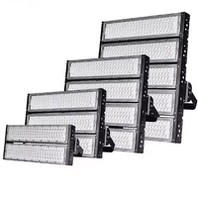
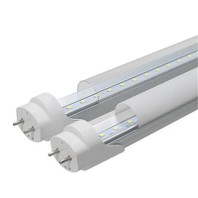
Which lamps are not energy-saving lamps? Is led an energy-saving lamp?
Lamps and lanterns are inseparable from life nowadays. Lighting is an important part whether indoor or outdoor. We can’t see the dark places, so we will be more convenient with light. But lamps need electricity and energy saving is now. Everyone has considered the problem, so which lamps are not energy-saving lamps? Is led an energy-saving lamp? Many people are not sure, so let’s analyze it with everyone and let’s take a look.
Energy-saving lamps
Which lamps are not energy-saving lamps?
The incandescent lamp is an electric light source that energizes and heats the filament to an incandescent state, and emits visible light by using thermal radiation. Therefore, incandescent lamps, fluorescent lamps and some LED lamps are not within the scope of energy-saving lamps. The working current DC of each lighting fixture is below 0.5-1.3A, and the power consumption is about 6W-12.6W, and there is not much heat generation. , It saves electricity more than energy-saving lamps. Energy-saving lamps, also known as energy-saving bulbs, electronic bulbs, compact fluorescent lamps and integrated fluorescent lamps, refer to lighting equipment that combines fluorescent lamps and ballasts (ballasts) into a whole. So to see if energy-saving lamps need to look at the power and testing.
Energy-saving lamps
Is led an energy-saving lamp?
LED is a new type of energy-saving luminous lighting, which is different from energy-saving lamps. LED is likely to become the widespread use of household lighting, energy saving and environmental protection may also become a revolution in lighting.
LED is an abbreviation for light-emitting diode. It is made of compounds containing gallium (Ga), arsenic (As), phosphorus (P), nitrogen (N), etc. It is a type of semiconductor diode that can convert electrical energy into light energy. Like ordinary diodes, light-emitting diodes are composed of a PN junction, and they also have unidirectional conductivity. When a forward voltage is applied to the light-emitting diode, the holes injected from the P area to the N area and the electrons injected from the N area to the P area are respectively in contact with the electrons in the N area and the voids in the P area within a few microns of the PN junction. The holes recombine and produce spontaneous emission fluorescence. The energy states of electrons and holes in different semiconductor materials are different. When electrons and holes recombine, the energy released is somewhat different. The more energy released, the shorter the wavelength of the emitted light. Commonly used are diodes that emit red, green or yellow light. The reverse breakdown voltage of the light-emitting diode is greater than 5 volts. Its forward volt-ampere characteristic curve is very steep, and it must be used in series with a current-limiting resistor to control the current through the diode. If it is an LED energy-saving lamp, it should be regarded as an energy-saving lamp, so the energy-saving lamp is the original abbreviation for CFL (compact fluorescent lamp), which is mainly energy-saving compared to the original incandescent bulb. LED energy-saving lamps have the characteristics of energy saving, and the power consumption is 1/10 of that of ordinary incandescent lamps and 1/4 of that of energy-saving lamps. Moreover, the service life is long, and the lighting time can reach more than 100,000 hours, which can be described as "one-time-for-all" for ordinary household lighting. But the price is more expensive, and the efficiency of high-power LED is low.
Energy-saving lamps
Let’s stop here for the explanation of the knowledge of which lamps are not energy-saving lamps and whether LEDs are energy-saving lamps. I believe you will know more about it after reading it. The content is for your reference only and I hope it can be useful to you. help.