Introduction: The Economics of Purification Lighting
The B2B Procurement Dilemma
In the wholesale market for LED purification lights, the purchasing decision is frequently reduced to a simplistic comparison of unit price per unit volume. For distributors and large-scale facility managers, however, this metric is profoundly misleading. A low-cost, plastic-housed fixture that requires replacement every two years is significantly more expensive than a premium fixture that operates for a decade. The true cost of lighting in a controlled environment-such as a hospital ward, a pharmaceutical cleanroom, or an electronics assembly line-is dominated by labor for installation and maintenance, the cost of disrupted operations, and the risk of non-compliance with health and safety regulations.
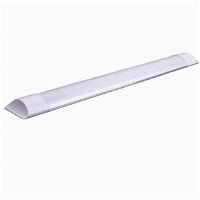
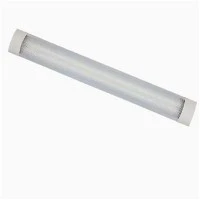
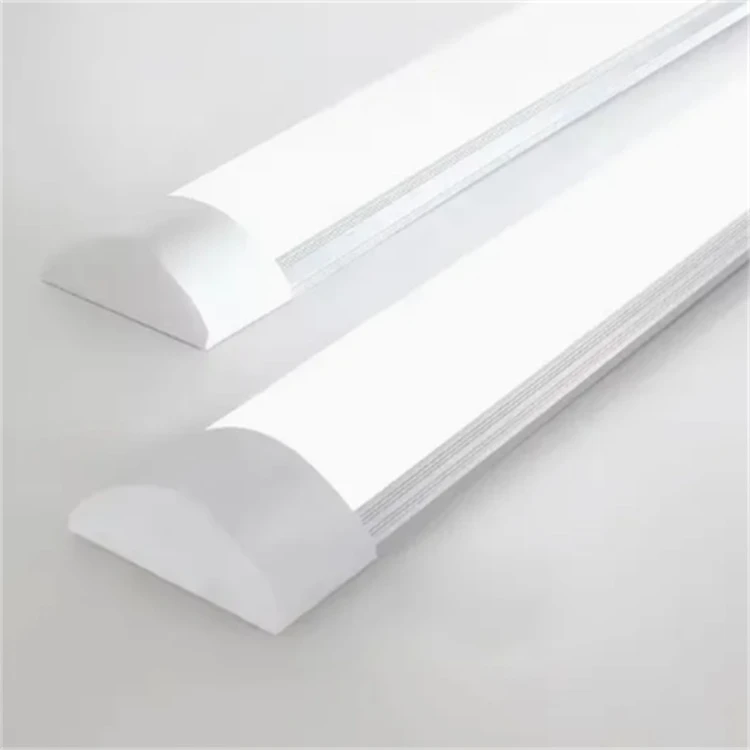
The product under examination in this article-the iron-clad base linear light with a high-transmittance PC cover and constant-current driver-is engineered specifically to resolve this dilemma. It is designed not to be the cheapest fixture on the market, but to be the most economical fixture across its operational lifespan.
Defining the Purification Standard
The term "purification light" implies more than mere illumination. In controlled environments, lighting fixtures must not act as a source of contamination. They must be easily cleanable, resistant to chemical disinfectants, and structurally sealed to prevent dust or microbial ingress. The iron base, powder-coated to a smooth, non-porous finish, meets these requirements far better than the porous or easily deformed surfaces of low-grade plastic housings.
The Pillar of High Quality: Material and Electrical Engineering
The Iron-Clad Base: Structural Integrity and Thermal Conductivity
The foundation of the fixture's quality claim is the iron-clad base. Unlike plastic housings, which are inherently thermally insulating (with a conductivity of approximately 0.2 W/m·K), iron offers a thermal conductivity in the range of 50 W/m·K. This order-of-magnitude difference is the primary determinant of the fixture's longevity.
In a purification light, where fixtures are often mounted flush against ceilings or in sealed enclosures, thermal management is critical. The iron base acts as a massive heat sink, rapidly spreading the heat generated by the LED junction across the entire surface area of the fixture. This prevents the formation of localized hot spots that accelerate lumen depreciation and degrade the driver's electrolytic capacitors. Furthermore, the galvanized or powder-coated iron surface resists corrosion from the harsh chemical cleaning agents commonly used in healthcare and laboratory settings, ensuring the structural integrity of the fixture remains intact over years of rigorous sanitation cycles.
Impact Resistance and Installation Durability
Wholesale buyers must consider the logistics of bulk transportation and installation. Plastic diffusers and housings are prone to cracking and warping during transit and handling. The iron base provides a rigid, impact-resistant shell that protects the optical and electrical components. This durability reduces the "breakage rate" during installation, a hidden cost that can severely erode the profit margins of a wholesale order.
The High-Transmittance PC Cover: Optical Quality and Safety
The optical interface of a purification light must balance luminous efficacy with visual comfort. The high-transmittance polycarbonate (PC) soft mask used in this fixture achieves visible light transmittance exceeding 85% while maintaining a high haze value (up to 99%). This ensures that the maximum amount of light reaches the work plane without the harsh, point-source glare that characterizes low-quality fixtures.
For commercial and healthcare environments, the Unified Glare Rating (UGR) is a critical metric. The PC cover is micro-structured to diffuse light angularly, reducing peak luminance. This ensures compliance with EN 12464-1 standards for indoor workplaces (UGR ≤ 19), preventing eye strain and fatigue for workers and patients. Additionally, the PC material is formulated with UV stabilizers to resist the yellowing and embrittlement that afflict untreated plastics, ensuring the optical clarity and color consistency remain stable over the fixture's lifetime.
The Intelligent Constant-Current Driver: The Electrical Heart
The most common failure point in any LED fixture is the driver. Cheap, constant-voltage drivers using pulse-width modulation (PWM) are notorious for producing flicker and unstable light output, which can be particularly problematic in medical or precision manufacturing environments.
This fixture employs an intelligent constant-current driver with a closed-loop feedback system. It maintains the current within a narrow tolerance (typically ±3%), ensuring stable light output and preventing the thermal runaway that occurs when current fluctuates. By operating below the IEEE 1789-2015 recommended limits for flicker, the driver ensures a comfortable, stroboscopic-free environment. This is not merely a comfort feature; it is a safety requirement in environments where rotating machinery or precision visual tasks are performed.
The Pillar of Low Maintenance: Reducing the Total Cost of Ownership
The Ten-Degree Rule and Capacitor Longevity
The maintenance burden of a lighting installation is overwhelmingly dictated by the lifespan of its components. The iron-clad base and the constant-current driver work synergistically to minimize this burden.
The electrolytic capacitors within the driver are the primary determinants of driver life. They are thermally sensitive; for every 10°C reduction in operating temperature, their expected lifespan doubles. In a plastic-housed fixture, heat from the LED board is trapped, causing the driver's internal temperature to rise significantly above ambient. In the iron-clad fixture, the heat is efficiently dissipated. By lowering the driver's operating temperature by 15°C to 20°C, the iron base effectively quadruples the capacitor's lifespan. This translates directly into a reduction in premature driver failures-the most frequent cause of warranty claims and maintenance callbacks in the LED industry.
Lumen Maintenance and the Elimination of Relamping
A high-quality fixture is defined by its lumen maintenance curve. The iron base's thermal efficiency ensures that the LED junction temperature remains low. As per the Arrhenius relationship, a lower junction temperature significantly slows the rate of light decay. This fixture is engineered to achieve L80 lumen maintenance (80% of initial brightness) at 50,000 hours or more.
For the wholesale buyer, this means the elimination of routine relamping cycles. In high-ceilinged warehouses, cleanrooms, or hospital corridors, the labor cost of accessing and replacing a fixture often exceeds the cost of the fixture itself. The "fit-and-forget" nature of this purification light removes this recurring expense from the facility's maintenance budget.
Structural Durability and Chemical Resistance
Maintenance in purification environments often involves aggressive chemical cleaning. Plastic housings can become brittle, crack, or develop micro-fissures that harbor bacteria. The powder-coated iron base is impervious to most common disinfectants and cleaning agents. It maintains a smooth, cleanable surface that meets the strict hygiene standards of pharmaceutical and healthcare facilities. This structural resilience eliminates the need for premature fixture replacement due to environmental degradation, further driving down the total cost of ownership.
The Pillar of Unbeatable Longevity: A System-Level Analysis
Beyond the LED Chip: The System Specification
The longevity of an LED fixture cannot be determined solely by the rated life of the LED chip. It is a system-level property determined by the weakest link in the thermal, electrical, and structural chain.
The Chip: High-efficacy LEDs are inherently reliable, but their longevity is contingent on thermal management.
The Driver: The constant-current architecture protects the LED from electrical stress and ensures stable operation, while the iron base protects the driver from thermal stress.
The Housing: The iron base ensures that the thermal interface between the LED board and the heat sink is maintained. Unlike plastic, which can warp under thermal cycling and degrade the thermal contact, the rigid iron base preserves the critical thermal path over decades of service.
This system-level design-where the driver protects the chip, and the base protects the driver-is what justifies the "unbeatable longevity" claim.
Reducing the Environmental Footprint
In the context of large-scale wholesale procurement, longevity is also an environmental metric. A fixture that lasts 50,000 hours requires one manufacturing cycle, one transport cycle, and one disposal cycle. A cheap fixture that fails at 15,000 hours requires more than three times the resources over the same operational period. The iron-clad purification light aligns with the sustainability goals of modern enterprises and government procurement policies, reducing electronic waste and the carbon footprint associated with frequent replacements.
The Wholesale Advantage: Practical Considerations for Distributors
Installation Efficiency and Labor Savings
Wholesale buyers and their contractor clients benefit directly from the fixture's design. The iron base's rigidity allows for precise, straight alignment during installation, eliminating the sagging and warping common with plastic battens. The fixture's low-profile design and consistent finish reduce installation time and callbacks. For contractors, faster installation means higher daily throughput and improved profitability.
Reliable Supply Chain and Compliance
For a wholesale distributor, product reliability is only half the battle; compliance is the other. This fixture is designed to meet stringent international standards for safety and performance, including CE, RoHS, and relevant IEC standards for photobiological safety. The constant-current driver complies with harmonic current emission standards, ensuring it does not pollute the electrical grid-a critical requirement for large-scale installations.
The Margin and Warranty Equation
In the wholesale market, a product is only valuable if it supports a healthy margin while minimizing warranty risk. The iron-clad purification light occupies a premium tier in terms of bill-of-materials cost, but it commands a premium price point that delivers higher absolute margins. More importantly, its robust design drastically reduces the return rate and warranty claim rate. A distributor's worst nightmare is a container of fixtures that fails in the field. The rigorous thermal and electrical engineering of this fixture provides the distributor with the confidence to offer extended warranties, a powerful competitive differentiator in the B2B market.
Conclusion: The Strategic Choice for Wholesale Buyers
The specification of LED purification lights for commercial and industrial applications is not a transaction; it is a strategic decision. The iron-clad base LED batten, with its high-transmittance PC cover and intelligent constant-current driver, is engineered for the rigorous demands of the wholesale environment.
It delivers high quality through its structural rigidity and optical precision. It ensures low maintenance by eliminating the thermal and electrical failure modes that plague conventional fixtures. It achieves unbeatable longevity through a system-level design that protects every critical component from degradation.
For the wholesale buyer-whether a distributor looking for a reliable product to build their brand around, or a facility manager seeking to reduce operational expenditures-this fixture represents a definitive solution. It is a lighting system that understands that the most expensive light is the one that has to be replaced. By investing in a product that is built to last, wholesale buyers secure their supply chain, satisfy their clients, and realize the true economic value of engineering excellence.

How To Cooperate With Us?
We are happy to have total control over the manufacturing process and the calibre of our products since we have our own facilities. Since we are producers rather than just brokers, we are dedicated to providing our customers with the best pricing. Since we are certain that the price and quality of our products are clear, we invite customers to see our samples first. Our commitment to quality and customer satisfaction drives us to continuously provide top-notch goods.
Our address
3rd Floor, 5th Building, Hebei Industrial Park, Hualian Community, Longhua District, Shenzhen, China