Why Back-lit LED Panels Outperform Edge-lit Panels

When selecting LED panels for commercial or residential lighting, one of the key decisions is choosing between back-lit and edge-lit designs. While both are widely used, back-lit LED panels have become the preferred choice-and for good reason.
In this article, we'll explore what sets these two technologies apart, and why back-lit panels consistently deliver better performance, efficiency, and value.
Understanding the Basics
Back-lit LED Panels
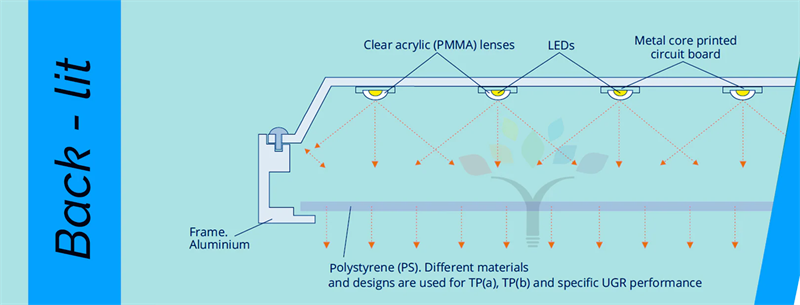
Also referred to as direct-lit panels, these feature an array of LEDs mounted across a horizontal plate behind a diffuser. The light shines directly downward, offering consistent and even illumination across the entire surface.
Edge-lit LED Panels
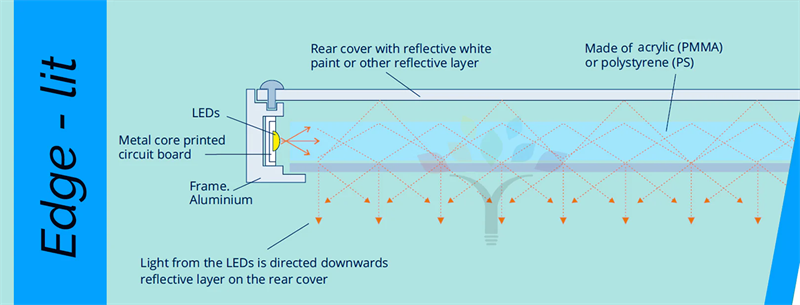
Known also as side-lit panels, these have LEDs positioned only along the edges. The light is directed horizontally and then dispersed downward through a diffuser, relying on light guides to spread illumination across the panel.
While both types come in similar sizes and appearances, the placement of LEDs and the method of light distribution make a significant difference in performance and longevity.
Advantages of Back-lit LED Panels
Slim and modern design
Higher energy efficiency
Reduced manufacturing costs
Superior light output
Uniform brightness with no dim zones
Easy installation
Long-term color stability (no yellowing)
Back-lit vs. Edge-lit: A Detailed Comparison
Why Edge-lit Panels Were Initially Popular
Edge-lit technology was once considered innovative. Its key benefits included:
Even Light Diffusion: By positioning LEDs at the edges, manufacturers reduced the risk of bright spots, creating a smooth visual effect.
Material Flexibility: Using PMMA (acrylic) light guides allowed even low-cost diffuser materials to perform well, as long as they didn't degrade over time.
Beam Control: Edge-lit systems worked effectively with various beam angles without requiring additional lenses.
Heat Management: The rear of the panel remained cool, making it suitable for housing drivers and other components.
The Downsides of Edge-lit Technology Over Time
Despite early advantages, edge-lit panels revealed several shortcomings:
Material Degradation: While high-quality acrylic performs well, cheaper materials-often used to cut costs-can yellow over time, especially without UV stabilizers. This leads to dull, discolored light and dark spots in the center of the panel.
Limited Brightness: With LEDs only along the edges, overall light output is lower, and uniformity can suffer in larger panels.
Complex Construction: Multiple layers and components are required to guide light from the edges to the center, increasing complexity and potential failure points.
Why Back-lit LED Panels Are the Better Choice
Advances in LED technology have made back-lit panels more efficient, affordable, and reliable than ever.
Superior Light Distribution: With LEDs spread across the entire panel, back-lit designs deliver consistent brightness from edge to edge, with no dim areas or hotspots.
Higher Efficiency & Lumen Output: Back-lit panels produce more light per watt, resulting in better energy efficiency and brighter illumination.
Cost-Effective Manufacturing: Modern back-lit panels use inexpensive PMMA lenses and advanced adhesives, ensuring secure attachment and even light diffusion without the need for complex optical systems.
Durability & Longevity: New polystyrene (PS) diffusers are both low-cost and highly effective, eliminating the need for dual-diffuser systems. They resist yellowing, maintaining light quality over time.
Thermal Performance: Today's LEDs run cooler and more efficiently, allowing back-lit panels to operate safely without overheating-even without placing drivers on the rear.

The Industry Shift to Back-lit Panels
The lighting industry has increasingly embraced back-lit LED panels, recognizing them as the most cost-effective, durable, and high-performing option for general and commercial lighting.
Whether for offices, schools, healthcare facilities, or retail environments, back-lit panels provide reliable, high-quality light with fewer maintenance issues and a longer lifespan.
Conclusion
While edge-lit LED panels once offered a promising alternative, back-lit LED panels now lead the market in nearly every key category: efficiency, light quality, durability, and value.
By choosing back-lit panels, you invest in a lighting solution that not only brightens spaces effectively but also stands the test of time-without compromising on performance or aesthetics.