Why Do Some LED Lights Attract Mosquitoes?
Introduction: The Mosquito-Light Mystery
You've swapped your old incandescent bulbs for energy-efficient LEDs, only to find your porch now doubles as a mosquito nightclub. Why? Turns out, not all light is created equal in the eyes (or antennae) of mosquitoes.
This article explores:
✔ How mosquitoes "see" different light wavelengths
✔ Which LED colors attract (or repel) them
✔ Real-world case studies & solutions
✔ How to pick mosquito-resistant lighting
The Science: How Mosquitoes Perceive Light
Mosquitoes don't rely on vision alone-they use a combo of heat, CO₂, and light spectra to find prey. Key factors:
1. Wavelength Sensitivity
Mosquitoes are most attracted to:
Short wavelengths (UV to blue light, 300–500 nm) – Mimics dawn/dusk when they're active.
Green/yellow (500–600 nm) – Moderate attraction.
Red/orange (>600 nm) – Nearly invisible to them.
Note: Human skin also reflects UV, making us glow like a buffet sign under bug-attracting lights.
2. Heat vs. Light
| Light Type | Heat Output | Mosquito Attraction |
|---|---|---|
| Incandescent | High (90% energy as heat) | Very high |
| CFL | Medium | Moderate |
| Standard LED | Low | Depends on color |
| Amber LED | Very low | Minimal |
Case Study: A 2021 University of California study found blue LEDs attracted 50% more mosquitoes than amber LEDs.
LED Colors & Mosquito Appeal: A Shocking Ranking
| LED Color | Wavelength | Mosquito Attraction | Best For |
|---|---|---|---|
| UV/Blacklight | 300–400 nm | ★★★★★ (Mosquito rave) | Bug zappers |
| Cool White (6500K) | 450 nm blue peak | ★★★★ | Offices, avoid outdoors |
| Warm White (3000K) | 550 nm yellow | ★★ | Living rooms |
| Amber (2000K) | 600+ nm | ★ | Porches, patios |
| Red | 650+ nm | ☆ (Almost zero) | Astronomy, night lights |
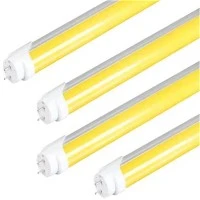
Pro Tip: Look for "mosquito-proof" LEDs marketed as yellow or amber bug lights.
Why Some LEDs Are Worse Than Others
1. Blue Light Peaks
Many white LEDs use blue chips + yellow phosphor, emitting a blue spike that mosquitoes love.
Example:
A standard 5000K LED: 30% blue light → mosquito magnet.
An amber LED: 0% blue → mosquito ghost town.
2. Flicker Frequency
Some cheaper LEDs flicker subtly (even if invisible to us). Mosquitoes detect this and interpret it as movement (i.e., prey).
3. Brightness
Brighter LEDs = larger "target" for bugs. A 10W LED attracts more than a 4W one.
Real-World Fixes: Case Studies
1. The Florida Porch Experiment
Before: Cool white LEDs → 100+ mosquitoes/night.
After: Switched to amber LEDs → <10 mosquitoes/night.
Bonus: Added a fan (mosquitoes hate wind) for extra protection.
2. Malaysian Rice Farms
Used green LED traps to lure mosquitoes away from workers.
Result: 60% fewer bites compared to white lights.
3. Smart Camping Hack
Campers placed red LED lanterns at a distance from tents.
Mosquitoes flocked to the red light (but couldn't see humans in the dark).
How to Mosquito-Proof Your Lighting
✔ Use Amber/Yellow LEDs (e.g., Philips Bug Defense).
✔ Avoid UV/Blue-Rich Lights (check specs for <5% blue content).
✔ Install Lights Away from Seating (draw bugs to a distant post).
✔ Combine with Fans/Citronella (disrupts their flight sensors).
Myth Buster:
"LEDs don't attract bugs." False-color matters!
"Bug zappers work." Mostly useless (they kill moths, not mosquitoes).
Future Tech: Smarter Anti-Mosquito LEDs
Tunable Spectrum Lights
Adjust color to repel bugs at night (e.g., switch from white to amber at dusk).
UV-Free "Invisible" LEDs
Only emit wavelengths humans see (mosquitoes stay confused).
CO₂-Baited Traps
LEDs + CO₂ emitters to lure bugs away (used in Singapore).
Conclusion: Light Like a Mosquito Ninja
Mosquitoes aren't just annoying-they're deadly (malaria, dengue, etc.). Picking the right LED can literally save lives in bug-prone areas.
Final Tip: If you're hosting a backyard party, use amber LEDs + candles (mosquitoes hate smoke). Your guests will thank you!
Did You Know? Male mosquitoes don't bite-they're just out here vibing to UV light. Ladies, why must you ruin everything? 😤