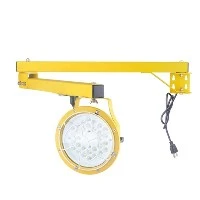
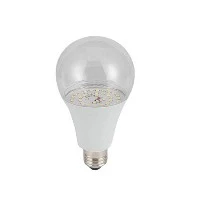
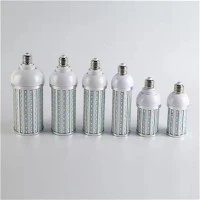
Native to Central America, the dragon fruit is a tropical cactus species that thrives on abundant light and warmth. It possesses a unique characteristic: it is a "long-day flowering" plant-falling between short-day and long-day categories-meaning it requires extended periods of light exposure to initiate flowering. While this poses no issue in tropical regions with ample natural sunlight, yields and market availability are significantly constrained in temperate zones, high-latitude areas, or during the winter months. In recent years, an increasing number of growers have begun installing plant growth lights in their orchards-ranging from supplemental lighting in greenhouses to indoor vertical farming setups. This article explores the reasons for using growth lights and the benefits they provide.
Breaking seasonal barriers to enable off-season flowering and fruiting
Under natural conditions, dragon fruit flowering is concentrated in the summer and autumn, typically yielding six to eight rounds of blossoms annually. During winter, short daylight hours and low light intensity cause the plants to enter a state of dormancy, halting both flowering and fruiting.
Supplemental night lighting artificially extends the photoperiod, inducing the plants to continue flowering through winter and spring. Growers in regions such as Guangxi, Hainan, Fujian, and Vietnam frequently employ this method to bring their fruit to market around the Lunar New Year. Dragon fruit prices during this period are often significantly higher than during the peak harvest season, representing the most direct economic benefit of supplemental lighting.
Compensating for insufficient light during winter and overcast weather
It is a misconception that light deficiency is exclusive to the north. Prolonged overcast and rainy weather is common in the south during winter and spring. Insufficient light causes stems to become thin and limp-a condition known as "leggy growth" (etiolation)-resulting in inadequate nutrient accumulation and poor flowering performance the following year.
Growth lights effectively "replenish" the missing light, ensuring sufficient duration and intensity for daily photosynthesis and preventing the plants from suffering vitality loss due to light deprivation. The need for supplemental lighting is particularly acute in greenhouses, where the covering film itself absorbs a portion of the available light.
Precise spectral control to promote flower bud differentiation
This is where grow lights outperform a standard light bulb. Different wavelengths of light affect plants in distinct ways:
Red light (600–700 nm): Promotes photosynthesis and significantly boosts flowering and fruiting.
Blue light (400–500 nm): Encourages sturdy stems and compact internodes, preventing leggy growth.
Far-red light: Plays a role in the plant's photoperiodic response and aids in inducing flowering.
Professional supplemental lights for dragon fruit are typically engineered with specific red-to-blue ratios; for instance, a spectrum rich in red light is better suited for the flowering and fruiting stages. While ordinary incandescent or energy-saving bulbs can extend lighting duration, their spectral output is unsuitable, leading to suboptimal results and poor energy efficiency.
Increasing yield and fruit quality
Adequate lighting boosts chlorophyll synthesis, allowing the plant to accumulate more sugars and dry matter. In terms of the fruit, this translates to heavier individual fruits, higher sugar content, more uniform shapes, and superior coloration.
Additionally, supplemental lighting increases the number of flowering cycles, enabling one or two extra harvests per year and naturally raising the yield per unit area. For growers whose livelihoods depend on quality and volume, the investment usually pays off.
Shortening the growth cycle for faster returns
After planting, dragon fruit seedlings typically take one to two years to begin bearing fruit. Providing appropriate supplemental light during the seedling and vegetative growth stages accelerates stem development and strength, allowing the plant to enter the fruiting stage sooner.
For new orchards, realizing returns earlier shortens the payback period and significantly eases financial pressure.
Enabling facility and indoor cultivation to expand growing regions
With grow lights, dragon fruit cultivation is no longer restricted to tropical or subtropical zones. Growers in northern regions can attempt cultivation in solar greenhouses, multi-span greenhouses, or even fully enclosed plant factories. When used with vertical cultivation racks in indoor facilities or greenhouses, grow lights can be arranged in tiers, thereby saving land. This offers a practical solution for farms and agritourism orchards located near cities, where land costs are high.
LED grow lights are more energy-efficient and hassle-free than traditional light sources
Compared to the high-pressure sodium (HPS) and metal-halide lamps commonly used in the past, LED grow lights offer several distinct advantages:
Low energy consumption: They provide the same lighting effect while significantly reducing power usage.
Low heat emission: They can be installed close to plants without scorching branches or causing a significant rise in greenhouse temperatures.
Long lifespan: They have a normal service life of tens of thousands of hours, resulting in low long-term maintenance and replacement costs.
Customizable spectrum: Light recipes can be adjusted to suit different growth stages.
Since dragon fruit is a perennial crop requiring long-term supplemental lighting, energy efficiency and lifespan are critical cost factors to consider.
Key points for selecting dragon fruit grow lights
Before purchasing lights, consider the following factors:
Power and coverage area: Configure based on planting density and installation height; higher wattage isn't necessarily better.
Spectral composition: Prioritize solutions with a higher proportion of red light that meet the needs of the flowering stage.
Waterproof and dustproof ratings: Greenhouse environments are humid, so choose fixtures with an IP65 rating or higher.
Heat dissipation design: Effective heat dissipation directly determines the fixture's lifespan.
Lighting duration control: Use timers or smart control systems; generally, 3 to 5 hours of supplemental lighting at night is sufficient, though adjustments should be made based on local varieties and climate.
If you are unsure about the best setup for your orchard, simply provide the supplier with details regarding your planting area, location, and greenhouse type. Letting them propose a solution saves you the trouble of figuring it out yourself.
Summary
Overall, the core value of using grow lights for dragon fruit lies in several areas: overcoming seasonal limitations, compensating for insufficient natural light, precisely regulating flower bud differentiation, boosting yield and quality, accelerating the time to first harvest, and expanding cultivation regions. When combined with the energy efficiency and longevity of LED technology, supplemental lighting becomes a sustainable investment rather than a one-off expense that simply "burns money." Of course, there is no one-size-fits-all solution for supplemental lighting. The choice of lights and their layout will vary depending on factors such as crop variety, climate, greenhouse type, and planting density.
We specialize in the R&D and manufacturing of plant growth lights, offering professional spectral recipes and installation solutions tailored for tropical fruit crops like dragon fruit. We support OEM/ODM customization and can provide free lighting layout recommendations based on your orchard size and greenhouse type.