Why Vegetables and Fruits Require Specialized Grow Lights Instead of Regular Light Tubes
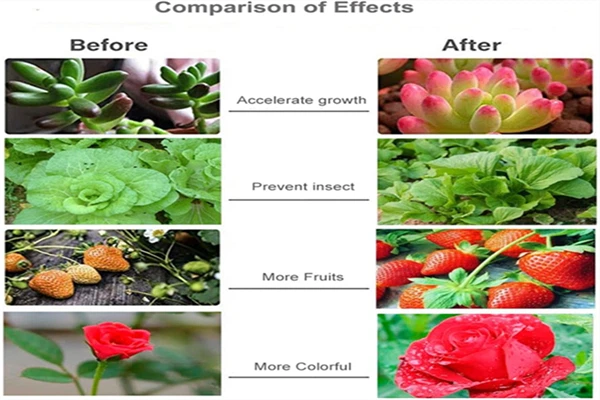
For anyone growing vegetables and fruits-whether in indoor hydroponic systems, urban vertical farms, or greenhouse setups where natural light is limited-a critical question arises: Why invest in specialized grow lights when regular light tubes (like incandescent, fluorescent, or generic LED bulbs) are more affordable and accessible? The answer lies in the unique relationship between plants and light: unlike humans, who perceive light primarily for vision, plants rely on light as an energy source and a signal to regulate growth, flowering, and fruit production. Regular light tubes are designed for human needs (e.g., bright, warm illumination for homes or offices) and fail to deliver the specific light spectrum, intensity, and duration that vegetables and fruits require to thrive. Below, we explore the science behind plant light needs, why regular tubes fall short, and how specialized grow lights address these gaps-ensuring healthier plants, higher yields, and better-quality produce.
Plants Depend on Specific Light Spectrums-A Need Regular Tubes Ignore
The most fundamental reason vegetables and fruits need specialized grow lights is their reliance on targeted light wavelengths to drive photosynthesis and developmental processes. Photosynthesis-the process by which plants convert light into energy (glucose) for growth-relies primarily on two ranges of the light spectrum: blue light (400–500nm) and red light (600–700nm). Blue light triggers chlorophyll production, supports leaf growth, and strengthens plant structures-critical for leafy vegetables like lettuce, spinach, and kale, as well as the early stages of fruiting plants (e.g., tomato seedlings). Red light, meanwhile, stimulates flowering, fruit set, and sugar accumulation-essential for fruits like tomatoes, peppers, strawberries, and cucumbers to ripen and develop flavor.
Regular light tubes, by contrast, emit a broad, unfocused spectrum that wastes energy on wavelengths plants cannot use. Incandescent bulbs, for example, produce mostly yellow and infrared (heat) light-wavelengths that contribute little to photosynthesis-and only 10–15% blue/red light. Fluorescent tubes (like T8 or CFL bulbs) are slightly better, emitting more blue light, but they lack sufficient red light to support flowering and fruiting; a tomato plant grown under fluorescent tubes may produce lush leaves but few flowers or small, tasteless fruit. Even generic LED bulbs (designed for home lighting) prioritize white light (a mix of all visible wavelengths), but they often have imbalanced blue/red ratios-e.g., too much blue light can stunt fruit growth, while too little red light delays ripening.
Specialized grow lights solve this by delivering a customized spectrum tailored to vegetable and fruit needs. Most high-quality grow lights use a "full-spectrum" design that combines blue and red light in a ratio optimized for specific crops: leafy greens thrive with a 1:1 blue-to-red ratio, while fruiting plants need a 1:2 or 1:3 ratio to boost flowering. Some advanced models even include far-red light (700–800nm), which regulates plant height (preventing leggy growth) and accelerates fruit ripening. A 2023 study by the American Society for Horticultural Science found that tomato plants grown under specialized red-blue grow lights produced 40% more fruit (by weight) and 25% higher sugar content than those grown under generic white LED tubes-proof that spectrum matters for both yield and quality.
Regular Tubes Lack the Intensity and Uniformity for Plant Growth
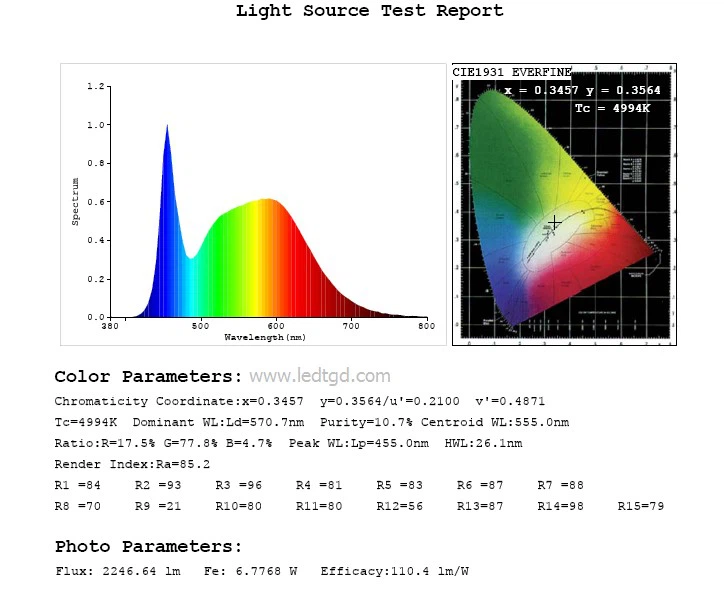
Vegetables and fruits also require consistent light intensity (measured in photosynthetic photon flux density, or PPFD) to drive photosynthesis efficiently. PPFD quantifies the number of usable photons (blue and red) that reach a plant's leaves per second, and different crops have specific PPFD requirements: leafy greens need 200–400 μmol/m²/s, while fruiting plants like tomatoes and peppers require 400–800 μmol/m²/s during their flowering and fruiting stages.
Regular light tubes fail to meet these intensity needs, especially in indoor or greenhouse settings. Incandescent bulbs have extremely low PPFD (often below 100 μmol/m²/s at 12 inches) – insufficient even for seedlings. Fluorescent tubes improve on this (reaching 200–300 μmol/m²/s), but their intensity drops sharply with distance: at 24 inches above plants, PPFD can fall by 50%, leading to uneven growth (taller plants near the light, stunted ones below). Generic LED bulbs may have higher PPFD, but they are designed for spot lighting (e.g., illuminating a room corner) rather than covering a wide growing area, resulting in "hot spots" (areas with too much light) and "dark spots" (areas with too little), where plants struggle to photosynthesise.
Specialized grow lights are engineered for high, uniform PPFD across growing spaces. LED grow lights, for example, use arrays of diodes focused on blue and red wavelengths, delivering PPFD levels up to 1000 μmol/m²/s – enough to support even the most light-hungry fruiting plants. Many models also include optical lenses or reflectors that spread light evenly over 2–4 square feet (depending on the light's wattage), ensuring every leaf receives the same amount of usable light. Vertical farms, which stack growing trays, rely on this uniformity: without it, lower trays would receive too little light to produce healthy crops. A study of a vertical lettuce farm in Japan found that using uniform PPFD grow lights increased harvest weight by 30% compared to using generic fluorescent tubes, as all plants in the stack received adequate light.
Regular Tubes Waste Energy and Generate Harmful Heat

Growing vegetables and fruits requires lights to be on for 12–16 hours daily (mimicking natural summer daylight), so energy efficiency and heat management are critical. Regular light tubes are inefficient for long-term plant growth, as they waste energy on unused wavelengths and generate excessive heat-both of which harm plants and increase costs.
Incandescent bulbs are the worst offenders: they convert 90% of energy into heat (not light) and only 10% into usable blue/red wavelengths. Running a 100W incandescent bulb for 14 hours daily costs \(6.30 monthly (at \)0.15/kWh) but provides little benefit to plants; the excess heat can also burn leaves or dry out soil, forcing growers to invest in extra fans or cooling systems. Fluorescent tubes are more efficient but still waste energy on green and yellow light (which plants don't use) and generate moderate heat-enough to raise temperatures in small grow tents by 5–10°F, stressing heat-sensitive crops like lettuce or strawberries. Generic white LEDs are more efficient than incandescent or fluorescent bulbs, but they still include unnecessary wavelengths (e.g., violet or green), reducing their overall efficiency for plant growth.
Specialized grow lights solve these issues with energy efficiency and low heat output. LED grow lights, the most common type, convert 80–90% of energy into usable blue/red light-using 75% less energy than incandescent bulbs and 30% less than fluorescent tubes. A 30W LED grow light running 14 hours daily costs just $4.20 monthly in electricity – compared to $21 monthly with 4x 100W incandescent bulbs-and avoids leaf burn or soil drying. High-pressure sodium (HPS) grow lights (another specialised option) are less efficient than LEDs but still more targeted than regular tubes, emitting mostly red light ideal for fruiting stages.
Regular Tubes Can't Support Plant Developmental Stages
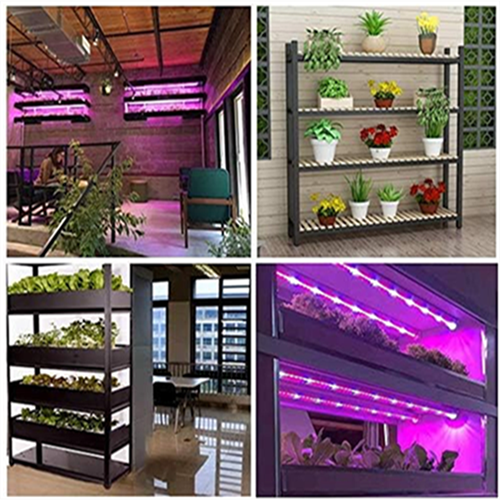
Vegetables and fruits go through distinct growth stages-seedling, vegetative, flowering, and fruiting-each requiring different light conditions. Regular light tubes offer no flexibility to adjust spectrum or intensity, forcing plants to grow in a "one-size-fits-all" environment that often stunts development.
For example, seedlings (e.g., tomato or pepper sprouts) need high blue light to develop strong stems and leaves; too much red light at this stage causes "leggy" growth (tall, weak stems that fall over). Regular fluorescent tubes, which have moderate blue light but little red light, may support seedlings but fail to trigger flowering later. When plants enter the flowering stage (e.g., tomato plants forming buds), they need more red light to stimulate flower production; regular white LEDs, which have balanced blue and red light, may not provide enough red light, leading to fewer flowers and smaller fruit. During the fruiting stage, plants need even more red light to accumulate sugars (for flavor) and ripen fruit; regular incandescent bulbs, which have some red light but too much heat, can damage ripening fruit or slow sugar production.
Specialized grow lights address this with adjustable settings for each growth stage. Many LED grow lights include dimmers or spectrum switches: growers can increase blue light during the seedling stage, boost red light during flowering, and maintain high red light during fruiting. Some advanced models even use smartphone apps to automate these adjustments-e.g., gradually increasing red light as tomato plants transition from vegetative to flowering stages. This flexibility ensures plants get exactly what they need at each stage, leading to stronger growth, more flowers, and larger, tastier fruit. A 2022 study on strawberry plants found that adjusting grow light spectrum (blue-heavy for vegetative, red-heavy for fruiting) increased fruit yield by 28% and sugar content by 15% compared to using a fixed-spectrum regular LED tube.
Conclusion: Specialized Grow Lights Are an Investment in Success
While regular light tubes may seem like a cheaper option for growing vegetables and fruits, they fail to meet plants' unique needs for spectrum, intensity, efficiency, and flexibility. The result is often weak plants, low yields, and poor-quality produce – costing growers more in the long run. Specialized grow lights, by contrast, are engineered to mimic the best of natural sunlight (focusing on usable blue and red wavelengths) while offering the control and efficiency needed for indoor or greenhouse growing.
Whether growing lettuce in a home grow tent, tomatoes in a greenhouse, or strawberries in a vertical farm, specialized grow lights ensure plants receive the right light at the right time-supporting healthy growth, abundant flowering, and flavorful fruit. For commercial growers, this translates to higher profits and consistent harvests; for home growers, it means fresh, home-grown produce year-round. In the end, the choice is clear: regular light tubes are designed for humans, but specialized grow lights are designed for plants-and that difference makes all the difference in successful vegetable and fruit cultivation.
Our service:
1.Your inquiry related to our products or prices will be replied in 24 hours.
2.Well-trained and experienced staffs to answer all your enquires in fluent English.
3.OEM&ODM, we can help you to design and put into product.
4.Distributoership are offered for your unique design and some our current models.
5.Protection of your sales area, ideas of design and all your private information.
https://www.benweilight.com/lighting-tube-bulb/5000k-herb-growing-light.html
Shenzhen Benwei Lighting Technology Co.,Ltd
Telephone: +86 0755 27186329
Mobile(+86)18673599565
Whatsapp :19113306783
Email:bwzm15@benweilighting.com
Skype: benweilight88
Web: www.benweilight.com