Wrong driver, good LEDs go to waste
1. Constant Current vs. Constant Voltage – Don't Get Them Reversed
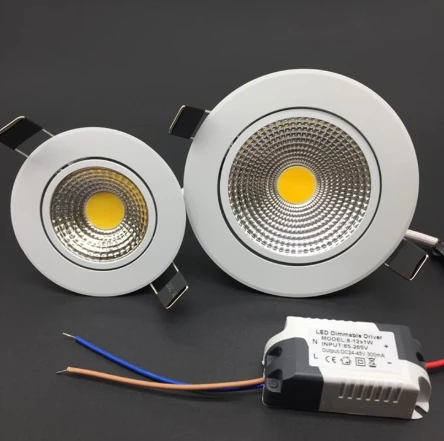
1.1 Most LED chips need constant current
LEDs are current‑driven devices. A tiny voltage fluctuation can cause current to spike and burn the chips. Constant current sources keep the current stable – the right choice for driving bare LED chips.
1.2 LED strips and modules usually need constant voltage
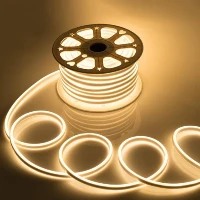
12V/24V constant voltage drivers, combined with current‑limiting resistors, work for strips that already have built‑in resistors. Mixing them up will cause uneven brightness or burn out the strip.
One sentence: Chips → constant current; strips → constant voltage.
2. Power Margin – Leave 20% as a Rule of Thumb
2.1 Don't run at full load
A 50W‑rated driver should be paired with a luminaire of 40W or less. A 20% margin lowers the temperature of capacitors and switching MOSFETs, extending driver life from 20,000 hours to over 50,000 hours.
2.2 Increase margin in high‑temperature environments
For outdoor or enclosed fixtures, leave 30‑40% margin. Every 10°C rise cuts electrolytic capacitor life in half.
3. Ripple & Flicker – The Invisible Eye‑Strain Killers
3.1 High ripple = severe flicker
Point your phone camera at the light. If you see rolling stripes on the screen, the driver ripple is too high. Good drivers have ripple <5%; flicker‑free drivers achieve <1%.
3.2 Flicker affects vision and mood
Long‑term exposure to flickering light causes eye fatigue, headaches, and even anxiety. The EU and North America are tightening flicker requirements.
Ripple & flicker comparison of different driver topologies
| Driver Type | Typical Ripple | Flicker Depth | Best for | Relative Cost |
|---|---|---|---|---|
| Resistive‑capacitive (RC) | 20‑30% | Severe flicker | Cheap bulbs | 0.3x |
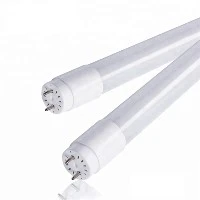
| Linear IC | 10‑15% | Medium‑high flicker | Downlights, T8 tubes | 0.6x |
| Non‑isolated constant current | 5‑8% | Slight flicker | General indoor | 1.0x |
| Isolated constant current (flicker‑free) | <1% | No flicker | Hospitals, schools, premium lighting | 1.5x |
Bottom line: For mid‑to‑high end products, always choose flicker‑free isolated constant current.
4. Certifications & Protection – Safety Matters More Than a Cheap Price
4.1 Export certifications are a must
US → UL/FCC; EU → CE/ERP; Saudi → SASO/SABER. If the driver doesn't have the required certification, the complete luminaire cannot obtain certification either.
4.2 IP rating depends on the installation environment
Indoors → IP20; bathroom/kitchen → IP44; outdoor floodlights → at least IP65. Potting with waterproof compound is more reliable than conformal coating, but costs about 20% more.
Final tip: A good driver costs only about 15% of the luminaire's bill of materials, yet it determines 90% of the failure rate.