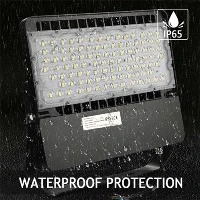
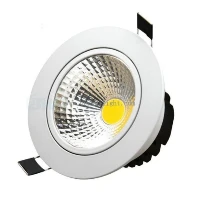
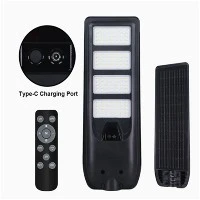
LED stadium lights are excellent for both outdoor and indoor sporting venues. Compared to conventional metal halide and HID systems, LED stadium lights have several advantages. Because LEDs use less power and last four to five times longer than traditional lights, they will undoubtedly save you money on energy and maintenance expenses. Additionally, LEDs operate significantly cooler than metal halide and HID lamps, which eases the burden on air conditioning systems. The fact that LED stadium lights don't flicker or buzz like conventional lighting systems is another fantastic benefit.
Traditional lights, however, work on a different principle
When metal and halogen elements come together, compounds known as metal halides are created. These consist of uranium hexafluoride (the fuel used in nuclear energy reactors) and sodium chloride (salt). An electric current is passed through a mixture of metal halide gas and mercury to create light in metal halide lamps. The composition of the gas is the main distinction between them and other gas-discharge lamps, such as mercury vapor, in terms of how they work.
What benefits can LED stadium lights offer over conventional illumination, then?
Lifespan of LED Stadium Lighting
The lengthy service life of LED stadium lights is undoubtedly their greatest benefit over conventional lighting options. LED stadium lights typically endure between 50,000 and 100,000 operational hours, or longer. That is two to four times longer than the majority of sodium vapor and metal halide lamps. It is over 40 times longer than the typical incandescent lightbulb.
reduced labor maintenance costs and reduced replacement part costs are two major benefits of less frequent replacement (since the bulbs simply do not endure for a long time).
Energy Efficiency of LED Stadium Lighting
Compared to using a halogen lamp for the same period of time, using an LED stadium light until it burns out uses less than 10 to 20% of the energy. This will result in significant electricity bill savings.
LED Stadium Lighting Enhances Safety
Perhaps the most frequently disregarded benefit of LED stadium floodlights is safety. When it comes to lights, heat emission is the biggest risk. While conventional bulbs like metal halide convert more than 60% of the energy necessary to power them directly into heat, LEDs emit nearly no forward heat. This indicates that only 40% of the energy consumed to power metail halide lights is actually used for illumination, making them far less efficient than LEDs. Additionally, LED stadium lights can function well on low-voltage electrical systems due to their lower power consumption. In the event that something goes wrong, these are usually far safer.
The color rendering index (CRI) of LED stadium lights is excellent
The CRI measures how well a light can convey an object's true color in comparison to the ideal light source, which is natural light. Although it obviously depends on the necessary application, a high CRI is often a desired attribute. In terms of CRI, LED stadium lights typically have very high (excellent) values.
Comparing LED outdoor stadium lighting, which has a high CRI, to more conventional lighting options, such as sodium vapor lamps, which often have low CRI ratings and are occasionally nearly monochromatic, is perhaps the best way to understand CRI.
Vibrance
The majority of halogen lamps are far less bright than LEDs. In actuality, you may use just seven LED lamps to provide the same level of brightness as a standard downlight, which has twenty halogen lamps. At the same power usage, metal halide and LED lumen outputs might differ significantly. A 400-watt LED stadium flood light, for instance, emits light that is roughly equal to that of a 1000-watt metal halide.
Reduced Heat
Because LED stadium flood lights consume energy more efficiently and convert more of it into light than HID bulbs, they produce a lot less heat than the latter. When utilized in recessed or enclosed lighting fixtures, this is a significant benefit. Additionally, it is a huge help when a lot of lighting is being utilized. In the past, the heat from the lights would have changed the temperature of the room or indoor gym, increasing the strain on the air conditioner. Under these conditions, energy is also saved on air conditioning due to the LED stadium floodlights' decreased heat output.
Compared to metal halide lights, LED stadium lights produce less heat. It can be astonishing how much heat metal halides can produce. One of the main issues with metal halide lighting is this. It considerably elevates the room's temperature. There is a significant risk of fire because of the increased heat generated by these metal halide lights.
7. LED Stadium Lighting Is Safe for the Environment
The environmental problems associated with conventional lighting options, such as mercury vapor lamps, are not present with LED stadium lights. These conventional solutions need particular care at the end of the product's useful life since they contain mercury inside the bulb. LED stadium floodlights don't require any of these factors.
Absence of UV Light
The UV rays that CFLs emit have drawn criticism for their impact on the electrical fields inside buildings. Those who are exposed to them for extended periods of time may experience health issues. In this regard, LED stadium lights are neutral; they provide aesthetically pleasing and clean illumination for interior areas.
Color Temperature Correlation (CCT)
A large variety of correlated color temperature (CCT) settings are available for LED stadium lights. A "warm," yellowish glow, a "cool," white light, and a number of additional variations are available for purchase.
Instant on/off switching is provided by LED stadium lights
The LED stadium lights are instantly turned on and off. Unlike metal halide lights, there is no preheating time. Furthermore, frequent switching doesn't cause the equipment to deteriorate.
The dimming capability of LED stadium lights is excellent
LED stadium lights can run at almost any percentage of their rated power, from 0% to 100%. It should be noted that in order to dim, they do require hardware unique to LED technology; hence, the dimming equipment cannot be used for any other conventional lighting technology. One advantage of using LEDs at lower power levels is that their efficiency increases with decreasing power. Additionally, this extends the light's overall lifespan. Technologies like metal halides, which actually become less efficient at reduced power and frequently cannot be dimmed at all, lack both of those benefits.
Over time, LED stadium lights are less expensive to buy than metal halide ones.
The initial expense of buying the unit limits the adoption of metal halide lighting. Unfortunately, the cost of light bulbs, maintenance, and electricity for this sort of lighting will be far more than that of LED lights for commercial and industrial lighting.

https://www.benweilight.com/industrial-lighting/led-stadium-light/led-round-stadium-lights-100w.html