3 Types of Lighting and How to Use Them In Your Home
The task of remodelling your area is not difficult. If you know the basics, it is actually simple and pleasant. Interior design considerations include items like wall and ceiling finishes, counter top material, furniture colour matching the rest of your home, drapes, and blinds. Lighting is a crucial component of house remodelling that hasn't yet been covered but is nonetheless essential.
Let's talk about the five types of lighting to have a better understanding of it and see how we can make the most of them to create the greatest potential appearance for your home.
Outdoor Lighting
Let's begin with the most fundamental kind of light: natural light. Did you know that one's impression of a space is influenced by natural light? Scientific research has shown that natural lighting may really increase space in a room more than artificial lighting can. In terms of health advantages, natural illumination has also been shown to enhance our bodies' production of vitamin D, enhance our sleep patterns, and help us focus on activities, allowing us to complete more chores. More significantly, scientific evidence shows that natural illumination contributes to our happiness.
Unfortunately, many people still choose to spend 80–90% of their time indoors because the epidemic is still active. If you fall into this category, at the very least allow natural light to enter your house.
Now that we are aware of the value of natural lighting in our homes, it is time to learn how to make the most of it.
It obviously depends on whether you're building a new house or just remodelling. Always be sure to include a few window openings in your home's design, all of which should be placed in thoughtful locations. However, the only option you have if you're merely remodelling or performing fit outs is to make the most of the available natural light. Here are some ideas for bringing more natural light into your house.
- Take a look at reflective flooring
- Replace brick or wall cladding with glass surfaces.
- If you can, make your windows bigger.
- Increase your ceilings as well, if you can.
- Remove any impediments from your windows.
- if required, employ skylights
- Mirrors should be added opposite your windows.
Setting Light
Ambient lighting is the following sort of lighting. In a nutshell, ambient lighting is the primary source of light in a certain area. When the aforementioned is not available, it serves as a replacement for natural illumination. This is why general illumination is another name for it.
Ambient lighting is anticipated to be carefully considered, since it should neither produce any glare and so be distracting, nor should it be either too bright or too dim as to strain your eyes. Most frequently, ceiling-mounted lights are used to generate ambient lighting.
Chandeliers and hanging lights are excellent sources of ambient lighting because of their high placement. As a result of these fixtures, the most, if not all, of the room's corners are well-lit.
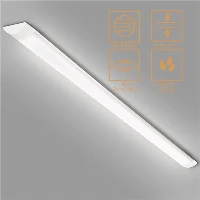
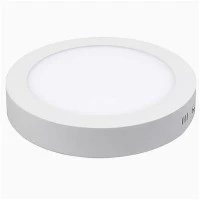
Recessed lighting, track lighting, and wall lamps are additional lighting devices that can produce ambient lighting.
Wall lights are a great ambient lighting source for staircases and corridors.
Since thoughtful planning is anticipated for ambient lighting, any lighting fixture that is well-designed and well-planned may really serve as the main source of light.
Job Light
Although some may argue that the next form of light is not essential, it unquestionably changes lives. Task lights are a good complement to ambient lights since they boost lighting for specific tasks carried out in certain spaces. It is very beneficial for spotting smaller things with low contrast or for tasks requiring more precision. This involves preparing meals, cooking, studying, completing assignments, writing reports for the office, drafting, sewing, taking care of one's skin, and many other activities. Task lighting is crucial and should be taken into consideration when arranging your lighting because so many tasks at home demand additional light.
As task illumination, a variety of fixtures can be employed. Under cabinet lighting or track lighting are more frequently employed in the kitchen. Particularly task lighting offers more concentrated illumination. Having more than one head allows you to direct light in different directions.
Wall lights positioned right over the sink or the prep counter are another option. It is best to utilise one of the several rotating wall lights that are available.
Bedside lights and floor lamps are frequently used in bedrooms. Of course, these are still on the market and unquestionably still function. However, since wall lamps and pendant lights don't take up much room, we advise using them instead. You won't be able to use a bedside table if you have floor lamps next to your bed. You may hang wall lights around 30-36 inches above the mattress if you have nightstands or bedside tables. With this, the desk light won't take up too much room and you can still stack other things on top of the table.