In the previous two decades, LEDs have advanced significantly in terms of dependability, efficiency, compactness, and toughness. The ability to manufacture LEDs with precisely the right color temperature to suit a variety of needs and applications is a significant advantage. The 4,000K and 5,000K color temperatures are two of the most popular ones for LED light bulbs, speaking of which. This article will contrast the illumination of 4,000K and 5,000K, discuss their intended uses, and determine which is better for indoor use.
An Overview of Color Temperature
Combining "color" and "temperature" might seem strange at first. Planck's Black Body Radiations, however, disagree. Planckian black body glows first in red, orange, and yellowish white as temperature is progressively increased; as temperature rises, the color changes to white and blue white.
A light source's color temperature, measured in Kelvin, is how it compares to a black body at a certain temperature (K). On a temperature scale, the whiteness of a light source is measured in Kelvin.
Look at an incandescent light bulb; it normally has a 2800K low color temperature. The color temperature of sunshine, however, is high—often it's 5000K or more.
Color Temperature: 4000K
4,000K is somewhat less yellow than 2,700K and 3,300K, which are warm white color temperatures. The 4,000K light may be compared to a natural white with a little hint of yellow.
4,000K illumination seems incredibly pure and natural, much like sunshine. As a result, this color temperature is used in places like homes and workplaces where people require clear illumination without a blue tinge.
Color Temperature 5000K
With 5,000K color temperature, the lighting begins to exhibit its blue tinge whereas 4,000K seems to be neutral white. 5,000K lights are crisp and brilliant, yet they don't have any yellow tint.
The light looks practically white at 5,000K, revealing the real colors of the things it strikes. This is the reason why 5,000K lighting is used to display art.
Lighting Comparison & Differences Between 4000K & 5000K
Our naked eyes cannot initially distinguish between a 4,000K and 5,000K illumination without the use of pricey photometers. However, you can distinguish the neutral white and yellowish white of 4,000K and 5,000K illumination, respectively, with continuous exposure.
While 5,000K Lights are neutral white with a tint of blue, 4,000K Lights have a somewhat warmer color tone. We do not advise going beyond 5,000K for reading or working for extended periods of time since the blue tint predominates in light at that temperature.
Where are 4000K and 5000K lighting used?
The kind, color, and intensity of light in a space directly affects how well our brains work. The choice of lighting for various environments, such as study, computer/office, kitchen, art galleries, sports/stadiums, etc., also heavily depends on color temperature.
Melatonin, a hormone that induces sleep and relaxation, will be released when a room has a cool color tone. Serotonin, a hormone that increases your energy levels, will also be released in response to a somewhat warm color temperature.
4000K
We'll see some typical locations soon where 4000K lighting is really helpful.
Kitchen
You need lighting that fills the room and is both calming and energizing, whether it be ambient lighting or cabinet lighting in the kitchen. For this, a 4000K color temperature LED is ideal.
With this lighting, working with sharp objects like knives is simple. You can also use it to enjoy your meal.
Offices
Because of its somewhat warm tone, 4000K lighting in offices not only helps workers unwind but also keeps them awake so they can work productively all day.
Retail Locations
Consider yourself walking inside a business. The lighting there will definitely have an effect on you since you can clearly see the merchandise and because of the neutral white with a little yellowish tinge. The customer may appear dim and foggy if the color tone is slightly cooler.
Garages You are surrounded by numerous tools and equipment in a garage. To see the tool or work, proper lighting is required. To avoid any accidents, the lighting should also be clear and sharp.
5000K
Now let's look at some typical locations where 5000K lighting is helpful.
Galleries of art
If the colors are true, you can appreciate paintings, sculptures, and other works of art. Due to its neutral white color tone, 5000K lighting is often used in art galleries and studios for this reason.
Showrooms 5000K lighting is also used in clothing and auto showrooms to display objects' true colors. The paint job on a vehicle or the embroidery on clothes are only two examples of the little, fine features that are easily visible.
Sports arenas
The majority of fast-paced video games are shot in high definition to produce clear, sharp images. But you need a good source of lighting to get accurate or real colors. As a result, the majority of sports stadiums (indoor and outdoor) use lighting with a color temperature close to 5000K.
health care facilities
A hospital is another significant and crucial application where the individual must have a clear and sharp understanding of the issue. Good illumination is essential for doctors and other medical workers to see even the tiniest details properly. Therefore, 5000K lighting is used in settings like hospitals, clinics, and ambulances to provide pure white light.
Warehouses Proper lighting is necessary in big warehouses where employees handle enormous numbers of items and materials so that they can see everything clearly and remain attentive and motivated.
Studios and theaters for television
TV and theater settings, like sports arenas, need pure, natural white light to accurately depict the colors of subjects and objects. While the play is recorded by cameras in TV studios, the theater is a live setting, making proper lighting essential to seeing the performance clearly.
Home Lighting: 4000K vs. 5000K
When we place two lights, one each with a 4000K and a 5000K color temperature, side by side, we can hardly tell the difference between them because the difference between similar brightness 4000K and 5000K lighting is very minimal.
However, 5000K lighting is more of a neutral white with a little blue tinge, whereas 4000K lighting is somewhat yellowish white.
We can use 4000K lighting in our living rooms, offices, and even kitchens because of its slightly warm color tone. Regarding 5000K lighting, you may use it in bathrooms, powder rooms, etc. because of its naturally white tone.
Conclusion
It is crucial to choose the right color temperature when lighting your homes and workspaces since it will not only improve your vision but also uplift your mood and give you more energy. Which color temperature is best—4000K vs. 5000K—is the subject of a protracted argument. In this article, we covered the fundamentals of the 5000K and 4000K color temperatures as well as some typical applications for each. Additionally, we observed the rooms in a house that may use 4000K and 5000K illumination.


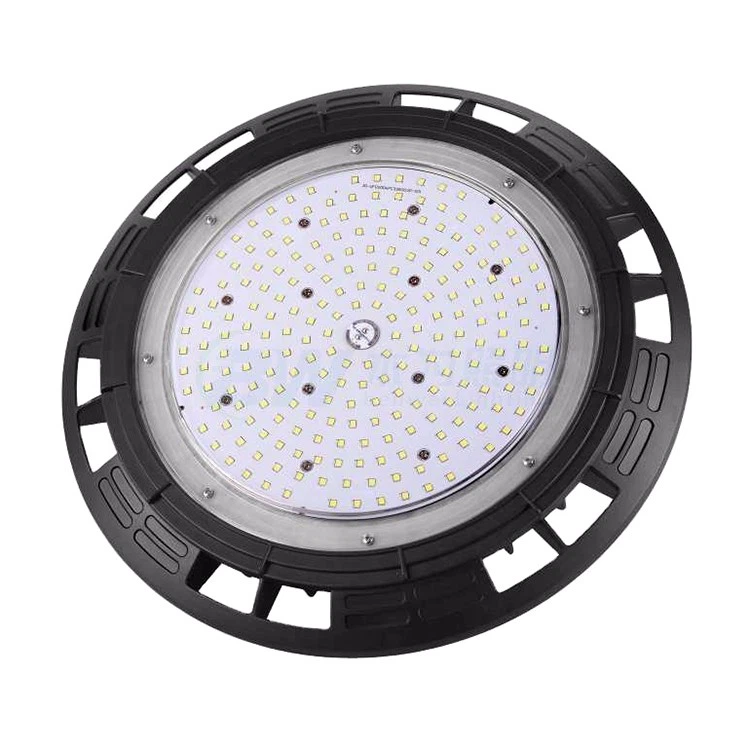

Benwei warehouse led lights:
|
Model |
BW-002-S100W |
BW-002-S150W |
BW-002-S200W |
|
Power(W) |
100W |
150W |
200W |
|
Light Source |
SMD |
||
|
Input Voltage |
AC220-240V/ AC100-305V / 480v 50/60Hz |
||
|
Material |
Aluminum+PC |
||
|
Beam Angle |
60°/90°/120° |
||
|
IP Rating |
IP65 |
||
|
CCT |
3000K / 4000K / 6000K |
||
|
CRI |
Ra>80 |
||