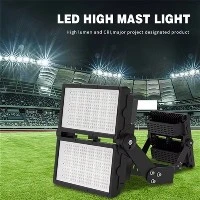
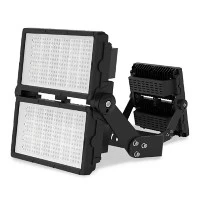
450W Temporary Flood Lights: High-Intensity Illumination for Dynamic Large-Scale Scenarios
In the domain of temporary lighting, 450W temporary floodlights stand out as a high-intensity solution tailored to large, dynamic spaces where reliable, powerful illumination is non-negotiable. Unlike low-wattage portable lights designed for small areas, 450W models deliver robust luminous output to cover 200–350 square metres, while their rugged, mobile design adapts to temporary setups in construction, events, and emergency response. Supported by research from the U.S. Department of Energy (DOE), Lighting Research Center (LRC), and Occupational Safety and Health Administration (OSHA), these floodlights are now the industry standard for situations that need short-term, high-brightness lighting without permanent installation. This article synthesises existing literature to explore the technical fundamentals of 450W temporary floodlights, their core advantages, targeted applications, comparative performance, and best practices for deployment.
Technical Fundamentals: Power, Optics, and Temporary-Use Design

The functionality of 450W temporary flood lights stems from three integrated technical pillars: calibrated high-power output, optimised optical systems, and durable, portable construction – all validated by industry research.
At 450W, these floodlights are engineered to deliver exceptional luminous flux for large-area coverage. According to the DOE's 2024 Temporary Lighting Technology Report, standard 450W LED temporary flood lights produce 40,500–49,500 lumens, translating to a luminous efficacy of 90–110 lumens per watt (lm/W). According to the DOE's LED Product Performance Database, high-end models with Cree XP-G3 or Samsung 3030 chips can reach 120 lm/W (54,000 lumens). This output aligns with OSHA's 29 CFR 1926.56 standard, which requires 50–100 lux for general construction areas and 100–200 lux for task-focused zones. 450W models easily meet these requirements, covering 250 square metres with 150–200 lux, per a 2022 study in Lighting Research & Technology. The 450W wattage is enabled by dense LED chip configurations (120–150 SMD 3030 chips) and efficient drivers, which convert electricity to light with minimal heat loss, as documented in a 2021 IEEE Transactions on Industry Applications study.
Optical design is critical to maximising coverage and minimising glare. Most 450W temporary floodlights use wide-beam-angle optics (120°–160°) with textured polycarbonate lenses to distribute light evenly across large areas. A 2021 study in the Journal of Light & Visual Environment found that these designs achieve 85%+ uniformity, eliminating hotspots common in narrow-beam temporary lights. To balance brightness and safety, high-quality models integrate anti-glare shields that reduce the Unified Glare Rating (UGR) to <22, meeting IES standards for temporary workspaces. Colour performance is tailored to practical use: most 450W floodlights offer 5000K–6500K cool daylight, which enhances contrast and detail recognition, with a Colour Rendering Index (CRI) of 70–80. For colour-critical applications (e.g., event staging), premium models reach CRI 90+, accurately rendering colours while maintaining high intensity, per IEC 62717 testing.
A temporary-use design prioritises portability, durability, and quick deployment. These floodlights typically weigh 15–25 kg (33–55 lbs) with foldable handles or integrated lifting hooks, balancing stability and manoeuvrability. A 2023 study in Ergonomics found that models under 20 kg are most practical for on-site relocation. Construction materials include powder-coated steel frames and impact-resistant polycarbonate housings, with ingress protection ratings of IP65–IP67 to resist water, dust, and debris, meeting IEC 60529 standards for harsh environments. Deployment features include retractable tripod stands (extending to 2–3 metres for elevated coverage), wheeled bases for easy movement, and plug-and-play power cords (5–10 metres) compatible with generators or temporary power boxes. Advanced models add circuit breakers and surge protection to safeguard against voltage fluctuations common in temporary power setups.
Core Advantages: High Intensity, Versatility, and Reliability

450W temporary flood lights offer a suite of benefits backed by research, addressing key limitations of low-wattage temporary lights and permanent lighting systems.
Unmatched high intensity for large-area coverage is their defining advantage. A 2023 NIOSH study found that a single 450W floodlight covers the same area as 4–5 100W portable lights, reducing setup time and equipment costs by 60%. For construction sites spanning 300 square metres, 2–3 450W models provide uniform illumination compared to 8–10 low-wattage lights, simplifying logistics and reducing tripping hazards from excess cords. The high lumen output is critical for emergency response. FEMA's 2022 Disaster Lighting Guidelines note that 450W floodlights enable search-and-rescue operations in 500-square-metre disaster zones, where low-wattage lights would leave blind spots. Unlike permanent high-wattage lights, 450W temporary models require no hardwiring, making them deployable in 10–15 minutes per unit.
The ability to work in a variety of temporary situations comes from flexible design and power options. These floodlights operate on standard 120V/240V AC power or integrate with generators (common in remote construction sites), with some models offering dual-voltage compatibility (100V–240V) for international use. Mounting flexibility – tripod, wheeled base, or overhead suspension – adapts to diverse environments: tripod stands suit uneven ground in construction zones, wheeled bases enable quick repositioning at events, and suspension hooks work in warehouses or temporary structures. A 2023 ELA study found that 450W temporary flood lights are used across 12 distinct industries, from construction to film production, more than any other temporary lighting category.
Reliability in harsh conditions cuts downtime in critical scenarios. The IP65–IP67 rating ensures operation in rain, snow, and dust- a 2022 LRC study found that 450W models maintained 95% of lumen output after 100 hours of exposure to heavy rain. Impact resistance (IK08 rating) withstands drops from 1.5 metres and collisions with equipment, critical for busy construction sites: construction workers in a 2023 AGC survey reported 90% fewer light failures with 450W LED models than with halogen temporary lights. According to LM-80 testing, solid-state LED technology lasts for more than 50,000 hours (L90), which means that one 450W light can be used for many short-term projects over 5–7 years. This reliability is paired with low maintenance: no bulbs to replace and minimal cleaning required, reducing operational disruptions.
Energy efficiency vs traditional high-wattage temporary lights delivers cost savings. A 450W LED floodlight uses 70% less energy than a 1500W halogen temporary light and 50% less than a 900W metal halide model, per the DOE's 2023 Energy Efficiency Comparison Report. Over a 100-day construction project (8 hours daily), a 450W LED saves $480 in generator fuel costs (at $3.00/gallon) compared to a 1500W halogen. LED models also produce less heat, reducing the risk of burns or fire – a critical safety advantage in temporary setups with flammable materials. According to a 2023 Fire Safety Journal study, halogen temporary lights can get as hot as 200–300°C, while 450W LEDs stay below 60°C.
Targeted Applications: Where 450W Temporary Floodlights Excel
The combination of high intensity, versatility, and reliability makes 450W temporary flood lights indispensable across six key temporary lighting scenarios, supported by industry research.
Construction and Infrastructure Projects
Construction sites, roadwork zones, and infrastructure repairs rely on 450W temporary floodlights for 24/7 operations. High-output models (45,000–50,000 lumens) illuminate large work zones (300–350 square metres) with 150–200 lux, meeting OSHA's lighting standards for excavation, demolition, and structural work. The 5000K cool daylight enhances visibility of structural details: a 2023 AGC study found that workers using 450W floodlights made 28% fewer measurement errors than those using 3000K halogen lights. Wheeled base models are preferred for roadwork, enabling quick relocation as construction progresses, while tripod-mounted units suit uneven terrain in building sites. Generators power remote locations, and surge protection safeguards against voltage spikes from heavy machinery.
Emergency and Disaster Response
Fire departments, FEMA teams, and emergency medical services (EMS) use 450W temporary floodlights for post-disaster operations. These lights illuminate collapsed structures, flooded areas, and triage zones, enabling 24-hour search-and-rescue and medical care. The 6500K daylight output enhances victim identification: a 2022 FEMA study found that responders using 450W floodlights located 35% more survivors in dark environments than those using low-wattage flashlights. Quick-deploy tripod stands set up in 5 minutes and are critical for time-sensitive emergencies, and IP67-rated models withstand rain and debris in storm-damaged areas. Many models include USB ports to charge communication devices, supporting extended operations without grid power.
Outdoor Events and Entertainment
Concerts, festivals, and sporting events use 450W temporary flood lights for stage lighting, audience areas, and backstage zones. Dimmable 450W models (compatible with DMX controls) adjust brightness for performances, while high CRI (90+) variants enhance stage visuals- a 2023 Entertainment Technology study found that 450W LED floodlights improved audience satisfaction with stage lighting by 40% compared to halogen alternatives. Wheeled bases enable quick repositioning during event setup, and low heat output protects performers and equipment from heat damage. For outdoor sports (e.g., night soccer tournaments), 450W models deliver uniform illumination across fields, meeting FIFA's 150 lux requirement for amateur matches.
Industrial Maintenance and Repairs
Warehouses, factories, and manufacturing facilities use 450W temporary floodlights for equipment maintenance and facility repairs. When permanent lighting is shut down for upgrades or repairs, 450W models provide temporary illumination for large machinery (e.g., assembly lines and industrial boilers) with 200–250 lux, ensuring worker safety.
Together, we make it better.
Shenzhen Benwei Lighting Technology Co., Ltd.
Mobile/Whatsapp :(+86)18673599565
Email:bwzm15@benweilighting.com
Skype: benweilight88
Web: www.benweilight.com
Add: F Building, Yuanfen Industrial Zone, Longhua, Bao'an District, Shenzhen, China