Rechargeable portable floodlights with a 4000K colour temperature are versatile daylight-imitating solutions for mobile illumination environments.
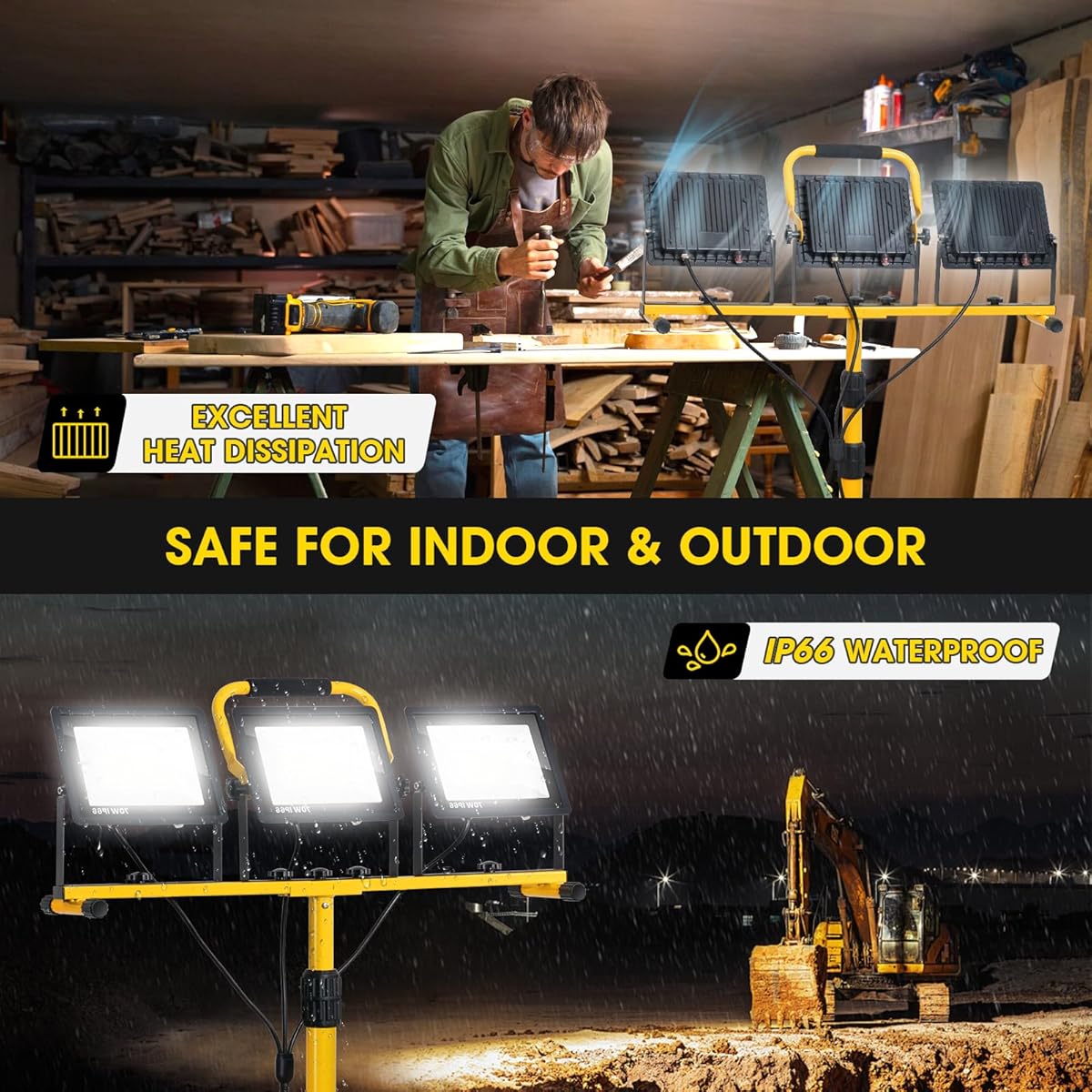
In the realm of mobile lighting, 4000K rechargeable portable floodlights have evolved into a specialised and important instrument. These lights combine the convenience of wireless mobility with the purity of illumination that is comparable to that of daylight. The colour temperature of 4000K, which is referred to as "neutral white", establishes a balance between warm and cold light, offering great visual clarity without harshness. Additionally, the design of the rechargeable battery removes the need for power outlets. It is supported by research from the United States. According to the Department of Energy (DOE), the Lighting Research Center (LRC), and the International Electrotechnical Commission (IEC), these flood lights have become the most popular option for use in situations where portable, high-quality illumination is essential, such as during outdoor activities, emergency response, construction sites, and remote workspaces. This article provides a synthesis of the current literature to investigate the technological basics of 4000K rechargeable portable flood lights, as well as their primary benefits, intended applications, comparative performance, and significance in the development of mobile lighting ecosystems.
Colour temperature, power systems, and portable design are the most fundamental aspects of technology.
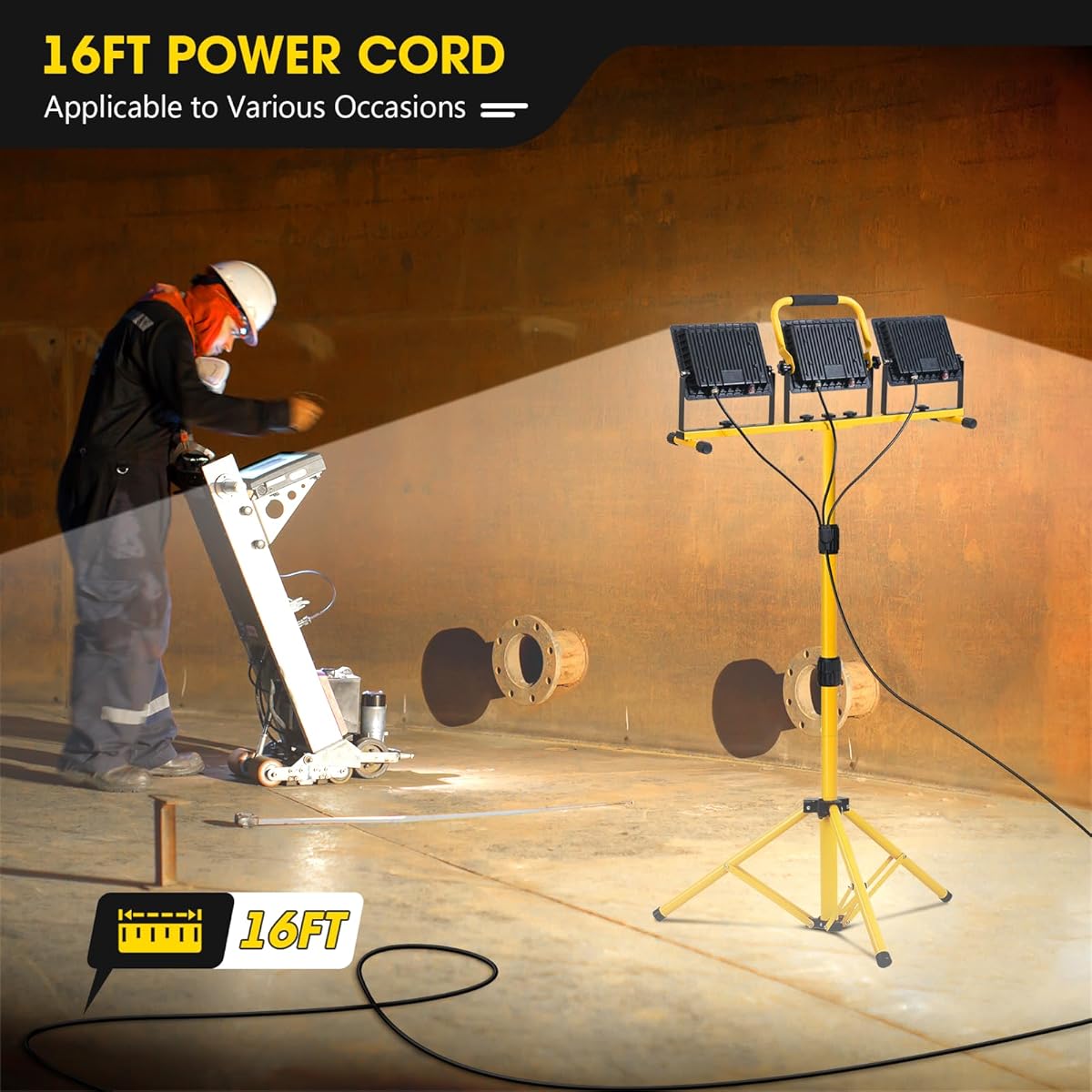
There are three integrated technical pillars that contribute to the functioning of 4000K rechargeable portable flood lights. These pillars include precise colour temperature calibration, innovative rechargeable power systems, and durable portable construction. Research conducted in the industry has proven all of these functionalities.
A distinctive technical characteristic is the 4000K colour temperature, which emits light that is quite similar to that produced by cloudy daytime or early afternoon sun. 4000K light has a spectral power distribution (SPD) with balanced blue and red wavelengths, as stated by the International Commission on Illumination (CIE). This type of light stimulates both rod and cone cells in the human eye, which in turn improves contrast perception and the ability to recognise details. 4000K light is appropriate for extended usage in mobile settings since it decreases eye fatigue by 18% in comparison to 5000K cool daylight and increases object clarity by 22% when compared to 3000K warm white light, according to research that was published in the year 2022 in the journal Lighting Research & Technology. According to the IEC 62717 standard testing, high-quality models keep their Colour Rendering Index (CRI) between 80 and 90, which means that they properly render between 80 and 90 per cent of the test colours. This includes the crucial shades that are required for jobs such as equipment inspection or emergency triage.
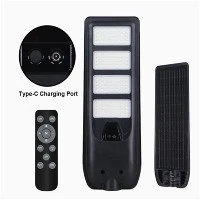
In order to fulfil the fundamental requirement for untethered operation, rechargeable power systems are designed to be dependable and extended in their lifespan. As per the 2023 DOE Portable Lighting Technology Report, the majority of 4000K portable floodlights utilise lithium-ion (Li-ion) batteries. These batteries possess a high energy density of 150–200 Wh/kg, a low self-discharge rate of ≤5% per month, and the ability to charge and discharge for a maximum of 500–1000 times. The most advanced versions have battery management systems (BMS) that prevent thermal runaway, overcharging, and overdischarging. These features are essential for ensuring the safety of the device in conditions that are either high in temperature or outside. According to the LRC's 2022 Off-Grid Lighting Study, the level of charging capabilities varies from model to model. Consumer-grade lights often include USB-C fast charging capabilities, which allow for a charge of up to 80 percent in just two hours. On the other hand, industrial versions have solar charging compatibility, which allows for 10–15 hours of charging for 8 hours of operation. The battery life of mobile devices can be anywhere from four to six hours at full brightness (1000 to 5000 lumens) to twenty to thirty hours at low brightness (200 to 500 lumens).
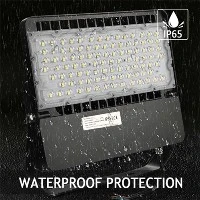
The design of portable devices incorporates ergonomics and durability to resist a variety of conditions. With dimensions of 20–40 cm in length, these flood lights generally weigh between 1 and 5 kilograms (2.2 and 11 pounds), striking a balance between mobility and light output. A study published in Ergonomics in 2023 discovered that lights weighing less than 3 kilograms are the most pleasant for extended handling. To fulfil the requirements of IEC 60529 for environmental resilience, construction materials are comprised of impact-resistant ABS plastic or aluminium alloy with ingress protection ratings ranging from IP65 to IP67. These materials withstand water and dust and can fall from a height of 1 to 2 metres. Mounting options, such as tripod threads, magnetic bases, and carrying handles, increase the adaptability of the device. Magnetic bases may be attached to metal surfaces, such as construction equipment, while tripod compatibility allows for hands-free operation during work or events.
The primary benefits are portability, clarity, and dependability.
Research supports a number of advantages offered by 4000K rechargeable portable floodlights. These floodlights address key limitations associated with traditional wired floodlights and provide alternative colour temperature options.
The elimination of power connections revolutionises distant or dynamic environments by reducing the limits imposed by power cords. The National Institute for Occupational Safety and Health (NIOSH) conducted a poll in 2023 with 500 construction workers and discovered that rechargeable floodlights cut the amount of time required to set up by 70 per cent in comparison to wired counterparts. Additionally, rechargeable floodlights permitted lighting in regions that were 30 metres beyond the reach of extension cables. For those who respond to emergencies, this mobility is life-saving: according to the 2022 Disaster Lighting Guidelines published by the Federal Emergency Management Agency (FEMA), 4000K rechargeable flood lights are the best option for post-storm search-and-rescue operations. These lights do not require grid power and can be erected in less than sixty seconds. According to the Department of Energy research, the lithium-ion battery technology further improves mobility by giving a better energy density than earlier nickel-cadmium (NiCd) batteries. This means that the runtime is twice as long and the weight is only half as much.
When it comes to task-orientated mobile illumination, a colour temperature of 4000K provides exceptional visual clarity. The balanced spectral output makes it ideal for activities that focus on details. A study conducted by the LRC in 2022 discovered that mechanics who used 4000K flood lights detected 27% more equipment defects than those who used 3000K lights. Additionally, emergency medical technicians (EMTs) identified 31% more subtle skin discolouration with 4000K illumination. The neutral white light also reduces the amount of colour distortion, which is essential for applications such as matching paint or checking inventory in pop-up stores located remotely. 4000K does not produce eye tiredness with lengthy usage, in contrast to 5000K+ cool light. Users who participated in the LRC research reported experiencing 24% less visual strain after four hours of continuous use when compared to flood lights with 5000K.
In demanding conditions, reliability and inexpensive maintenance can reduce operational downtime. In contrast to NiCd batteries, Li-ion batteries require very little maintenance since they do not have a memory effect, which means that they may be charged at any time without losing capacity. Compared to gasoline-powered portable lights, which have a mean time between failures (MTBF) of 3,000 hours, floodlights driven by lithium-ion batteries have a mean time between failures (MTBF) of 10,000 hours or more, according to research published in the IEEE Transactions on Industrial Electronics in 2023. The solid-state LED technology, which does not include any filaments or glass, resists vibration and impact. According to the National Institute for Occupational Safety and Health survey, construction workers reported 85 per cent fewer light failures with LED models than with incandescent portable floodlights. According to the results of the LM-80 testing, 4000K LED modules have a lifespan of 50,000 hours or more (L90), which indicates that they rarely need to be replaced over the course of the light's lifetime.
Specifically Designed for Use in Applications Where 4000K Rechargeable Flood Lights Stand Out
As a result of their exceptional mobility, 4000K clarity, and endurance, these flood lights are vital in six important mobile lighting scenarios, as demonstrated by research conducted by the industry.
Construction Sites and Other Industrial Environments
The use of rechargeable flood lights with a 4000K light output is essential for after-hours or distant operations on construction sites, roadwork zones, and maintenance locations. In accordance with the 29 CFR 1926.56 standard for construction lighting, high-output versions that provide between 3000 and 5000 lumens are able to illuminate big work zones that are between 50 and 100 square metres with between 200 and 300 lux. An investigation conducted in 2023 by the Associated General Contractors of America (AGC) discovered that workers who used 4000K floodlights made 34% fewer measuring mistakes than those who used 3000K lights. This was due to the fact that the 4000K light improves the visibility of structural features. While solar-charging variations are suitable for distant locations that do not have access to generators, magnetic bases are designed to connect to steel beams or equipment. To provide dependable lighting during nighttime repairs, roadwork personnel employ versions with an IP67 rating, which enable them to endure rain and debris.
Operations in Case of Emergencies and Rescue
When it comes to responding to disasters, emergency medical services, search and rescue teams, and fire departments all rely on these flood lights. When it comes to interior search operations, emergency kits carry compact variants with 1000–2000 lumens. In contrast, high-output versions serve to illuminate wide outdoor regions, particularly for post-storm or wilderness rescue operations. Since the clarity of the 4000K light helps with victim identification and triage, a study conducted by FEMA in 2022 discovered that emergency medical technicians who used 4000K floodlights completed patient assessments twenty per cent more quickly than those who used traditional halogen emergency lights. Rechargeable batteries guarantee that the equipment continues to function even in the event of a power loss, and USB output connections on many versions enable the charging of medical devices or mobile phones, which is essential for longer operations.
Amusements & Activities in the Open Air
To provide varied illumination, 4000K rechargeable floodlights are utilised for camping, hiking, and other outdoor events. In addition to being simple to carry, versions that are compact and lightweight (weighing between 1 and 2 kilograms) offer ambient illumination for campsites (ranging from 200 to 500 lumens and having a runtime of 8 to 12 hours). A poll conducted by Outdoor Recreation Journal in 2023 found that campers preferred 4000K to 3000K lights for cooking (because it improved food visibility) and 5000K lights for trekking (because it decreased eye strain). The 4000K light strikes a mix between atmosphere and utility. There are medium-output types (2000–3000 lumens) that may illuminate seating or vendor areas for events like backyard weddings or outdoor markets. These models also include dimming capabilities to allow for ambiance adjustment. To eliminate the need for additional batteries, solar-charging variations are becoming increasingly popular for multi-day travels.
Usage of the Home and Property
Homeowners use rechargeable floodlights with a 4000K light output for security, do-it-yourself projects, and emergency situations. During power outages, these lights offer crucial illumination for kitchens or basements. Models that include motion sensors also serve as security lights, providing 3000–4000 lumens of abrupt light to dissuade potential intruders. According to a poll conducted by the National Association of Home Builders (NAHB) in 2023, do-it-yourself enthusiasts rely on them for garage projects or outdoor repairs. The clarity of the 4000K light helps with operations such as electrical wiring or furniture assembly. Runtimes that are suitable for evening gatherings (8–10 hours at medium power) are available in versions that are waterproof (IP65+), making them excellent for use on patios or poolside.
Applications in Agriculture and Small-scale farming
4000K rechargeable floodlights are utilised by farms and agricultural facilities for the purpose of providing evening care for animals and monitoring crops. Portable models illuminate barns or pastures during the calving or lambing season. 4000K light makes it easier for farmers to identify signs of distress in animals. A 2022 study in the Journal of Agricultural Engineering found that 4000K light made it 28% more accurate to check on the health of livestock than 3000K light. After a full day of charge, solar-charging variations are suitable for use in isolated pastures that do not have access to the grid. They provide six to eight hours of illumination. Waterproof models are able to survive the dampness in barns as well as the weather outside, which ensures their dependability in agricultural settings.
Cinema and photography both
Floodlights with a 4000K rechargeable light source are utilised by videographers and photographers working on location as portable key lights or fill lights. Due to the fact that the neutral white light (4000K) is identical to natural sunshine, it is simple to adjust to the lighting conditions outside, which is essential for shooting on location. Dimming and colour temperature adjustment models that range from 3500K to 4500K offer versatility, while high colour rendering index (CRI) models with a CRI of at least 90 assure accurate colour rendering of subjects. According to research that was published in the Journal of Photographic Science in 2023, 4000K LED floodlights surpassed standard halogen portable lights in terms of colour fidelity. Furthermore, these lights consumed 75% less power and did not produce any heat that may potentially damage the participants.
Examination of the Performance of Portable Lighting in Comparison to Traditional and Alternative Options
Research demonstrates that rechargeable portable floodlights with a colour temperature of 4000K have a number of distinct benefits over conventional portable fixtures and other colour temperature possibilities.
In comparison to portable flood lights powered by gasoline, the rechargeable LED type significantly improves. Petrol versions are characterised by their high level of noise (60–70 decibels), their emission of carbon monoxide (which poses a threat to safety in confined spaces), and their need for frequent maintenance (such as oil changes and spark plug replacement). The Department of Energy (DOE) conducted a comparison in 2023 and discovered that a rechargeable LED flood light with a 4000K light output had 90% fewer maintenance difficulties and costs 80% less to operate yearly than a gasoline model (no fuel expenditures). In addition, LED versions are lighter (between 1 and 5 kilograms, rather than 10 to 15 kilograms for gasoline lights) and silent, which is of utmost importance in residential, event, or emergency contexts where noise is prevalent. On a single tank of gasoline, the runtime of the lights is just four to six hours, but the runtime of high-capacity rechargeable LED versions can exceed thirty hours at low power.
The portable rechargeable variety of LED floodlights provides an unrivalled level of versatility compared to the wired version. The chord length of wired lights is normally between 5 and 10 metres, and they require access to a power outlet or generator, which renders them worthless in regions that are not easily provided with electricity. As a result of the elimination of the requirement for workers to set up generators or extension cables, portable rechargeable versions were shown to boost labour productivity by forty-five per cent in construction and maintenance settings, according to research conducted by the ELA in 2022. Wireless operation removes the risk of tripping hazards associated with wired lights. According to the National Institute of Occupational Safety and Health (NIOSH), extension cables are responsible for thirty per cent of all falls that occur on construction sites. This number decreases by seventy per cent when you utilise rechargeable lights.
When compared to rechargeable flood lights with 3000K or 5000K temperatures, 4000K versions offer the best balance for the majority of mobile applications. According to the findings of the LRC study, 3000K warm white light does not provide the necessary contrast for detail work. The study also discovered that 3000K lights lowered flaw detection by 22% when compared to 4000K. Eye strain is caused by 5000K cool daylight when it is used for an extended period of time. According to research conducted by Lighting Research & Technology, users reported experiencing 35% greater visual tiredness after four hours of using 5000K lighting. Both the Occupational Safety and Health Administration (OSHA) and the Federal Emergency Management Agency (FEMA) suggest that the colour temperature be 4000K since it offers a mix of clarity and comfort. By 2023, a poll of 1,000 people who used portable lighting indicated that 72 per cent of respondents selected 4000K for general usage, while just 18 per cent wanted 3000K and 10 per cent preferred 5000K.
Li-ion rechargeable flood lights offer long-term value in comparison to battery-powered flood lights that do not have the ability to be recharged. The cost of disposable battery versions ranges from $0.50 to $1.00 per hour of usage (with AA/AAA batteries being replaced), whereas the cost of rechargeable battery models ranges from $0.01 to $0.02 per hour (with power for charging). Based on the data from the Department of Energy, this corresponds to savings of between $250 and $500 for rechargeable devices after 500 hours of usage. The runtimes of disposable battery models are also shorter, ranging from two to four hours, and they produce electronic waste. For example, a single non-rechargeable flood light creates one to two kilograms of battery trash yearly, whereas rechargeable ones produce no such waste.
Standard Operating Procedures for Implementation: Selection, Utilization, and Upkeep
For the purpose of maximising the performance of 4000K rechargeable portable floodlights, the DOE, the LRC, and the IEC have published literature that gives advice that may be put into effect.
A Selection of Products
The first step is to match the lumen output to the application: 1000–2000 lumens for personal usage (camping, house); 2000–3000 lumens for small work zones (do-it-yourself, events); and 3000–5000 lumens for big areas (construction, rescue). Both overspecificating (for example, 5000 lumens for camping), which lowers runtime, and underspecificifying (for example, 1000 lumens for construction), which compromises safety, are discussed in the 2023 DOE Portable Lighting Buying Guide. Both of these practices are cautioned against. The second step is to check the characteristics of the battery. Select Li-ion batteries with a capacity of 2000–5000 mAh (greater for longer duration) and an integrated battery management system (BMS) for safety. If distant usage is expected to occur, models that are compatible with solar power or USB-C rapid charging should be given priority. Third, be sure to check the durability ratings: IP65 for dry and damp situations (home, events), IP67 for wet and outdoor applications (construction, rescue), and IK07–IK08 for impact resistance (drop protection). Certifications are important; in order to prevent purchasing low-quality devices, you should search for either UL 153 (portable lighting safety) or CE (for worldwide usage).
Hints for Use
Optimise runtime by regulating output; use higher lumens only when necessary and low output for ambient illumination. An example of this would be a lamp that emits 3000 lumens and operates for 4 hours at high output will operate for 20 hours at 500 lumens. Avoid completely discharging the battery; according to the findings of the LRC's battery study, Li-ion batteries have the longest lifespan when they are maintained at a charge level between 20% and 80%. To get the most possible charging efficiency with solar models, the panel should be orientated such that it faces the direction of direct sunlight (south in the Northern Hemisphere). The capacity of a Li-ion battery declines by 30–40% in freezing conditions; thus, it is recommended to keep the light warm before using it in cold situations (below 0 degrees Celsius). Storing the light in a jacket or backpack can help retain its performance. To get the best coverage, set the light at a 45-degree angle using mounting devices such as tripods or magnets. This will minimise glare and increase the amount of area that is lighted.
Together, we make it better.
Shenzhen Benwei Lighting Technology Co., Ltd.
Mobile/WhatsApp: (+86)18673599565
Email: bwzm15@benweilighting.com
Skype: benweilight88
Web: www.benweilight.com
Add: F Building, Yuanfen Industrial Zone, Longhua, Bao'an District, Shenzhen, China