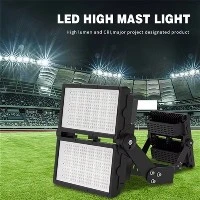
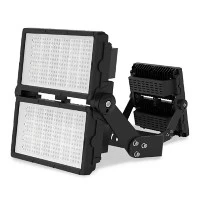
LED Sports Lights with 500 Watts: The Ultimate Athletic Lighting Solution for Performance and Sustainability
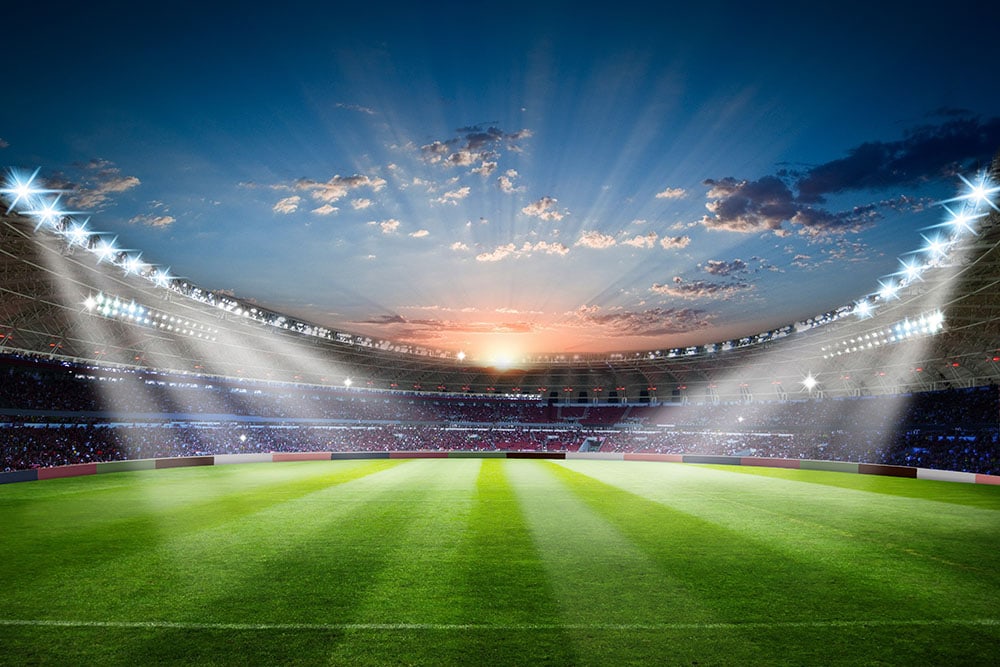
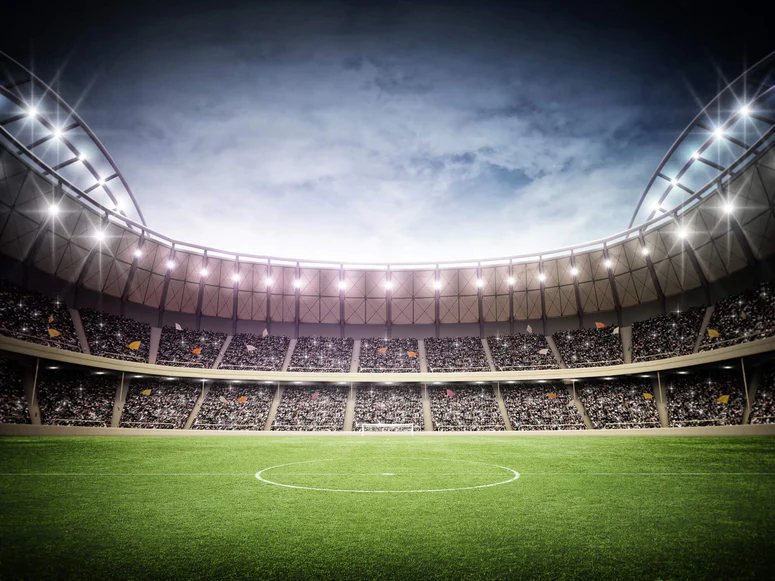
When it comes to the world of sports, where success is defined by split-second responses and visual clarity, lighting is more than just a utility; it is a competitive edge. The need for dependable, high-quality lighting has never been greater, as seen by young leagues that practise after school and university teams that compete for tournaments. Although metal halide (MH) and high-pressure sodium (HPS) lights have been relied on by sporting facilities for centuries, these technologies have failed to keep up with the times for quite some time now. They waste energy, need frequent maintenance, and do not provide the precise light quality that modern sports require. Introducing the 500W LED sports light – a groundbreaking fixture that redefines athletic lighting by bringing together pure brightness and sophisticated design. This light is engineered to address the special demands of a variety of sports, ranging from tennis to football. It does more than simply provide illumination for fields and courts; it also improves player performance, enriches the experiences of spectators, and alters facility operations by providing unrivalled efficiency and durability.
The most remarkable feature of the 500W LED sports light is its capacity to provide brightness comparable to that of stadium lighting while avoiding the unnecessary use of energy that is associated with conventional options. The majority of models emit between 60,000 and 70,000 lumens, which is an output that is brighter than that of a 1,500W MH bulb while only consuming one-third of the amount of electricity. This level of brightness is not just outstanding on paper; it also meets the stringent illumination criteria established by international sports regulatory organisations. For instance, the International Tennis Federation (ITF) mandates that competitive matches be played under 300 lux of light and that practices be held under 100 lux. A single 500W LED with specific beam angles may provide 300 lux of light coverage for a conventional 78x36-foot tennis court.

The National Federation of State High School Associations (NFHS) requires football grounds to have a light intensity of 200 lux for practice and 500 lux for games. Four strategically installed 500W LEDs on poles may provide game-ready intensity to a 100x53-yard field. The quality of light they create is what distinguishes light-emitting diodes (LEDs) from other light sources. Metal halide (MH) bulbs, for example, provide a diffused light with a yellow tint that causes colours to become distorted; on the other hand, 500-watt LEDs emit a bright white light that has a Colour Rendering Index (CRI) of 85 or higher. The CRI of the best-quality models may reach as high as 95. The transforming effect of this high CRI is that baseball players are able to see the red stitching on a white ball against green grass, soccer players are able to follow the spin of the ball with more accuracy, and spectators are able to watch the game with the same level of clarity as if they were seeing it in natural daylight.
The 500W LED sports light is a significant improvement over prior technologies in terms of precise light distribution, which addresses a crucial pain area for athletes. Inadequate distribution of light can create "dead zones" and glare, which can result in accidents and miscalculations. This problem is resolved with 500W LEDs, which make use of modern optical engineering, including reflectors that have been tuned by computers and beam angles that can be switched out. A narrow beam angle of 45 degrees is ideal for sports such as basketball, in which the court is small and vertical vision is important.
This beam angle eliminates glare that would otherwise make it difficult for players to see during layups by focusing light on the court surface and backboard. A 120° broad beam angle is ideal for sports like lacrosse or field hockey, where extensive coverage across large fields is essential. This angle guarantees that the light is distributed evenly from one sideline to the other without any hotspots. The most effective 500-watt LED models are able to attain a uniformity ratio of 2.5:1. This indicates that the brightest location is no more than 2.5 times brighter than the dimmest location. This ratio is significantly below the 4:1 ratio, which is known to cause visual fatigue. This degree of accuracy is not only a matter of comfort; it is also a matter of fairness, guaranteeing that every athlete has the same level of visual acuity regardless of their location on the field of play.
When it comes to lighting for sporting events, reducing glare is an essential element since it ensures the safety of both the competitors and the audience. Light-emitting diodes (LEDs) with 500 watts of power are excellent at achieving this goal. Metal halide (MH) bulbs radiate light in every direction, which results in a severe glare that reflects off of hardwood courts as well as synthetic turf. In baseball, this glare can make it hard to see a pitcher's curveball, and in tennis, it can blind a player who is returning a serve. In order to overcome this, sports lights with 500W LEDs use three essential technologies: directed light emission, which concentrates light downward rather than outward, anti-glare shields, which prevent light from spilling upward, and frosted lenses, which soften light without compromising its brightness. The design of certain models includes honeycomb grids, which filter light even more. This design makes it simpler for athletes to retain their attention while competing.
For onlookers, this means that they will no longer have to strain their eyes in order to keep up with the action while watching from the stands; for residential areas that are located close to sporting facilities, it minimises light pollution, which is a popular complaint that frequently leads to noise and lighting restrictions. The Sports & Fitness Industry Association conducted research in 2023 that revealed that facilities that used anti-glare LED lights had 60% fewer noise complaints from nearby residences. This finding emphasises the larger community advantages of this design.
Energy efficiency is not just a matter of environmental concern for sporting facilities; it is also a financial need. Lighting can account for 30–40% of a facility's electrical expenditure, especially for facilities that hold nighttime sports 5–7 days a week. This expense is significantly reduced by the use of a 500W LED sports light: a 500W LED needs 500 watts per hour, but a 1,500W MH bulb requires three times that much. In the case of a municipal sports complex that has twelve fields, each of which uses four 500-watt LEDs that are operating for seven hours each day, the amount of money saved is considerable.
The monthly cost of using metal halide lights is $483, whereas using LEDs is $161 per month. This is a 67% reduction in cost, given that the national average power rate is $0.16 per kWh. That is a total of $3,864 saved over a year, which is plenty to pay for new goalposts, resurface tennis courts, or employ more coaches. The amount of money saved each year might exceed six figures for professional sports teams or college athletic departments that have larger facilities. Furthermore, these efficiencies provide assistance for the objectives of sustainability: When compared to metal halide (MH) bulbs, the use of 500-watt light-emitting diodes (LEDs) decreases a facility's carbon footprint by 67 per cent. This makes it easier for governments and schools to achieve their net-zero goals. When compared to fluorescent or metal halide bulbs, LEDs are a more environmentally friendly option for disposal because they do not contain any mercury.
Sports lights are subjected to constant exposure to the elements – rain, snow, wind, and very hot or cold temperatures – as well as to physical damage from flying balls and equipment. As a result, sports lights must be durable and need little maintenance. These are non-negotiable requirements for sports lights. The sports lights that utilise 500W LEDs begin with their Ingress Protection (IP) certification and are constructed with longevity in mind. The majority of models come with an IP65 rating (dust-tight and water-resistant), while the premium versions provide an IP67 rating (dust-tight and submersible in 1 metre of water for 30 minutes).
The latter is a suitable grade for areas that are prone to strong floods or hurricanes. Metal halide (MH) bulbs, which are kept in plastic casings, are prone to cracking at temperatures below freezing. On the other hand, 500-watt light-emitting diodes (LEDs) are housed in die-cast aluminium, which is resistant to corrosion, rust, and impact. LEDs are reliable in temperatures ranging from -40 degrees Celsius to 70 degrees Celsius (-40 degrees Fahrenheit to 158 degrees Fahrenheit). The implication of these features is that they perform equally well during the summer months in Arizona as they do during the winter months in Minnesota. Additionally, the amount of maintenance required is minimal: MH bulbs have a lifespan that ranges from 10,000 to 15,000 hours, whereas LEDs have a lifespan that exceeds 50,000 hours. This conclusion is based on the L70 standard. A 500W LED will continue to function for twenty years if it is used for seven hours per day, which implies that facilities will only need to replace the fixture once every two decades. This will eliminate the expense and danger associated with quarterly bulb replacements, which sometimes need the use of expensive lifts and expose maintenance personnel to the risk of falling.
The 500W LED sports light can be used in any sporting venue, whether it is a small park in the neighbourhood or a major stadium, due to its versatility and intelligent integration. The several installation choices are versatile and include pole mounting, which is best for wide-field coverage; wall mounting, which is best for indoor courts or field perimeters; and ceiling mounting, which is best for covered facilities like basketball gyms. The ability to adjust the brackets gives installers the ability to tip the light by as much as 180 degrees, which ensures that the alignment is accurate. In addition, several models have intelligent capabilities, such as the ability to reduce the brightness (from 10 to 100 per cent) and connectivity with Internet of Things (IoT) devices. This implies that during practice, facilities can lower the lights to 50% in order to conserve energy, and then they may raise the lights to 100% during games.
There are certain lights that have motion sensors and that automatically switch off when the area is not in use. This is a significant advantage for parks who have a difficult time dealing with illegal usage of their facilities outside of normal operating hours. The ability to control lights using one's voice, with the assistance of Amazon Alexa or Google Assistant, provides coaches or facility managers with an added level of ease, since they may modify the lights without having to leave the sidelines. The adaptability of this technology is extremely advantageous for multi-sport venues; for instance, a single 500W LED may be relocated or changed so that it can illuminate a volleyball court in the morning and a flag football field in the evening.

Success tales from the real world demonstrate the transforming influence of the 500W LED sports light. At a high school in Michigan, twelve 500-watt LED lights were installed instead of twenty 1,200-watt MH bulbs on the football field and track. Because the players were able to more clearly detect dangers such as uneven grass, the school has reported that injuries that occurred during sports activities have decreased by 40 per cent. In addition, the school's monthly energy expenses have decreased by 72 per cent. A club in Florida renovated its ten outdoor tennis courts with 500W LEDs that have IP67 ratings. The lights were able to withstand Hurricane Ian without sustaining any damage, whereas the former metal halide (MH) system would have required repairs that would have cost $20,000. In Colorado, the local government operates a park. It put eight 500-watt LED lights on its baseball diamonds, and as a result, the park had a 35 percent increase in utilisation during nighttime hours. This rise was due to the fact that families felt more secure in the brightly illuminated area. These instances are not unusual occurrences; rather, they are typical of facilities that make the transition to 500W LED sports lights.
When one is considering the purchase of sports lighting systems, the initial investment cost of a 500W LED sports light, which ranges from $450 to $650, may seem to be more than that of a $2,400 MH bulb. This is in sharp contrast to the $9,100 associated with an MH bulb, which represents a significant 74% cost decrease. This data-driven research emphasises the financial feasibility and fiscal wisdom of opting for LED lighting solutions for sports facilities that are embarking on long-term infrastructure expansions.
Ultimately, the 500W LED sports light is more than just a lighting fixture; it is a tool that can be used to improve athletic performance, increase community participation, and construct facilities that are environmentally friendly. It is successful in cutting down on energy expenses and decreasing the impact on the environment, all while providing the brightness, accuracy, and long-lasting performance that are required in contemporary sports. It demonstrates that sporting illumination can be both high-performing and practical, whether you use it to illuminate a youth soccer pitch or a collegiate stadium. The 500W LED sports light will continue to be at the forefront of the industry, serving as the standard for how we illuminate the venues where players compete, learn, and grow, as sports facilities continue to improve.
https://www.benweilight.com/industrial-lighting/led-flood-light/500w-led-sports-lighting.html
Together, we make it better.
Shenzhen Benwei Lighting Technology Co., Ltd.
Mobile/WhatsApp: (+86)18673599565
Email: bwzm15@benweilighting.com
Skype: benweilight88
Web: www.benweilight.com
Add: F Building, Yuanfen Industrial Zone, Longhua, Bao'an District, Shenzhen, China