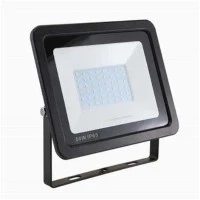
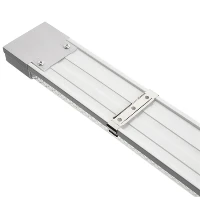
600-Watt LED Sport Court Lights: Precision Engineering for Illumination for Both Recreational and Competitive Play
When it comes to sport courts – whether they are used for basketball, tennis, volleyball, or pickleball – it is essential that the lighting provides a balance between intensity, consistency, and clarity to support both the performance of athletes and the engagement of spectators. For a long time, conventional lighting solutions such as metal halide (MH) and high-pressure sodium (HPS) lights have failed to meet the demands of modern society: they use up a lot of energy, require regular maintenance, and generate light that is inconsistent and has poor colour rendering. The LED sport court light, which has a power rating of 600 watts, is designed to serve as a purpose-built solution that is created to fulfil the high criteria of organisations such as USA Pickleball, the International Basketball Federation (FIBA), and the International Tennis Federation (ITF). This fixture redefines what sport court lighting can provide, changing dimly lit places and inconsistently illuminated into professionally lit arenas that are ideal for everything from youngsters practice to competitive competitions.
This fixture achieves this transformation through its high luminous flux, efficient beam control, robust construction, and energy efficiency. The excellent luminous output and optical precision of the 600W LED sport court light are at the heart of its performance. The majority of versions produce between 72,000 and 84,000 lumens, which is sufficient to surpass a 2,000 W MH bulb while consuming 70 per cent less electricity. This output is in accordance with the stringent illuminance (lux) standards that are required for various types of courts and levels of competition. The International Basketball Federation (FIBA) advises that basketball courts used for recreational purposes have 200 lux of light at the playing surface. At this level of illumination, one 600W LED light is sufficient to cover a whole court, which measures 50 by 94 feet. In the case of competitive tennis, the International Tennis Federation (ITF) has set a requirement of 500 lux for regional tournaments and 750 lux for national events.
In order to attain 750 lux with constant coverage, two to three 600W LEDs strategically put on poles that are twenty feet tall would be required. Sixty-watt LEDs make use of superior secondary optics – including computer-aided reflectors and lenses that are formed with precision – in order to guide light precisely to the locations where it is required. This is in contrast to metal halide (MH) bulbs, which create diffused light that wastes energy on regions that are not utilised for play. The reduction of skyglow and light trespass (the leakage of light into neighbouring regions) is achieved by this targeted distribution, which also ensures that the restrictions regarding light pollution that have been put in place by the municipality are followed and that the common grievances of residents living in the vicinity are addressed.
When it comes to sports court lighting, uniformity is an essential criterion that cannot be compromised. The 600W LED excels in both horizontal and vertical uniformity, which is an important factor for sports that include objects moving at high speeds and vertical motions. The constancy of the light throughout the surface of the court is measured by horizontal uniformity (U1). According to the rules set by the International Tennis Federation (ITF) and the International Basketball Federation (FIBA), a ratio of less than or equal to 3:1 is necessary for competitive play. The 600W LED is capable of achieving U1 ratios as low as 2.2:1, which means that it is able to eliminate dark areas and hotspots, which are known to cause athletes to misunderstand the trajectories of balls. Vertical uniformity (U2), which has an impact on how well players are able to view the ball against backdrops such as backboards or nets, is of equal importance; the fixture provides U2 ratios of ≤2.5:1, which guarantees that a basketball player can follow a layup or a tennis player may anticipate a serve without any visual distortion. Because MH fixtures often have U1 ratios of 4:1 or greater, they are unable to achieve this degree of homogeneity. As a result, the conditions of play are unequal, and the danger of injury is raised.
The 600W LED sport court light's capacity to improve visual clarity is based on two fundamental components: the correlated colour temperature (CCT) and the colour rendering index (CRI). When it comes to high-end models, the colour rendering index (CRI) is typically greater than or equal to 90. This is a significant improvement over the CRI of 60 to 70 that metal halide (MH) bulbs offer, which means that colours in premium models seem as they would in real life. In the sport of basketball, this enables players to quickly and easily differentiate between the jerseys worn by teammates and the shirts worn by the officials. In the sport of tennis, this causes the yellow ball to stand out in stark contrast to the green or clay courts. The colour temperature (CCT) settings, which range from 5000K to 6500K, are designed to satisfy a variety of requirements: When it comes to indoor courts, the 5000K "natural white" is the best option since it simulates natural light without being too harsh. On the other hand, the 6500K "daylight white" is the favoured choice for outdoor courts because it optimises visibility when playing at night. According to research conducted by the Lighting Research Center, athletes' reaction times are 12–15% faster when using high-CRI, 5000K–6500K lighting than when using typical MH lighting. This difference in reaction time has the potential to determine the outcome of competitive matches.
The optical design and shielding technologies of the 600W LED serve to address another important advantage, namely glare management. Glare, which is evaluated by the Unified Glare Rating (UGR), is a significant problem with metal halide (MH) lighting. These lamps scatter light upward and outward, creating uncomfortable glare (UGR > 25), which blinds players and spectators. To minimise the Unified Glare Rating (UGR) to 19 or below, the 600W LED is equipped with honeycomb louvres, frosted lenses, and anti-glare shields. This ensures that the LED meets the "comfortable viewing" standard for competitive sports. In the sport of tennis, this implies that players will not squint while they are staring up at a serve that is high in the air. In the sport of basketball, this removes the glare that is reflected off of polished hardwood floors during jump shoots. The spectators also reap the benefits of this: a lower UGR makes it easier to follow the action from the bleachers, which improves the watching experience as a whole and encourages people to stay at nighttime events for a longer period of time.
For sport court operators, who frequently deal with high utility bills as a result of long hours of illumination, energy efficiency and sustainability may bring about significant change. Metal halide (MH) lights produce just 60 to 80 lumens for every watt of energy they use, but light-emitting diodes (LEDs) provide 120 to 140 lumens per watt, which translates into substantial savings. A community centre with two outdoor tennis courts would spend roughly $138 per month on electricity at a rate of $0.15 per kWh, compared to $414 for four 2,000W MH lamps. This would be the result of employing four 600W LEDs in total and running them for eight hours each day, which would result in a 67% reduction in costs. Over the course of a year, that amounts to a saving of £3,312, which is money that may then be used for resurfacing the court or upgrading equipment. In municipal parks that have ten or more courts, annual savings surpass $20,000. Furthermore, LEDs do not contain any lead or mercury, and this is in accordance with the regulations of the Restriction of Hazardous Substances (RoHS). Additionally, because they have a long lifespan, they contribute to a reduction in waste in landfills, which is in line with green construction certifications such as LEED for sports facilities.
When it comes to sport courts that are located outdoors or in interior areas that see high levels of foot traffic, durability and minimal maintenance are of the utmost importance. The 600W LED is designed to weather hard circumstances. The majority of types have an ingress protection certification of either IP66 or IP67. IP66 provides total dust tightness and resistance to high-pressure water jets, which is essential for rain or sprinkler systems, while IP67 allows for temporary submersion, which is suitable for locations that are prone to flooding. The housing is made out of die-cast aluminium with a powder-coat finish, which makes it resistant to corrosion from salt spray (for coastal courts) as well as damage from ultraviolet (UV) radiation. The thermal management system is equally robust: integrated heat sinks and airflow channels maintain LED junction temperatures below 75 degrees Celsius, which prevents light degradation and extends the lifespan of the LEDs. Regarding longevity, the 600W LED has a claimed L70 lifespan of over 60,000 hours, which is six times greater than the lifespan of MH bulbs (10,000 hours). This equates to more than twenty years of dependable operation when used for eight hours per day, which eliminates the expense and risk associated with quarterly bulb changes. These changes need lifts and put maintenance people at risk of falling from great heights.
Serving the ever-changing requirements of facilities, the 600W LED sport court light's value is further enhanced by its smart integration and flexibility. Operators are able to alter the brightness of the lighting for different activities thanks to the compatibility of many models with 0–10V dimming or DALI (Digital Addressable Lighting Interface) systems. For example, 300 lux is appropriate for juvenile practices, 500 lux is ideal for adult leagues, and 750 lux is recommended for competitions. The inclusion of motion sensors and programmable timers, which are able to switch off lights automatically when courts are not in use, can lead to an extra 15 to 20 per cent reduction in energy use. The light is flexible across court types because to the adjustable mounting brackets (which can be tilted up to 180 degrees) and the interchangeable beam angles (30 degrees for concentrated pickleball courts and 90 degrees for broad basketball courts), which are features that come standard on multi-sport facilities. Certain high-end versions are equipped with wireless connectivity, which allows for remote monitoring through the use of a mobile application. This feature allows facility managers to monitor the temperature, lumen output, and fault status of the lights without having to be physically present at the site, which makes maintenance easier.
The effect of the 600W LED on the performance of sport courts is demonstrated via real-world applications. A YMCA in Florida made improvements to its four indoor basketball courts by replacing 32 1,500W MH lights with 16 600W LEDs. The YMCA stated that monthly energy expenses had decreased by 62 percent and that complaints from players regarding glare and uneven lighting had decreased by 35 percent. A municipal tennis complex in California installed twelve 600W LEDs over six outdoor courts, exceeding ITF 750 lux criteria for regional tournaments-something the old MH system could never do. The players commended the "daylight-like" clarity, and the complex witnessed a twenty percent increase in reservations for evening court time. The pickleball club located in Texas came to the decision to use 600W LEDs that had an IP67 rating; during heavy hailstorms, the fixtures were able to survive without sustaining any damage. In contrast, the MH bulbs that had been used previously would have needed to be replaced completely.
Although the initial cost of a 600W LED sport court light (500–700) is more expensive than that of an MH bulb (150–200), the total cost of ownership (TCO) presents a clear picture. The LED is able to pay for itself within a period of one and a half to two years when factoring in the savings on energy, maintenance, and longevity. The total cost of ownership (TCO) of a 600-watt LED over the course of twenty years is estimated to be around $2,500, whereas the TCO of a metal halide (MH) fixture over the same period is estimated to be $10,000. This represents a savings of seventy-five percent. This makes light-emitting diodes (LEDs) the most financially reasonable option for institutions that are planning modifications that will take place over a lengthy period of time.
To summarize, the 600W LED sports court light is the epitome of athletic illumination, combining precise optics, energy economy, and tough durability in order to satisfy the requirements of today's sports courts. It not only improves the performance and safety of athletes, but it also provides operators with significant cost savings and surpasses the high criteria of global sports governing organisations. This fixture converts lighting from a simple utility into a strategic investment, regardless of whether it is used to illuminate a neighbourhood basketball court, a competitive tennis complex, or a multi-sport facility. The 600W LED sport court light serves as a symbol of how far lighting technology has come in terms of improving the way we play and watch sports, as the sports sector continues to place a high value on performance, sustainability, and user experience.
https://www.benweilight.com/industrial-lighting/led-flood-light/600w-led-sport-court-lights.html
Together, we make it better.
Shenzhen Benwei Lighting Technology Co., Ltd.
Mobile/WhatsApp: (+86)18673599565
Email: bwzm15@benweilighting.com
Skype: benweilight88
Web: www.benweilight.com
Add: F Building, Yuanfen Industrial Zone, Longhua, Bao'an District, Shenzhen, China