LED Sport Court Lights with 600W of Power: The Versatile Powerhouse for Illuminating Multiple Sports Venues

Whether they are neighborhood leisure centers, school gymnasiums, or professional training complexes, multi-sport venues present a unique lighting problem. These facilities must accommodate a wide variety of activities, each of which has its own specific illumination requirements, while also assuring safety, performance, and the pleasure of spectators. A volleyball court has to have little glare in order to prevent obscuring upward ball trajectories, a basketball court needs to have strong, uniform light in order to monitor fast-paced dribbles and aerial plays, and a pickleball court needs precise light distribution in order to highlight narrow court borders. These venues depended on inefficient, one-size-fits-all solutions for decades, such as metal halide (MH) or high-intensity discharge (HID) lighting, which failed to fulfill these complex needs, incurred significant energy costs, and required regular maintenance. MH and HID lights are examples of such systems. As of now, the 600W LED Sport Court Light has emerged as the ideal option. It was designed to provide lighting that is both adaptive and high-performance, and it is designed to meet the requirements of almost all sports that take place both indoors and outdoors. This article examines the technology that is behind 600W LED Sport Court Lights, as well as their compliance with global sports lighting standards, advantages over traditional systems, installation best practices, real-world applications across sports, and future innovations. The purpose of this article is to highlight the reasons why these lights have become the foundation of modern multi-sport facilities.
Prior to gaining an understanding of the relevance of 600W LED Sport Court Lights, it is essential to first dissect the multitude of lighting requirements that are associated with the sports that they accommodate. Multi-sport facilities, in contrast to single-sport venues, are required to strike a balance between the requirements of the activities and the various visual demands:
In the sport of basketball, the International Basketball Federation (FIBA) requires a uniformity ratio (minimum to average illuminance) of 0.8 or higher. This is done to guarantee that players are able to track the ball over the whole court, from the three-point line to the key. The lowest lux threshold for recreational play is 500, while the maximum lux threshold for professional tournaments is 1500. For the purpose of preventing eye strain during leaps or layups, the glare must be below 30 (on a scale from 0 to 100).
The Fédération Internationale de Volleyball (FIVB) mandates that the lighting for volleyball courts must be between 400 lux (recreational) and 1000 lux (professional), with a particular emphasis on vertical uniformity (light constancy from floor to ceiling). This is because volleyball players regularly glance skyward in order to strike or block the ball. Direct light in the upper visual field can obscure the ball when it is in mid-air, making glare management an even more important consideration in this situation.
In the sport of pickleball and tennis, the International Tennis Federation (ITF) and USA Pickleball recommend a uniformity ratio of 0.7 or higher, brightness levels ranging from 300 lux (recreational) to 750 lux (competition), and a color temperature ranging from 5000K to 6500K. These specifications are intended to improve the contrast between the ball and the court surface.
In order to cover vast playing areas and eliminate shadows that may mask players' movements, indoor soccer and floor hockey require a light distribution that is wide and even along with a light intensity ranging from 300 lux (for leisure purposes) to 600 lux (for competitive purposes).
Traditional MH lights are unable to satisfy these diverse requirements since they provide unpredictable light, have a poor Color Rendering Index (CRI) of sixty to seventy, and need the use of multiple fixtures for each sport, which results in an increase in both expenses and complexity. In contrast, the 600W LED Sport Court Light is meant to be adaptable. It features optics that can be adjusted, excellent color quality, and a brightness that can be customized, all of which are in accordance with the specifications of practically all indoor and outdoor multi-sport arenas.

The innovative LED technology that strikes a balance between power and accuracy is the driving force behind the adaptability of the 600W LED Sport Court Light. A modular array of high-density COB (Chip on Board) or SMD (Surface Mount Device) LED chips, generally ranging from 180 to 220 individual chips, is utilized by the fixture in order to increase light output while retaining efficiency. The luminous effectiveness of a single 600W LED fixture is between 120 and 150 lumens per watt, and it generates between 72,000 and 90,000 lumens depending on the specifics of the fixture. When compared to conventional 1500W MH lights, which generate just 120,000–150,000 lumens (typically divided over two bulbs) and have an efficiency of only 80–100 lumens per watt, this is a significant improvement.
LED chips are chosen for their color stability and accuracy. The default color temperature of the LED chips is 5000K, which is sunshine white. This color temperature is appropriate for most sports, although many models provide adjustable choices ranging from 3000K to 6500K to meet the requirements of certain venues. In order to alleviate eye strain, for instance, a facility that hosts child volleyball may switch to 4000K (warm white), whereas a venue that hosts professional basketball would go to 6500K (cool white) in order to improve the quality of the broadcast they provide. In addition, the fixture has a high color rendering index (CRI) of 90 or more, which guarantees that colors look as they would in real life. This is essential for distinguishing between different court markings, player jerseys, and equipment (for example, a red basketball and a green court).
Due to the fact that high-power LED chips produce a substantial amount of heat, thermal management is an essential component of the design of the 600W LED Sport Court Light. This heat can cause performance to suffer and can also affect the lifespan of the light. As a solution to this problem, the fixture features a heavy-duty heat sink that is often constructed of copper or aluminum alloy. This heat sink is typically designed with ribs to increase the surface area available for heat dispersion. In order to speed up the process of heat transfer and maintain the LED chips within their recommended working temperature range (45–65 degrees Celsius), many premium versions have heat pipes or fans that are silent and resistant to dust. This thermal design assures that the fixture will keep a consistent brightness and color quality over its entire lifespan. This is in contrast to MH lights, which lose between 30 and 40 percent of their brightness (lumen depreciation) after only 5,000 hours of usage.
The 600W LED Sport Court Light is genuinely distinguished for its ability to accommodate a variety of sports due to its optical flexibility. These fixtures, in contrast to standard lights that have set beam angles, make use of replaceable optical lenses or adjustable reflectors, which enable facility managers to adapt the dispersion of light to certain sports. A few examples of common beam angle possibilities are:

When it comes to basketball or tennis, where light has to concentrate on certain court zones (for example, the basketball key or the tennis baseline), narrow (15–30 degrees) lighting is ideal since it prevents energy from being wasted on areas that are not being used.
Medium (35–60 degrees): Ideal for volleyball or pickleball, two sports in which light must be distributed uniformly throughout the court while still preserving vertical uniformity.
When playing indoor soccer or floor hockey, when broad coverage is favored to eliminate shadows across huge playing surfaces, wide (65–90 degrees) is the angle of coverage that is utilized.
Certain versions additionally have anti-glare diffusers or honeycomb grids, which decrease direct glare by softening light and channeling it downward. This is an essential feature for games like as volleyball and badminton, which require players to often look upward rather than downward. Because of this optical versatility, there is no longer a requirement for numerous types of fixtures, which enables a single 600W LED system to fulfill the multifaceted requirements of a venue.
When compared to conventional lighting systems, 600W LED Sport Court Lights provide a multitude of advantages that provide substantial value to facility managers, players, and spectators. These advantages go far beyond the adaptability of the product. Energy efficiency, which results in large cost savings, is one of the most significant advantages that may be gained. When compared to a 1500W MH fixture, a 600W LED fixture consumes sixty percent less energy while generating light output that is equivalent to or even higher. This leads in significant savings in energy consumption for a multi-sport complex that has 12 courts, each of which requires four fixtures. The LED system consumes 28,800W per hour, whereas the MH system consumes 72,000W for the same time period. The LED system saves 259,200 kWh each month, which is equivalent to roughly 38,880 dollars at an average industrial power rate of 0.15 per kWh. This is based on the assumption that the facility works its lights for ten hours per day, six days per week. In a year, this translates to a savings of $466,560, which is sufficient to cover the initial cost of the LED lighting within a period of time ranging from 1.5 to 2.5 years.
Another significant advantage is a long lifespan, which helps to cut down on maintenance expenses and downtime. The rated lifespan of high-quality 600W LED Sport Court Lights is between 50,000 and 70,000 hours, which is five to seven times greater than the lifespan of 1500W MH lights, which only last between 8,000 and 10,000 hours. Compared to MH fixtures, which only last between two and three years, LED fixtures may last anywhere from thirteen to nineteen years when used for ten hours each day before they need to be replaced. This removes the costly and disruptive chore of often changing bulbs, which sometimes requires multi-sport facilities to close courts during peak hours and hire specialist workers with lifts to access high-mounted fixtures. This eliminates the need for these facilities to close courts during peak hours. In a facility with twelve courts, the cost of replacing MH bulbs every two years would be around $72,000 (including the cost of parts and labor). However, with LED lights, this expense is removed for more than a decade.
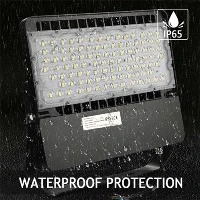
Due to its durability and resilience to the elements, the 600W LED Sport Court Light is appropriate for use in multi-sport facilities that are located either inside or outside. Indoor variants include a sturdy aluminum shell that has an ingress protection certification of IP54. This rating protects the internal components from dust and inadvertent water splashes, which are typical in gymnasiums with water coolers or perspiration. Outdoor variants have a classification of either IP65 or IP67, which means that they are completely resistant to precipitation, snow, high humidity, and even salt air, which is essential for buildings located along the shore. The solid-state nature of the fixtures, which eliminates the need for fragile glass bulbs or filaments, also makes them immune to vibration. This makes them a perfect choice for venues that stage high-energy events such as basketball championships, where the noise from the crowd or the movement of equipment can cause traditional lights to get dislodged.
Instant-on and dimming capabilities are two additional features that further increase the adaptability of the 600W LED Sport Court Light. It takes traditional MH fixtures five to ten minutes to warm up to maximum brightness, and if they are shut off mistakenly, they require ten to fifteen minutes to cool down. This lengthens the amount of time it takes for back-to-back games or practice sessions to take place. Because LED lighting are able to rapidly come on to full brightness, facilities are able to move between different sports or events without experiencing any delay. 0–10V dimming or DMX control is included in many models, which enables facility managers to adjust the brightness of the lighting based on the use of the facility. For example, the brightness can be dimmed to 40% for youth practice sessions in order to save energy, increased to 100% for competitive games, or even synchronized with scoreboards or audio systems in order to create an atmosphere that is appropriate for the event.
Compliance with worldwide lighting standards is a non-negotiable condition for multi-sport facilities, and the 600W LED Sport Court Light is designed to meet or surpass the criteria of the most prominent sports governing organizations. Just one example:
FIBA: A 600W LED light with a 30-degree beam angle generates 1000 lux with a uniformity ratio of 0.85 on a basketball court setting, which is higher than the 0.8 standard that FIBA has established for professional play.
In accordance with the requirements set out by the International Volleyball Federation (FIVB) for competitive volleyball, the fixture's tunable optics and high CRI guarantee 600 lux with a vertical uniformity of 0.75.
Using a beam angle of 45 degrees and a color temperature of 5000K, the fixture achieves a uniformity ratio of 0.75 and a brightness of 500 lux, which is in accordance with the competitive criteria of both the International Tennis Federation and the United States of America.
In order to ensure that their 600W LED Sport Court Lights are in compliance with industry standards, numerous manufacturers submit them to third-party testing conducted by organizations such as the Sports Lighting Association (SLA) or the International Electrotechnical Commission (IEC). This provides facility managers with the assurance that their lighting is up to par with the most stringent industry standards.
Implementing 600W LED Sport Court Lights demands meticulous planning in order to guarantee the highest possible level of performance across all sports. The first phase is a detailed site evaluation, during which lighting experts examine the size of the venue, the ceiling height (for indoor facilities) or pole placement (for outdoor facilities), the existing electrical infrastructure, and the principal sporting usage. With the aid of this evaluation, the number of fixtures that are required, as well as their mounting location and optical arrangement, may be determined. As an illustration, a multi-sport gymnasium that spans 10,000 square feet and accommodates basketball, volleyball, and pickleball may necessitate the installation of sixteen 600-watt LED bulbs that are located 20–25 feet above the floor and include a combination of narrow and medium beam angles.
Following that, the order of fixtures is based on the most prevalent sports played at the site. When it comes to indoor facilities, a "grid pattern" is frequently utilized due to the fact that fixtures are uniformly distributed throughout the ceiling in order to guarantee consistent coverage. It is common practice in basketball to position lights in such a way as to prevent shadows from being projected on the key or the three-point line. In volleyball, fixtures are tilted downward in order to reduce the amount of upward glare. It is possible for pole-mounted lights with changeable beam angles to be used in outdoor multi-sport fields, such as a court that is used for both tennis and soccer. This allows for a speedy reconfiguration between the different sports.
Getting the electrical system ready is another essential stage. For the purpose of preventing voltage fluctuations, 600W LED Sport Court Lights need to be connected to dedicated circuits and a power source that is consistent (usually 208V–480V for commercial facilities). As LED lights come with their own built-in drivers, it may be necessary for facilities that are upgrading from MH lamps to remove their obsolete ballasts. It is also suggested to use surge protectors in order to protect the fixtures from power surges, which have the potential to cause damage to the LED chips and driver. For facilities that are located outside, all of the wiring must be rated for wet situations and housed in conduit that is resistant to the elements.
Testing and calibration are performed once the system has been installed to guarantee that it satisfies the requirements for all sports. Illuminance is measured at thirty to forty places across the court by engineers using a professional light meter. These measurements include vital zones such as the basketball key, the volleyball net area, and the pickleball non-volley zone. The results of these measurements are used to compute average illuminance and uniformity ratios. When doing glare testing, they make use of a glare meter to measure the amount of light that is emitted from the player's eye level. If necessary, they modify the angle of the fixtures or add diffusers. During broadcast events, extra testing is performed to guarantee that the lighting is devoid of flickering (in accordance with the requirements set out by IEEE 1789) and correct in terms of color. This is because flickering can result in distortion during slow-motion replays.
The utilization of 600W LED Sport Court Lights in real-world situations demonstrates the revolutionary influence that these lights have on multi-sport facilities. For instance, the Rivertown Community Recreation Center is a public facility that features four indoor courts that are used for a variety of sports, including kids soccer, basketball, volleyball, and pickleball. Prior to the year 2022, the center utilized 32 1500W MH fixtures, which resulted in an annual cost of (84,000 for energy and )18,000 for maintenance purposes. The lights caused the brightness to be inconsistent (the uniformity ratio for basketball was 0.5), and they also caused frequent outages, which resulted in the cancellation of events and a low level of customer satisfaction. A 65% decrease in energy expenditures (to $29,400 annually) and zero maintenance charges were achieved as a consequence of the center's conversion to 32 600W LED Sport Court Lights with adjustable lenses in the year 2022. For basketball, the new lights obtained a FIBA-compliant 800 lux, for volleyball, they achieved a FIVB-compliant 600 lux, and for pickleball, they achieved a USA Pickleball-compliant 400 lux. All of these metrics were accomplished with a single kind of fixture. Over the course of the first year, there was a 90% improvement in user satisfaction, and there was a 45% increase in event reservations.
An additional illustration of this is the West Coast University Athletic Complex, which plays home to games of basketball, volleyball, and indoor soccer at the NCAA Division II level. Twelve thousand dollars in yearly energy savings were realized as a consequence of the complex's decision to replace 48 1500W MH lighting with 48 600W LED fixtures in its six indoor courts. The uniformity ratio of the LED lights was 0.85, and the glare rating was 22. The LED lights produced 1000 lux for basketball, which was sufficient to fulfill the rules for NCAA broadcasting. For volleyball, the LED lights produced 800 lux, and for indoor soccer, they produced 500 lux. The facility was selected to host the 2023 NCAA Division II West Regional Volleyball Tournament as a result of the considerable increase in video quality that was seen by the broadcasters. This improvement included crisper ball tracking and more accurate color reproduction overall.
Facility managers should take into consideration a number of important aspects when purchasing a 600W LED Sport Court Light. This will ensure that they purchase a product that is both adaptable and of good quality. To begin, let's talk about lumen output and efficacy. In order to guarantee energy efficiency throughout all sports, you should seek for a fixture that generates between 72,000 and 90,000 lumens and has an efficacy of between 120 and 150 lumens per watt. The second consideration is optical flexibility. To accommodate a variety of sports, select a model that has lenses that can be switched out or beam angles that can be adjusted from 15 to 90 degrees.
Verify that the fixture has a color temperature that can be adjusted between 3000K and 6500K and a color rendering index (CRI) of 90 or above in order to fulfill a variety of requirements. The fourth aspect of thermal management is to ensure a long lifespan by ensuring that the heat sink is made of a sturdy material (either copper or aluminum) and that it has extra cooling elements (heat pipes, fans). The fifth consideration is durability. Choose indoor versions with an IP54+ certification and outdoor models with an IP65+ rating. Additionally, choose materials that are resistant to corrosion for tough conditions. Sixth, choose a guarantee that covers both the parts and the labor for a period of five to ten years. Compliance is the final consideration; search for fixtures that have been tested to fulfill the criteria of FIBA, FIVB, ITF, or USA Pickleball, in addition to safety certificates such as UL, CE, or ETL.
The future of 600W LED Sport Court Lights will be characterized by continual improvements that will further enhance the adaptability and performance of these lights. The integration of smart lighting systems is one of the most interesting innovations. These systems enable facility managers to operate lights remotely through the use of a smartphone app or a cloud platform. With a single swipe, these technologies make it possible to assign sport-specific presets, such as a "basketball mode" that changes the beam angles and brightness in accordance with FIBA rules. Monitoring of energy use and problem detection are also included, which helps to cut down on operating expenses and downtime.
Adaptive lighting is yet another innovation that makes adjustments in real time based on the amount of natural light and the number of people present. For instance, if there is only one court that is being utilized, the system will reduce the brightness of the lights that are not being used by twenty percent in order to conserve energy. If there is an increase in the amount of natural light, it will decrease the brightness of the LEDs in order to maintain a consistent level of illumination. The advancements in LED chip technology are also leading to improved effectiveness (160–180 lumens per watt) and longer lifespans (up to 80,000 hours), which further reduces expenses and the influence that they have on the environment.
To summarize, the 600W LED Sport Court Light has revolutionized the concept of multi-sport lighting.
https://www.benweilight.com/industrial-lighting/led-flood-light/600w-led-sport-court-lights.html
Together, we make it better.
Shenzhen Benwei Lighting Technology Co.,Ltd
Mobile/Whatsapp :(+86)18673599565
Email:bwzm15@benweilighting.com
Skype: benweilight88
Web: www.benweilight.com
Add:F Building,Yuanfen Industrial Zone,Longhua,Bao'an District,Shenzhen, China