Flexible LED strip lights are utilised in a wide range of commercial, residential, and industrial projects worldwide. Many architects and lighting designers use LED strip lighting because of its increased brightness, colour selection, and efficiency. Their ease of installation is their main selling point. They are the most often used LED strips for do-it-yourself projects at home because of their adaptability, low profile, and useful accessories. With the correct tools and a few hours, a homeowner can create a professional-quality pattern with these LED strips.
There isn't a single "one size fits all" standard for LED strip lights; there are several variations. The best LED strip lights for the task and how to utilise them while overcoming frequent installation hold-ups are topics that both novices and professionals will learn from our LED Strip Resource Guide.
What Makes them so Special?
LED strip lights, often referred to as LED ribbon lights or LED tape lights, are renowned for their adaptability and low profile. Efficient LEDs come in lengths ranging from 3 to 16.4 feet and are mounted on a circuit board that is 10 mm wide. Numerous properties of flexible LED strip lights make them simple to utilise in a range of scenarios:
Cut to size The cut marks along the strips make cutting LED strips a breeze. There is a black line with copper solder pads on either side at every cut point. Each strip piece may be addressed even after it has been cut thanks to the copper solder pads. This enables you to join LED strips in different parts of your house or to link them together.
Flexible LED strip with adhesive: For easy mounting choices, the LED strips come with a 3M adhesive backing. The flexible, low-profile strip is easy to attach since its peel-off backing reveals the 3M adhesive.
Whether waterproof or not, LED strip lights are not just for indoor applications. The silicone resin substance used in the IP65-rated waterproof LED strip lights shields the strip's components from moisture and dust. Although they cost a bit extra, weatherproof LED lights are essential for any activity that involves being near water or outside.
12 volt LED lights: In order to function, the LED strip lights require 12VDC power input. Although an AC/DC transformer is needed for in-home use, this makes it much safer to wire the strips throughout the house. These flex strips make it simple to create a battery-powered LED light because batteries can also produce DC electricity.
LED Strip Density = Brightness
The number of LEDs in a given area is known as the LED light strip's density. The density of LED flex strips is expressed as "LEDs per Meter." The High-Density strip has 60 LEDs/M, whereas the Standard Density strip has 30 LEDs/M. Brighter, better light is the result of a greater density strip. The distinctions between the standard and high density strips are displayed in the table below. Pay attention to the Lumen outputs, the variations in cut lengths, and the maximum run length for each.
The measurement of brightness as seen by the human eye is called a lumen. Most of us use watts to assess light brightness because of incandescent lighting. Lumens are the new standard for describing light output from LEDs. One of the most crucial factors in selecting LED strip lights is lumen output, which dictates the kind of light you will get.
When evaluating the brightness of LED strips, be important to take note of how lumens are monitored. The strips are labelled Lumens per Meter in the table above. Simply determine how many meters you will be running to determine the overall lumen output.
Different projects require certain amount of brightness to achieve their purpose. My advice would be to always go for the brighter option and add a dimmer. Below is a helpful guide on Lumen requirements:
Accent or Mood Lighting – 100-300 Lumens/ft.
Under Cabinet Lighting – 175-360 Lumens/ft.
Task lighting w/ higher distance from source – 300-450 Lumens/ft.
Bedroom, Cove Lighting – 180-500 Lumens/ft.
Color: RGB Multicolor, UV, Colors, White CCT Range
The colour of an LED strip is a matter of taste. RGB LED strips are an excellent choice for people who enjoy colour effects and diversity. RGB strip lights are excellent for accent lighting throughout the house since they change colour. In order to generate a wide range of colours, they employ red, green, and blue diodes. Just be sure to utilise a three-channel controller from this guide's dimming section if you're utilising RGB strips.
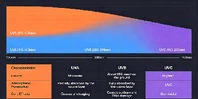
The strips are also available in Ultra Violet (UV) form. For UV applications or creating your own black light, this is a fantastic choice!
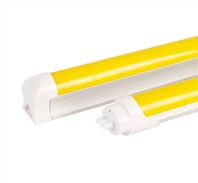
Additionally, single colours of Red, Green, Blue, Yellow, and White (3000-6500K CCT) are available for the strips.
Light's colour temperature, expressed in degrees Kelvin (K), is known as Correlated Colour Temperature, or CCT for short. An LED strip's temperature rating has a direct impact on the appearance of the light. Use the pictures below as a guide. Warm White, which appears orange or reddish, is what we refer to as 3000K. The colour shifts from yellow to off-white to natural white, and finally to blue white, or Cool White, as the Kelvin temperature rises.
Warm White makes the space seem comfortable and welcoming. It is typically utilised in spaces like living rooms, dining rooms, and bedrooms where people congregate to visit or unwind.
Natural White or Neutral White produces a daylight-like look. Because it simulates natural light and is comfortable to use anywhere in the house, this is the best-selling strip. Our most popular strip for LED lighting beneath cabinets is this one.
Cool White creates a bright, clean glow that goes well with current and contemporary styles. Cool white is a brighter, more focussed light that works well for job lighting. The restrooms, kitchens, and workspaces are where the cool, bright colours are most frequently employed.
Length of Strip
To determine how many feet of strip you will need overall, it is important to sketch out the whole project. This helps you determine what you should buy and how much it will cost. Up to a full reel (16.4 ft.), the LED strip lights are available in 3-foot increments. It's crucial to choose if you want to buy reel lengths and cut them to size or whether it would be more advantageous to have shorter lengths cut for you.
Now is the time to outline your project. Determine where the strip lights will be used, how they will be connected, and if they will all be powered by the same source or different ones. As you go on to the following phases, this step is really helpful.
LED Strip Wattage and Powering
What kind of electricity is required for the LED strips? A 12 volt DC input is always required for the LED strips.
That's the simple part; wattage determination comes next. If you have previously decided on your strip density and overall length, this shouldn't be too bad with the chart below.
Plug-in Adapter – Plug straight into your wall to power your LED strip lights.
Hardwire Power Supplies – Directly wire in between your line voltage wiring and your LED Strips.
Dimmable Power Supply – Want to dim from a common residential dimmer like a Lutron or Leviton? This is the power option for you!
Batteries – Find a 12V battery pack or use an 8 cell battery holder.
Wiring and Connecting LED Strips
This is where you may start thinking about where you will run all of the strips by using the previous drawing. Was it intended to eventually run all the comics together? You will need to run parallel cables from your power supply to the individual strips if the total length required exceeds the maximum run length of the strip (32.8 feet for SD and 16.4 feet for HD).
You may occasionally want to connect power strips from several directions to a single power source, as our design illustrates. You will already be running parallel wires in this case.
It might be challenging to wire LED strips when working with many reels of strips, but we have a wiring and powering guide that you can use to plan out your LED strip light configuration.
Accessories for wiring: splitters and connectors for LED strips
Any strip project will need connecting LED strips. We offer a few useful add-ons and instructions to finish any LED strip connection.
Soldering your own connectors and wire? Here is our suggested wire for the strips; be sure to follow our soldering instructions.

https://www.benweilight.com/professional-lighting/led-strip-light/rgb-led-strip-lights.html